
Uber-JSW EV MoU: India-Specific Ride-Hailing EVs on the Table
Uber and JSW Group have signed an MoU to explore electric vehicle solutions tailored for India's ride-hailing market. The partnership involves JSW Green Mobility and focuses on EVs that can meet local price, performance and usage expectations for app-based mobility. No production model, launch date,...
Editorial Team
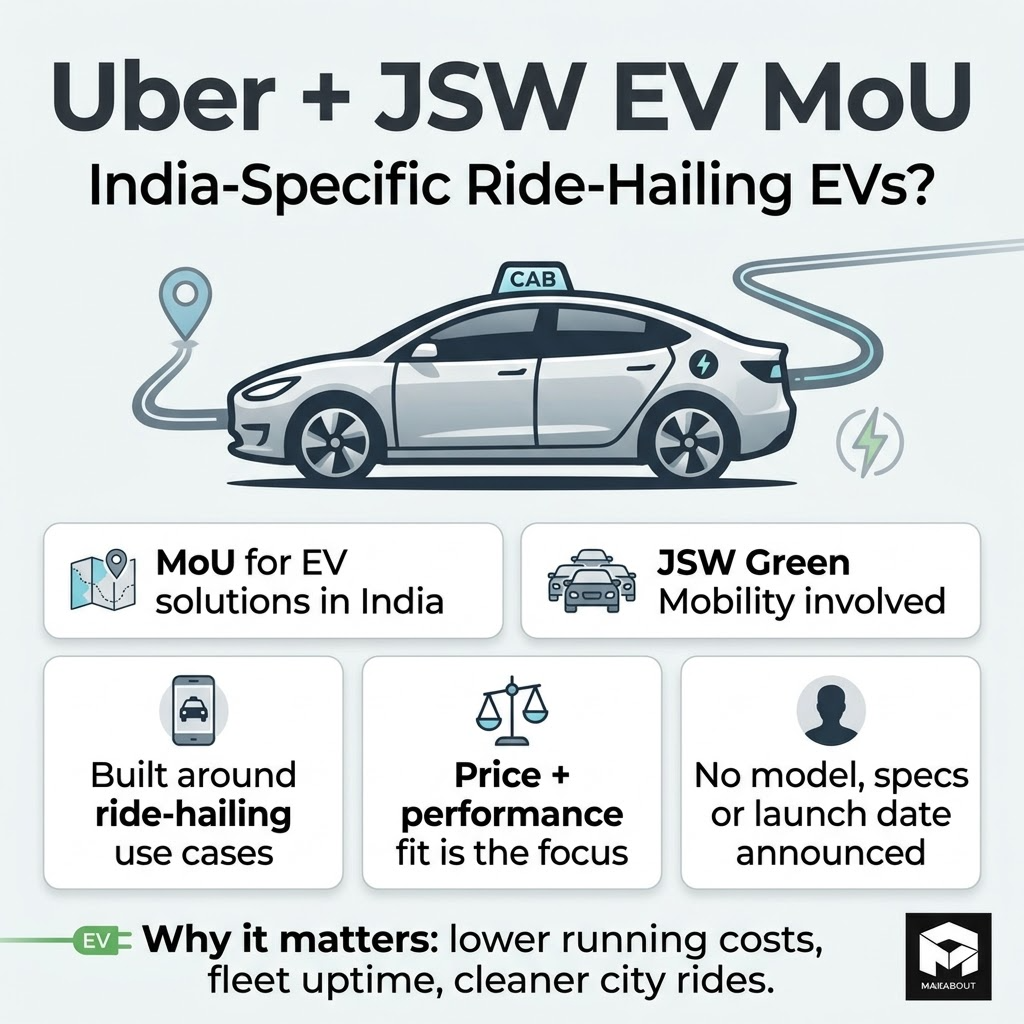
Uber and JSW Group have signed an MoU to explore electric vehicle solutions tailored for India's ride-hailing market. The partnership involves JSW Green Mobility and focuses on EVs that can meet local price, performance and usage expectations for app-based mobility. No production model, launch date, pricing, specifications or fleet deployment count has been announced yet.
What You Need To Know
Parties involved: Uber and JSW Group, with JSW Green Mobility part of the EV discussion.
Market focus: India-specific ride-hailing electric vehicle solutions.
Core idea: EVs aligned with local price and performance expectations.
Unknowns: model name, specs, price, rollout timeline and fleet size are not confirmed.
Why Ride-Hailing Needs Different EV Thinking
A ride-hailing EV has a tougher job than a private city car. It needs to run for long hours, charge quickly or predictably, keep operating costs low, and remain comfortable enough for high daily passenger turnover. Driver economics matter as much as range figures.
That is why the Uber-JSW MoU is interesting. The real opportunity is not only replacing petrol or diesel cabs with electric cars, but shaping EVs around fleet uptime, local roads, cost targets, charging access and platform-specific use cases.
Confirmed Vs Still Unconfirmed
| Area | Status |
|---|---|
| Uber-JSW MoU | Confirmed as a partnership intent |
| JSW Green Mobility involvement | Confirmed in the reported partnership structure |
| India ride-hailing focus | Confirmed |
| Production EV model | Not announced |
| Specs, price and launch date | Not announced |
| Fleet deployment count | Not announced |
What It Could Mean For Drivers And Riders
For drivers, the most important questions will be total cost of ownership, daily charging downtime, financing or leasing support, service availability and battery durability. For riders, the visible change could be cleaner city rides and a more consistent EV cab experience if deployment reaches scale.
For India's EV ecosystem, this type of partnership also signals that ride-hailing platforms may prefer vehicles designed around fleet use instead of simply adapting existing consumer EVs.
What To Watch Next
Whether JSW confirms a production vehicle platform or partner manufacturing route.
Whether Uber frames the EVs for specific categories such as hatchback, sedan, premium or fleet-only use.
Whether charging, finance and service partners are added to the plan.
Whether the first pilot city or deployment timeline is announced.
FAQs
Has Uber announced a new EV model with JSW?
No. The current update is an MoU to explore and develop ride-hailing EV solutions. A production model has not been announced.
Will these EVs be made only for ride-hailing?
The partnership is focused on India's ride-hailing market, but the exact product strategy has not been disclosed.
Are prices or launch timelines confirmed?
No. Pricing, specifications, launch timing and fleet deployment numbers are still unconfirmed.
The Uber JSW EV ride-hailing India story is worth tracking because it could shape how fleet-focused electric cars are designed, financed and deployed in Indian cities. The next major update should clarify whether this MoU becomes a real product and rollout plan.
No comments yet
Be the first to share your thoughts!
Want to read more automotive news?
Stay updated with the latest car launches, reviews, and industry insights.
Browse All News