

Tata Sierra Turbo Petrol Hits 222 kmph Top Speed at NATRAX
When I first heard that the Tata Sierra Turbo Petrol hit 222 kmph at NATRAX, my immediate reaction was "wait, really?" Here's an SUV that looks like it was designed with a ruler and some serious '90s nostalgia, yet it's achieving speeds that would make many sports sedans sweat a little.Let me walk y...
When I first heard that the Tata Sierra Turbo Petrol hit 222 kmph at NATRAX, my immediate reaction was "wait, really?" Here's an SUV that looks like it was designed with a ruler and some serious '90s nostalgia, yet it's achieving speeds that would make many sports sedans sweat a little.
Let me walk you through what this means, how Tata pulled it off, and whether you should actually care about top speed in a lifestyle SUV.
The NATRAX Achievement: Why It Matters
NATRAX (National Automotive Test Tracks) in Indore isn't just any test facility. It's one of the world's largest high-speed test tracks, featuring a 11.3 km high-speed oval track where manufacturers validate their vehicles' performance capabilities.
When Tata claims the Sierra hit 222 kmph there, it's not marketing fluff – it's a controlled, measured achievement on India's most credible automotive testing ground.
Breaking Down the Numbers
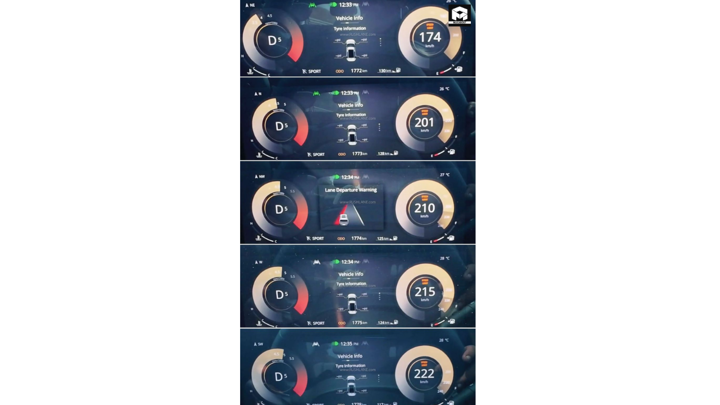
Here's what makes this speed noteworthy:
- Aerodynamic challenge: The Sierra's boxy silhouette isn't exactly wind-cheating. Achieving 222 kmph with that design means serious engineering under the skin
- SUV weight penalty: This isn't a lightweight sports car – it's a proper SUV with all the structural reinforcement that entails
- Indian manufacturing milestone: It demonstrates how far domestic automakers have progressed in powertrain and chassis development
- Real-world headroom: If it can hit 222 kmph, it means comfortable cruising at 120-140 kmph with power reserves to spare
What's Under the Hood?
The Sierra Turbo Petrol uses Tata's 2.0-litre turbocharged gasoline engine, which has been making waves across their lineup. Industry reports suggest this motor produces somewhere in the neighborhood of 170-200 bhp, though official figures will come closer to launch.
The Powertrain Package
Based on what we know about Tata's current turbocharged offerings and the Sierra's performance, here's what likely makes this speed possible:
- Direct injection technology: Maximizes fuel efficiency while delivering strong power output
- Twin-scroll turbocharger: Reduces lag and provides linear power delivery across the rev range
- Sophisticated engine management: Modern ECU tuning that balances performance with reliability
- Transmission options: Likely paired with both manual and automatic gearboxes optimized for highway performance
I've always maintained that it's not just about peak horsepower – it's how that power is delivered and managed. Tata seems to have nailed that balance here.
The Aerodynamics Puzzle
Let's be honest – the Sierra isn't winning any aerodynamics awards with its design. That vertical rear window and flat surfaces create drag. So how does it still hit 222 kmph?
Engineering Solutions
Manufacturers typically employ several strategies to overcome aerodynamic challenges:
- Underbody optimization: Smooth panels and strategic airflow management beneath the vehicle
- Active grille shutters: Close off cooling airflow at high speeds to reduce drag
- Optimized wheel arches: Carefully designed to manage turbulent air around the wheels
- Rear diffusers: Help manage airflow as it exits from under the vehicle
The fact that Tata achieved this speed despite the boxy design suggests they've done serious homework on these details.
Does Top Speed Actually Matter?
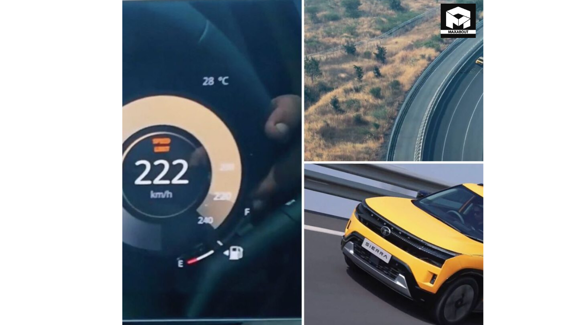
Here's where I'll get real with you. Will you ever drive your Sierra at 222 kmph? Almost certainly not – and you shouldn't, given India's road conditions and speed limits.
But here's why this number still matters:
The Practical Benefits
Highway cruising comfort: A vehicle that can comfortably hit 222 kmph will cruise effortlessly at 100-120 kmph without the engine straining. That translates to better fuel efficiency, lower noise levels, and reduced mechanical stress during long drives.
Overtaking confidence: When you need to pass slower traffic on highways, having power reserves means you can execute the maneuver quickly and safely. There's nothing worse than committing to an overtake and realizing your vehicle doesn't have the legs to complete it swiftly.
Build quality indicator: To safely achieve such speeds, everything from suspension geometry to brake cooling to chassis rigidity needs to be engineered to higher standards. You benefit from this engineering even at normal speeds.
The Emotional Factor
Let's not pretend we're purely rational beings. There's something satisfying about knowing your SUV could hit 222 kmph, even if you never will. It's like having a chef's knife in your kitchen – you might only use 10% of its capability, but knowing it's there makes every task feel better.
How It Stacks Up Against Competition
The compact SUV segment is crowded, and while most manufacturers don't officially test or advertise top speeds, industry testing and user reports provide some context:
Performance Comparison Context
- Hyundai Creta Turbo: Capable engines with strong mid-range but typically limited to lower top speeds
- MG Astor Turbo: Decent performance but generally not engineered for extreme top-end runs
- Jeep Compass: Various powertrains with strong performance credentials, but different positioning
- Mahindra XUV700: Powerful motors with impressive acceleration, though top speed varies by variant
The Sierra's 222 kmph puts it in genuinely impressive territory for this segment. It's not just keeping up – it's potentially leading in straight-line performance.
What This Means for Buyers
If you're considering the Sierra, here's my take on what this performance capability actually means for you:
The Good Stuff
Confident highway manners: You're getting an SUV that won't feel out of breath on expressways. Mumbai to Goa? Bangalore to Chennai? The Sierra will handle these runs with composure.
Future-proofing: As expressway networks expand across India with higher speed limits, you've got a vehicle that can safely and legally utilize those roads to their full potential.
Engineering validation: This kind of performance testing reveals that Tata has engineered the Sierra to high standards across all systems – cooling, braking, stability, and powertrain durability.
The Reality Check
Fuel economy trade-offs: Engines tuned for high performance typically sacrifice some efficiency. Expect respectable but not segment-leading mileage figures.
Premium pricing likely: This level of performance doesn't come cheap. The turbo petrol variant will probably command a significant premium over base models.
Tire and maintenance costs: Higher performance means premium tires and potentially higher service costs for components like brakes.
The Bigger Picture for Indian Automotive Industry
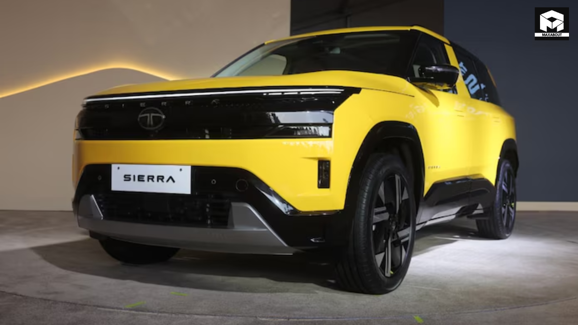
Step back for a moment and consider what the Sierra's achievement represents. A decade ago, if you wanted genuine performance from an Indian-made vehicle, options were limited. Today, we're seeing domestic manufacturers not just matching international standards but sometimes exceeding them.
Tata's investment in R&D, their partnership with Jaguar Land Rover, and their commitment to testing at world-class facilities like NATRAX – it all adds up to vehicles that can genuinely compete globally.
The Sierra hitting 222 kmph isn't just about one vehicle. It's a marker of where the entire industry is heading.
Frequently Asked Questions
Is 222 kmph the limited top speed or maximum possible?
Based on typical automotive testing protocols, 222 kmph is likely the measured maximum speed achieved during testing. Whether there's electronic limiting or if this represents the natural power ceiling isn't officially confirmed yet. Manufacturers often implement speed limiters for safety and tire rating considerations.
Which transmission achieved this top speed?
Official details about whether the manual or automatic transmission hit 222 kmph haven't been fully disclosed. Typically, manual transmissions can achieve slightly higher top speeds due to less power loss, but modern automatics have narrowed this gap considerably.
How does this compare to the diesel variant?
Diesel engines typically produce more torque but less peak horsepower than equivalent petrols. The diesel Sierra will likely excel in mid-range acceleration and towing but may have a lower outright top speed. The trade-off is usually better fuel economy and low-end grunt.
Can regular Sierra buyers expect this performance?
Test track conditions are ideal – perfectly smooth surface, optimized weather, minimal load, and expert drivers. Real-world top speeds will vary based on factors like passenger load, fuel level, road surface, altitude, and weather conditions. However, the fundamental capability remains in production vehicles.
What safety features support high-speed driving?
While specific details for the Sierra are still emerging, modern high-performance SUVs typically include electronic stability control, advanced ABS with brake assist, multiple airbags, high-speed rated tires, and reinforced chassis structures. These systems work together to maintain stability and safety across the speed range.
Conclusion
The Tata Sierra Turbo Petrol hitting 222 kmph at NATRAX is more than just a cool headline – it's evidence of serious engineering capability. Sure, you'll probably never drive it that fast, and honestly, you shouldn't try to on public roads.
But what this achievement gives you is an SUV with reserves. Power when you need to overtake. Composure when cruising at highway speeds. The confidence that comes from knowing every component is engineered to handle serious performance.
For me, the most exciting part isn't the speed itself. It's what it represents: Indian automakers building vehicles that don't just meet expectations – they exceed them. The Sierra takes a nostalgic design and backs it up with genuinely modern performance credentials.
Whether the turbo petrol variant becomes the sales leader remains to be seen. Diesel might still dominate for those prioritizing fuel economy and torque. But for driving enthusiasts who want an SUV that can actually deliver thrills alongside practicality, that 222 kmph number is exactly the validation they're looking for.
The real question isn't whether the Sierra can hit 222 kmph – Tata's proven that. The question is whether you value that capability enough to pay the premium it'll command. For many buyers, I suspect the answer will be a resounding yes.
Want to read more automotive news?
Stay updated with the latest car launches, reviews, and industry insights.
Browse All News