
Tata Sierra EV RWD and AWD launch in 2026
Let me tell you, when Tata Motors first teased the Sierra EV concept, I felt that rush of nostalgia mixed with genuine excitement. The original Sierra was way ahead of its time back in the '90s, and now it's returning as an electric powerhouse. This isn't just another EV launch—it's the revival of a...
Automotive Journalist
Let me tell you, when Tata Motors first teased the Sierra EV concept, I felt that rush of nostalgia mixed with genuine excitement. The original Sierra was way ahead of its time back in the '90s, and now it's returning as an electric powerhouse. This isn't just another EV launch—it's the revival of an automotive icon that many enthusiasts thought was gone forever.
The Sierra's Electric Comeback: Why It Matters
Tata Motors showcased the Sierra EV concept at the Auto Expo 2023, and the response was overwhelming. The company has confirmed that both rear-wheel-drive (RWD) and all-wheel-drive (AWD) variants will hit the market in 2026, giving buyers meaningful choice based on their driving needs and budget.
What strikes me most about this approach is how Tata is positioning the Sierra EV. They're not just slapping batteries into a retro design. Instead, they're building on their Gen 2 EV architecture—the same platform underpinning the successful Curvv EV and upcoming Harrier EV. This means proven technology, better range efficiency, and presumably fewer teething problems that often plague first-generation platforms.
Design Philosophy: Retro Meets Modern
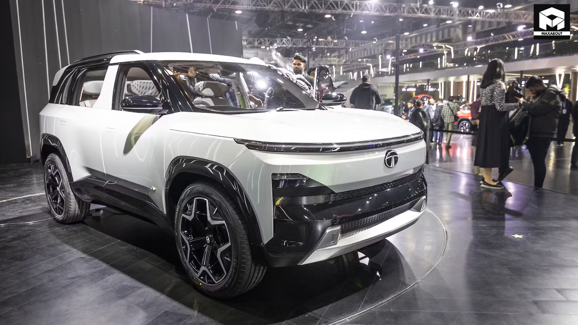
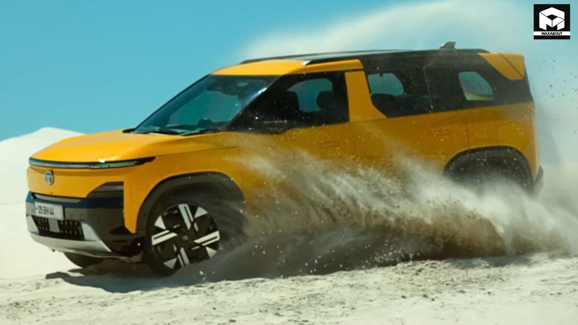
The Sierra EV maintains that distinctive silhouette the original was famous for. The three-door configuration with those angular lines? Still there. But Tata has smartly modernized everything else. The LED lighting signature, flush door handles, and aerodynamic tweaks show this isn't merely a nostalgia play—it's a serious electric SUV contender.
From what industry observers have noted at various auto shows, the Sierra EV sits larger than the Nexon EV but slightly more compact than the Harrier. That sweet spot could work brilliantly for urban families wanting space without the bulk.
RWD vs AWD: Understanding Your Options
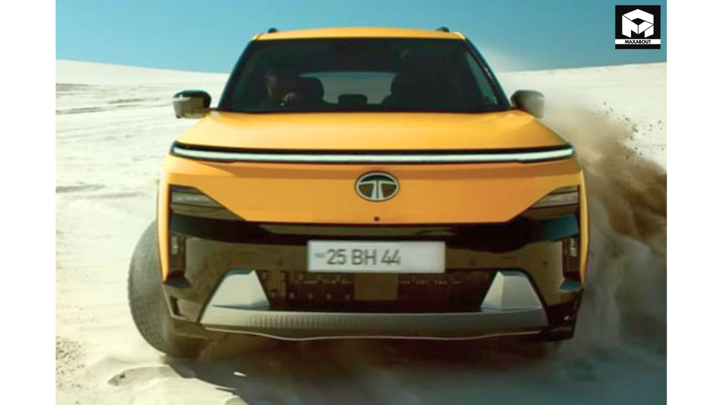
Here's where things get interesting for buyers. Tata is offering two distinct drivetrain configurations, and choosing between them will depend on what you actually need versus what sounds cool on paper.
Rear-Wheel-Drive Variant
The RWD Sierra EV will likely be the volume seller. Based on industry patterns with Tata's EV lineup, here's what we can reasonably expect:
- Single motor setup: Mounted on the rear axle, delivering power directly to the back wheels
- Better efficiency: RWD typically offers superior range since you're powering fewer components
- Lower price point: Generally runs ₹2-3 lakh less expensive than AWD equivalents
- Adequate performance: More than sufficient for daily commuting and highway cruising
- Lighter weight: Contributes to better range and handling characteristics
For most buyers in India, the RWD variant will make perfect sense. Our roads don't typically demand AWD capability, and the range advantage matters more for practical ownership. I'd estimate the RWD could deliver anywhere from 450-550 km on a full charge, based on current battery technology trends and the vehicle's size class.
All-Wheel-Drive Variant
Now, the AWD version—this is where enthusiasts will gravitate. Dual motors mean one up front and one at the rear, providing power to all four wheels simultaneously.
- Dual motor configuration: Independent motors on each axle for precise power distribution
- Enhanced traction: Particularly useful in wet conditions or loose surfaces
- Superior acceleration: Combined motor output typically delivers thrilling performance
- Advanced torque vectoring: Improves cornering stability and handling dynamics
- Premium positioning: Competes with higher-end electric SUVs in the market
The trade-off? Range typically drops by 10-15% compared to RWD due to increased weight and mechanical complexity. But if you're chasing that instant torque and confident handling in all conditions, the AWD delivers something special.
Expected Specifications and Performance
While Tata hasn't released final specifications, we can make educated assessments based on their existing EV portfolio and competitive positioning.
Battery and Range
The Sierra EV will almost certainly use Tata's latest battery chemistry. Industry sources suggest two battery pack options:
- Standard pack: Approximately 60-65 kWh capacity
- Long-range pack: Around 75-80 kWh capacity
These capacities would position the Sierra EV competitively against rivals while keeping costs manageable. The larger pack would be essential for the AWD variant to maintain respectable range despite the dual-motor setup's higher consumption.
Power Output Estimates
Based on typical configurations in this segment, here's what seems probable:
RWD Variant:
- Motor output: 160-180 kW (approximately 215-240 bhp)
- Torque: 350-400 Nm
- 0-100 km/h: Around 8-9 seconds
AWD Variant:
- Combined output: 240-280 kW (approximately 320-375 bhp)
- Combined torque: 500-600 Nm
- 0-100 km/h: Potentially under 6 seconds
Those AWD numbers would put it firmly in performance SUV territory—genuinely exciting stuff for an Indian-manufactured EV.
Pricing Strategy and Market Position
Pricing will make or break the Sierra EV's success. Tata has consistently offered competitive pricing across their EV range, but the Sierra sits in premium territory.
My estimate, considering production costs and positioning, places the Sierra EV RWD starting around ₹25-28 lakh (ex-showroom), while the AWD variant could command ₹30-35 lakh or potentially higher for top-spec versions.
Who Are the Competitors?
The Sierra EV won't have the electric SUV segment to itself. It'll face competition from:
- Mahindra's upcoming electric SUVs from their Born Electric range
- Hyundai Ioniq 5 and upcoming Ioniq 7
- Upcoming electric SUVs from MG Motor
- BYD's expanding India portfolio
What works in Tata's favor is brand trust and their established EV ecosystem. They've built credibility through the Nexon EV and Tiago EV, something newer entrants are still working toward.
Technology and Features Worth Watching
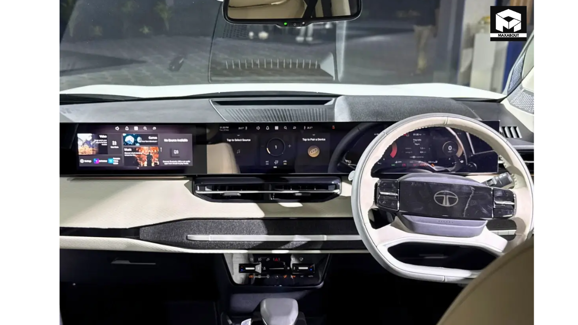
Modern electric SUVs are essentially rolling computers, and the Sierra EV should pack impressive tech.
Infotainment and Connectivity
Expect Tata's latest infotainment system with a large touchscreen—probably 12.3 inches or larger. Wireless Android Auto and Apple CarPlay are standard expectations now, along with connected car features through Tata's app ecosystem.
Over-the-air updates are becoming industry standard for EVs, allowing Tata to improve vehicle performance and add features long after purchase. This capability fundamentally changes the ownership experience compared to traditional vehicles.
Safety Features
Tata has built a strong reputation for safety, and the Sierra EV should continue that tradition with:
- Multiple airbags (likely 6-7 as standard)
- Advanced driver assistance systems (ADAS) with adaptive cruise control
- 360-degree camera system
- Automatic emergency braking
- Lane keeping assist and blind spot monitoring
These features aren't just checkboxes—they genuinely improve daily driving safety, especially in chaotic Indian traffic conditions.
Charging Infrastructure and Practicality
Here's something I always emphasize when discussing EVs: charging convenience matters more than raw range for most buyers.
Charging Capabilities
The Sierra EV will likely support:
- DC fast charging: Probably 100-150 kW, enabling 10-80% charge in approximately 30-40 minutes
- AC charging: Standard 7.4 kW home charging, fully replenishing overnight
- Vehicle-to-load (V2L): Increasingly common feature allowing the Sierra to power external devices
Tata's partnership with various charging networks means Sierra EV owners will have decent public charging access, though home charging remains the most practical solution for daily use.
Real-World Ownership Considerations
Let's talk practical ownership, because specifications only tell part of the story. The Sierra EV's success will depend on factors beyond the spec sheet:
- Service network: Tata's extensive service presence is a genuine advantage
- Battery warranty: Expect 8 years/160,000 km coverage, industry standard for EVs
- Resale value: Still uncertain for premium EVs in India; early adopters take some risk here
- Insurance costs: Typically higher for EVs due to expensive battery replacement concerns
Should You Wait for the Sierra EV?
This is the question I get asked most: should buyers wait for upcoming launches or purchase available options now?
For the Sierra EV specifically, waiting makes sense if:
- You're emotionally connected to the Sierra nameplate and want that specific design
- You need AWD capability and want an Indian-manufactured option
- You're not in urgent need and can wait until 2026
- You prefer being part of a vehicle's initial launch wave
However, purchasing current options might be smarter if you need an EV immediately, as 2026 is still some time away, and current EVs like the Nexon EV or competitors offer proven reliability.
The Early Adopter Consideration
Being among the first owners of any new model—especially on a new platform—carries risks. Manufacturing processes need time to mature. Software requires real-world testing beyond what any company can achieve internally. Initial production units sometimes have quirks that get ironed out in subsequent batches.
That said, Tata's Gen 2 platform will already be proven by other models before the Sierra EV launches, which reduces some first-generation concerns.
Environmental Impact and Sustainability
Let's address the bigger picture. Electric vehicles represent more than just a different powertrain—they're part of a fundamental shift in automotive transportation.
The Sierra EV will produce zero tailpipe emissions, which meaningfully improves urban air quality. Over its lifetime, even accounting for electricity generation emissions in India's current grid mix, it'll have a lower carbon footprint than equivalent petrol or diesel SUVs.
As India's renewable energy capacity expands—and it's growing rapidly—the environmental case for EVs strengthens further. Charging your Sierra EV with solar power fundamentally changes the sustainability equation.
Frequently Asked Questions
When exactly will the Tata Sierra EV launch?
Tata Motors has indicated a 2026 launch timeline for the Sierra EV. Based on typical automotive development cycles and company statements, expect it sometime in the second half of 2026, though exact dates haven't been officially confirmed.
What will be the price difference between RWD and AWD variants?
While official pricing hasn't been announced, AWD variants in the EV segment typically cost ₹3-5 lakh more than equivalent RWD versions due to the additional motor, drivetrain components, and associated technology. This pattern will likely hold for the Sierra EV.
Will the Sierra EV be a three-door or five-door SUV?
The concept showed a three-door configuration maintaining the original Sierra's distinctive design. However, Tata may offer both three-door and five-door variants to appeal to different buyer segments, with the five-door version providing better practicality for families.
How does the Sierra EV compare to the Harrier EV?
Both use Tata's Gen 2 EV architecture, but they target different buyers. The Harrier EV emphasizes practicality and family-friendly features, while the Sierra EV leans toward distinctive design and potentially more performance-oriented positioning, especially in AWD form.
What charging infrastructure will I need at home?
For optimal convenience, install a dedicated 7.4 kW AC charging unit at home. This requires a separate circuit breaker and proper electrical installation. Most Sierra EV buyers will find overnight home charging covers their daily driving needs completely, making public charging primarily for longer trips.
Can I take the AWD Sierra EV off-road?
The AWD variant will offer better traction on loose surfaces compared to RWD, but the Sierra EV is fundamentally designed as an on-road SUV rather than a hardcore off-roader. It'll handle broken roads
No comments yet
Be the first to share your thoughts!
Want to read more automotive news?
Stay updated with the latest car launches, reviews, and industry insights.
Browse All News