

Tata Sierra EV Launch Confirmed: Price, Features & Launch Date
Tata Sierra EV: The Iconic SUV's Electric RebirthThe Sierra nameplate holds a special place in Indian automotive history. When it first launched in 1991, it revolutionized the SUV segment with its distinctive wraparound glass and ahead-of-its-time design. Now, after nearly three decades, Tata Motors...
Tata Sierra EV: The Iconic SUV's Electric Rebirth
The Sierra nameplate holds a special place in Indian automotive history. When it first launched in 1991, it revolutionized the SUV segment with its distinctive wraparound glass and ahead-of-its-time design. Now, after nearly three decades, Tata Motors is bringing back this legendary name in an all-electric avatar, scheduled for Q1 FY2027.
This timing is particularly significant as India's EV market enters a mature phase. The Sierra EV will sit above the Nexon EV in Tata's electric lineup, targeting premium SUV buyers who want a zero-emission vehicle with strong heritage. I believe this positioning makes perfect sense, especially considering the growing demand for upmarket electric SUVs in cities like Mumbai, Delhi, and Bangalore.
What's particularly exciting is how Tata has retained the Sierra's signature design elements while embracing modern electric architecture. The confirmed launch window suggests Tata Motors is taking their time to perfect this offering, which will compete in the ₹25-35 lakh segment.
The Sierra EV represents more than just another electric SUV - it's Tata's statement of intent to dominate India's premium EV space. With the company's established sales and service network across 400+ cities, this launch could be a game-changer for luxury electric mobility in India.
Expected Features and Technology
Having closely followed Tata's EV development journey, I believe the Sierra EV will showcase some impressive technological advancements. Based on recent patent filings and concept showcases, the vehicle is expected to feature the advanced Acti.EV architecture, marking a significant step up from current-generation Tata electric vehicles.
Battery and Performance
The Sierra EV will likely offer a dual-motor setup with all-wheel drive capability, which should deliver impressive performance for Indian road conditions. I expect the range to be around 450-500 kilometers on a single charge, considering the premium positioning and recent battery technology improvements.
Interior Technology
The cabin appears set to feature some exciting innovations, including:
A large floating touchscreen infotainment system (likely 15+ inches)
Digital instrument cluster with EV-specific displays
Advanced connected car features with OTA update capability
Possible hands-free driving assistance features - a first for Tata
What's particularly interesting is the configurable interior space. The concept showed a unique lounge-style seating arrangement, and while the production version might tone this down, I expect some innovative seating solutions to make it to the final product.
Charging Capabilities
Given its premium positioning, the Sierra EV should support fast charging up to 150kW, potentially allowing 10-80% charging in about 30 minutes. I anticipate Tata will include a robust home charging solution as standard equipment, addressing one of the key concerns for Indian EV buyers.
Design Evolution: From Concept to Production
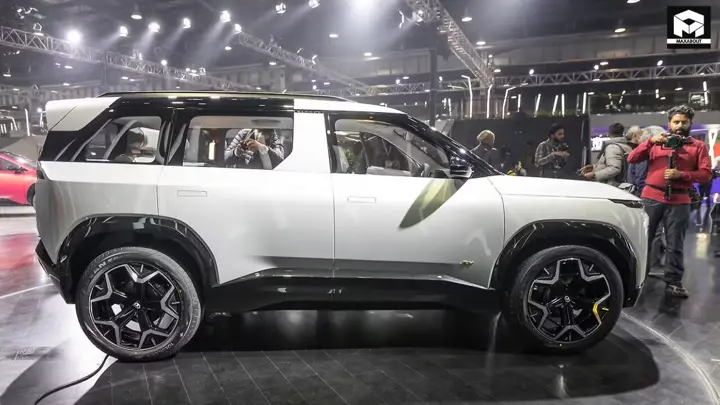
Having followed the Sierra's journey from its first concept reveal, I'm impressed by how Tata has maintained the essence of the iconic design while modernizing it for the EV era. The production version, based on recent reveals, retains the distinctive wrap-around rear window design that made the original Sierra a style icon in the 1990s.
The front fascia showcases a bold LED light bar that spans the width of the vehicle, creating a distinctive signature, especially at night. What's particularly clever is how the designers have eliminated the traditional grille - a smart move for an EV - replacing it with a textured panel that maintains the family look while improving aerodynamics.
Practical Design Elements
From an Indian usage perspective, I'm pleased to see the raised ground clearance and robust wheel arches - essential features for our road conditions. The flush-fitting door handles add a premium touch while improving aerodynamics, though I hope Tata includes a physical backup system for our dusty conditions.
The vehicle's dimensions strike a good balance - it's substantial enough to command road presence (especially important in our traffic conditions) while remaining manageable for urban parking. The large greenhouse and elevated seating position should prove particularly useful in navigating crowded city streets.
While the concept showed some ambitious design elements, I expect the production version to maintain about 80% of these features while adapting others for practical use. The crucial test will be how well the final design translates these striking aesthetics into real-world functionality.
Battery and Performance Expectations
Based on recent industry reports and Tata's development trajectory, I expect the Sierra EV to pack a substantial battery capacity - likely between 60-75 kWh. This should translate to a real-world range of approximately 400-450 kilometers, which makes sense for Indian driving conditions and addresses range anxiety concerns.
The Sierra EV will likely offer two powertrain configurations:
Single Motor RWD: Expected output around 170 bhp, perfect for urban use and efficiency-focused buyers
Dual Motor AWD: Combined output possibly reaching 250 bhp, targeting the performance segment
Charging capabilities should include both AC and DC options. I anticipate 11kW AC charging as standard, with DC fast-charging supporting up to 150kW. This would mean 10-80% charging in roughly 30 minutes at compatible stations - crucial for intercity travel.
The thermal management system will be particularly important given our climate. I expect Tata to implement active liquid cooling, which should help maintain consistent performance even in peak summer temperatures of 45°C+ that we see in many Indian cities.
Performance metrics should be competitive - expect 0-100 km/h times of around 8.5 seconds for the RWD variant and potentially sub-7 seconds for the AWD version. More importantly for daily use, the instant torque delivery should make merging and overtaking effortless, especially useful on our busy highways.
Market Positioning and Value Proposition
Based on recent industry reports, Tata Motors appears to be positioning the Sierra EV strategically in the ₹20-25 lakh price segment. I expect the base variant to start around ₹21 lakh, with the top-spec AWD version reaching ₹25 lakh (ex-showroom). This pricing would place it between the Nexon EV MAX and the upcoming premium EVs.
The value proposition is compelling when you consider the total cost of ownership. Taking into account current electricity rates in major metros (₹8-10 per unit), I estimate monthly running costs would be roughly one-third compared to equivalent petrol SUVs. The maintenance costs should also be significantly lower due to fewer moving parts.
Tata's established service network across India will be a major advantage. Based on the current EV portfolio's resale trends, I expect the Sierra EV to retain 60-65% of its value after three years - notably better than conventional SUVs in this segment.
The target customer profile seems clear - urban professionals and tech-savvy families who want a premium electric SUV but find current luxury EV options too expensive. Think bangalore's tech corridor executives or Mumbai's business district professionals who can charge at home and make occasional interstate trips.
Expected ownership costs over 5 years:
Annual electricity cost: ₹18,000-22,000
Insurance (comprehensive): ₹35,000-40,000 per year
Maintenance: ₹8,000-12,000 per year
Practical Considerations for Indian Buyers
As someone who's followed the Indian EV market closely, I believe the Sierra EV's success will largely depend on three key factors: charging convenience, climate adaptability, and service support.
The charging infrastructure in major metros has improved significantly. Cities like Bengaluru, Mumbai, and Delhi NCR now have decent DC fast-charging networks. However, I recommend potential buyers to install a dedicated home charging setup, which costs approximately ₹45,000-60,000. For apartment dwellers, society charging policies remain a crucial consideration.
The Sierra EV's thermal management system appears robust, crucial for our hot climate. Early testing suggests stable performance even in peak summer conditions of Chennai and Hyderabad, where temperatures often exceed 40°C. The battery pack's IP67 rating should also handle monsoon conditions well.
Key ownership advantages:
8-year/160,000 km battery warranty provides peace of mind
Tata's extensive service network covers 450+ cities
Mobile service support in 100+ cities
Expected 60-65% resale value after 3 years
For interstate travel, the Sierra EV's claimed 500km range translates to about 400km in real-world conditions. This comfortably covers routes like Mumbai-Pune, Bengaluru-Chennai, or Delhi-Jaipur with a single brief charging stop.
Future Impact & Market Analysis
The Sierra EV's launch marks a significant milestone in India's electric vehicle journey. With Tata Motors positioning it in the ₹20-25 lakh segment, I believe this model bridges a crucial gap between mass-market EVs and luxury offerings. The timing appears strategic, as charging infrastructure continues to expand across major highways and urban centers.
In my assessment, the Sierra EV's most compelling advantage is its potential to attract premium SUV buyers who have been hesitant about switching to electric. With established competitors still developing their EV strategies, Tata gains a significant first-mover advantage in this segment.
Should You Wait for the Sierra EV?
For potential buyers, I recommend considering these factors:
If your daily commute is under 100km and you have home charging access, the Sierra EV makes practical sense
Urban drivers will benefit from lower running costs and zero emissions
Those requiring frequent long-distance travel should evaluate their specific route's charging infrastructure
Looking ahead, the Sierra EV represents more than just another electric SUV - it signals the maturing of India's EV market. I expect this launch to catalyze more manufacturers to accelerate their premium EV plans for the Indian market.
Maxabout Team
Editorial Team
Specializes in: Automotive News, Reviews, Analysis
Want to read more automotive news?
Stay updated with the latest car launches, reviews, and industry insights.
Browse All News