
Tata Petrol SUV Sales Gain Pace As Sierra Mix Balances
Tata's SUV strategy in India is becoming more balanced. Reported market data shows Tata petrol SUV volumes rising 36% year-on-year to 1,17,315 units in the year-to-date period ended May 2026, while diesel, electric and CNG SUV volumes also grew. The bigger takeaway is that Tata is not relying on one...
Editorial Team
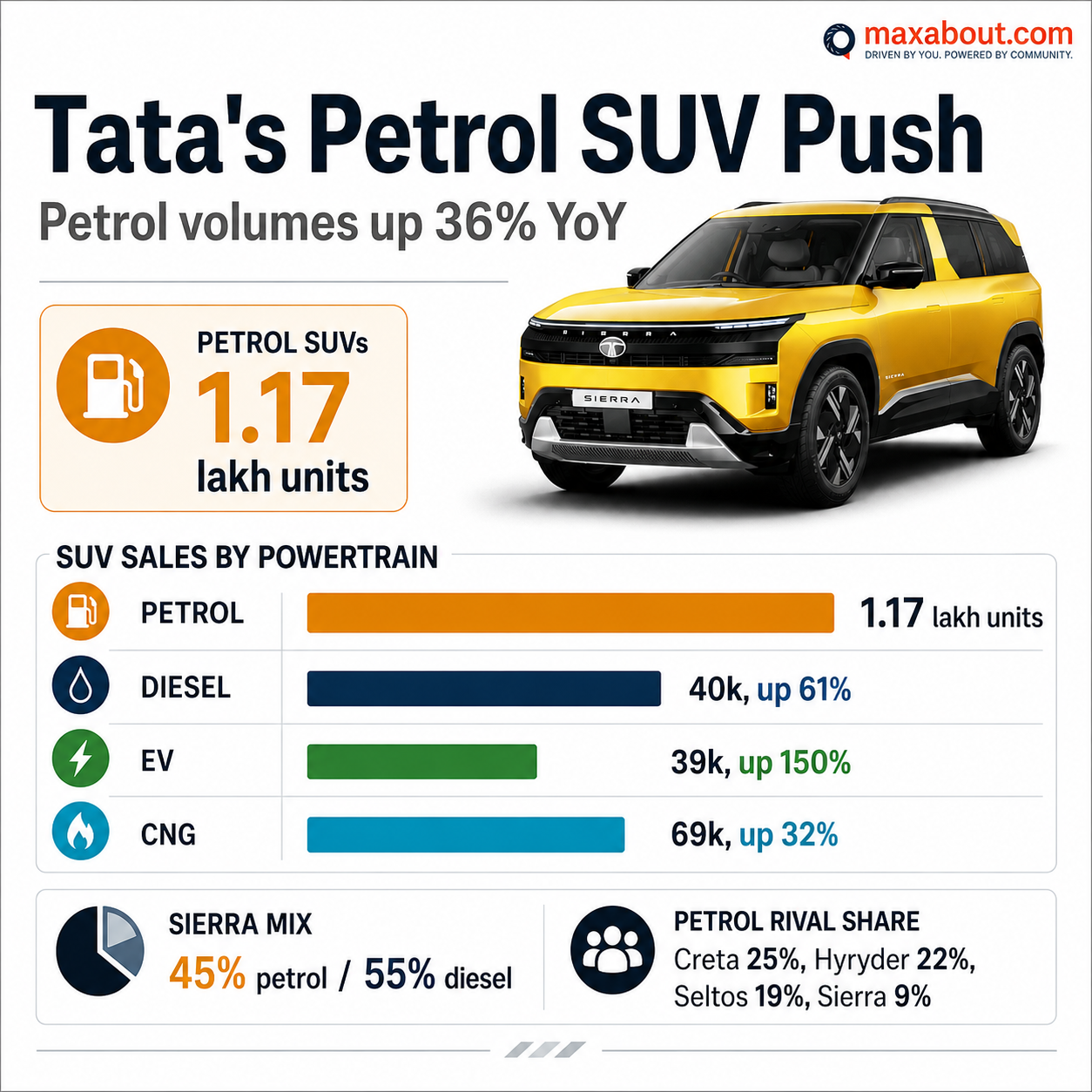
Tata's SUV strategy in India is becoming more balanced. Reported market data shows Tata petrol SUV volumes rising 36% year-on-year to 1,17,315 units in the year-to-date period ended May 2026, while diesel, electric and CNG SUV volumes also grew. The bigger takeaway is that Tata is not relying on one powertrain story: Sierra, Harrier and the wider SUV range are being positioned across petrol, diesel, EV and CNG demand pockets.
What you need to know
Petrol SUV volumes: 1,17,315 units, up 36% year-on-year.
Diesel SUV volumes: 40,340 units, up 61%.
Electric SUV sales: 39,458 units, up 150%.
CNG SUV volumes: 69,221 units, up 32%.
Reported Sierra mix: 45% petrol and 55% diesel.
Tata SUV sales by powertrain
The data suggests Tata's SUV growth is broad-based rather than limited to a single fuel type. Petrol remains important for scale, diesel continues to matter for long-distance SUV users, EVs are growing quickly from a smaller base, and CNG gives Tata another cost-conscious urban option.
| Powertrain | Reported volume | Reported YoY growth |
|---|---|---|
| Petrol SUVs | 1,17,315 | 36% |
| Diesel SUVs | 40,340 | 61% |
| Electric SUVs | 39,458 | 150% |
| CNG SUVs | 69,221 | 32% |
Why Sierra's reported mix matters
The reported Sierra fuel mix of 45% petrol and 55% diesel is important because it shows demand is not moving in a straight line toward one fuel type. Petrol can help Tata compete in high-volume midsize SUV markets, while diesel still appeals to buyers who prioritise torque, range and highway use. For Tata, Sierra can work as a bridge product if it keeps both groups interested.
How rivals frame the petrol SUV battle
The petrol midsize SUV market remains competitive. The reported petrol-share benchmark lists Creta at 25%, Hyryder at 22%, Seltos at 19%, Grand Vitara at 12% and Sierra at 9%. That means Tata has momentum, but it still has to fight entrenched rivals with strong petrol buyer recall.
What it means for Indian SUV buyers
For buyers, Tata's multi-energy push means more choice. A city-heavy user may compare petrol and CNG running costs, a high-mileage highway user may still prefer diesel, and an urban early adopter may consider EVs if charging access is sorted. The strongest Tata showroom pitch in 2026 may be the ability to keep buyers inside the brand even when their preferred fuel type differs.
What to watch next
Whether Sierra can improve its reported petrol share against Creta, Hyryder and Seltos.
Whether Tata's EV SUV growth continues as more rivals enter the segment.
Whether diesel demand stays resilient in larger SUVs.
Whether CNG volumes keep expanding beyond city-focused use cases.
FAQs
How much did Tata petrol SUV volumes grow in 2026?
Reported Tata petrol SUV volumes rose 36% year-on-year to 1,17,315 units in the year-to-date period ended May 2026.
What is the reported Tata Sierra petrol-diesel mix?
The reported Sierra mix is 45% petrol and 55% diesel, showing balanced demand across both fuel types.
Are Tata electric SUVs growing faster than petrol SUVs?
On reported growth rate, yes. Electric SUV sales rose 150%, but petrol SUVs still had much higher reported volume at 1.17 lakh units.
Which petrol SUV rivals are mentioned in the benchmark?
The reported rival-share set includes Creta, Hyryder, Seltos, Grand Vitara and Sierra.
Tata petrol SUV sales in 2026 show why multi-energy strategy still matters in India. Petrol is gaining scale, EVs are accelerating, diesel remains relevant, and Sierra's role will depend on how well Tata converts this broad powertrain spread into stronger market share.
No comments yet
Be the first to share your thoughts!
Want to read more automotive news?
Stay updated with the latest car launches, reviews, and industry insights.
Browse All News