

Tata Motors Targets 12 Lakh Annual PV Sales by FY31: The Growth Strategy Explained
Tata Motors Passenger Vehicles is preparing for a bigger electric-vehicle phase, with reports pointing to a 10-model EV portfolio by FY31 and a stronger push toward profitability beyond subsidy support. The roadmap matters because Tata already leads India's mass-market EV conversation, but the next ...
Tata Motors Passenger Vehicles is preparing for a bigger electric-vehicle phase, with reports pointing to a 10-model EV portfolio by FY31 and a stronger push toward profitability beyond subsidy support. The roadmap matters because Tata already leads India's mass-market EV conversation, but the next challenge is making EVs sustainable as a business and broader in buyer choice.
What The FY31 Roadmap Says
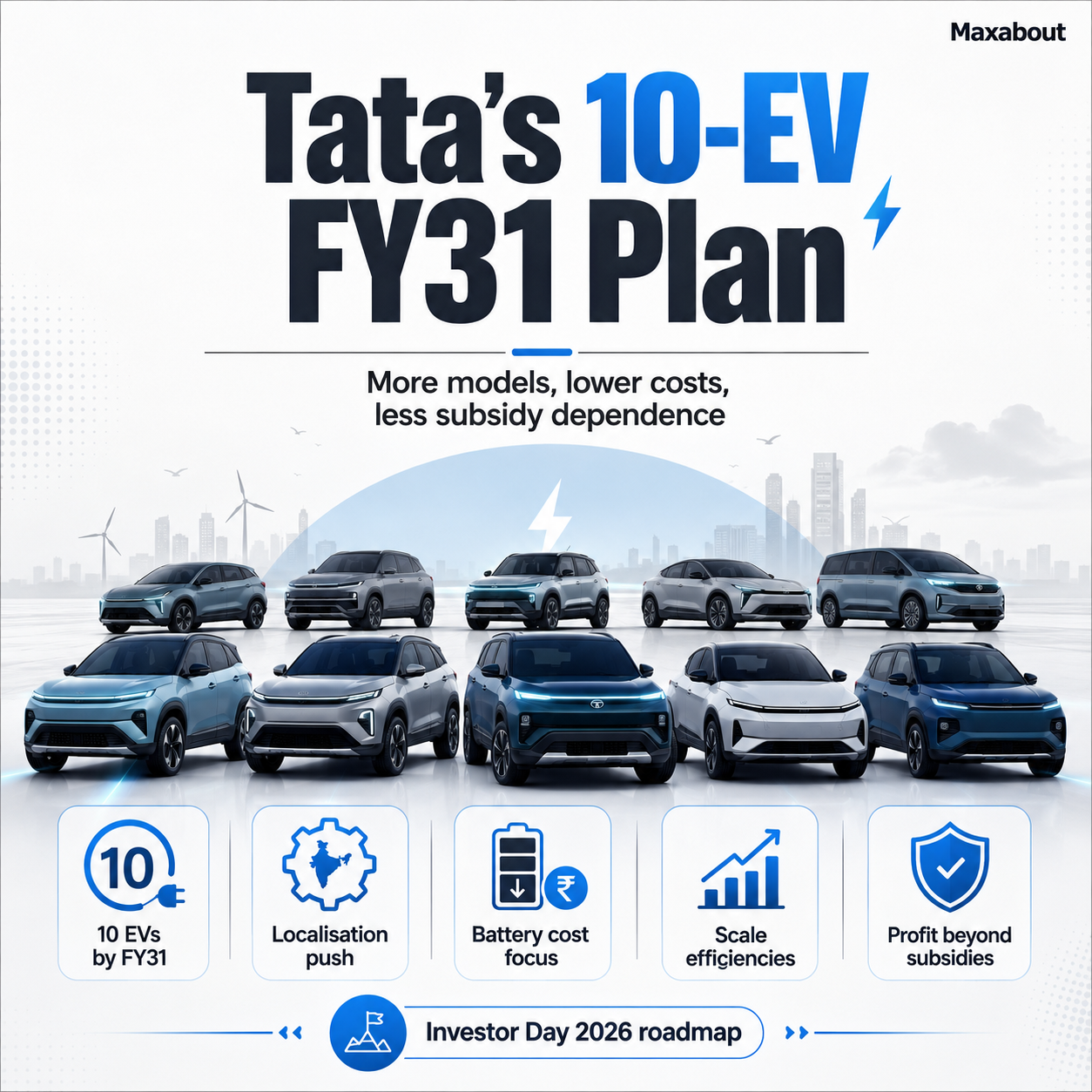
10 EVs by FY31 are part of the reported portfolio target.
Localisation is central to reducing cost dependence.
Battery cost reduction remains a key profitability lever.
Scale efficiencies should matter more as EV volumes grow.
Post-subsidy profitability is the larger business goal.
Why Profitability Beyond Subsidies Matters
EV growth in India has been helped by policy support, early-adopter demand and falling battery costs. But long-term success cannot depend only on incentives. Tata's roadmap points to a more mature phase where electric cars need to stand on product strength, cost control, localisation and scale.
Roadmap Snapshot
| Area | Reported Direction |
|---|---|
| EV portfolio | 10 models by FY31 |
| Cost strategy | Localisation, battery cost reduction, scale |
| Business goal | Profitability beyond subsidies |
| Buyer impact | More EV choices across segments |
What It Means For Indian Buyers
For buyers, the most important outcome would be a wider EV range with better value and stronger ownership confidence. More localisation can help stabilise costs, while a larger portfolio can give customers options beyond today's compact EV-heavy mix.
FAQs
How many EVs is Tata targeting by FY31?
Reports point to a 10-model EV portfolio by FY31.
Does this confirm all future Tata EV names?
No. The roadmap indicates portfolio scale, but final model names and launch timelines need official confirmation.
Why is localisation important?
Localisation can reduce costs, improve supply resilience and support profitability as subsidies taper.
The Tata Motors 10 EVs by FY31 plan shows the brand's next EV challenge clearly: not just launching more cars, but making the EV business stronger without depending heavily on incentives.
Maxabout Team
Editorial Team
Specializes in: Automotive News, Reviews, Analysis
Want to read more automotive news?
Stay updated with the latest car launches, reviews, and industry insights.
Browse All News