
Reliance Battery-Swapping Plan Targets EV Delivery Fleets First
Reliance battery swapping EV two-wheelers could become one of India's more important fleet-mobility stories if the reported rollout moves from internal trials to commercial deployment. Reliance New Energy is said to be preparing battery-swapping services for electric two-wheelers, with logistics and...
Reliance battery swapping EV two-wheelers could become one of India's more important fleet-mobility stories if the reported rollout moves from internal trials to commercial deployment. Reliance New Energy is said to be preparing battery-swapping services for electric two-wheelers, with logistics and last-mile delivery fleets expected to be the first focus rather than private scooter buyers. The reported plan matters because delivery riders lose money when vehicles sit idle for charging, and a working swap network could reduce downtime if pricing, station access, and battery availability are solved.
What You Need To Know
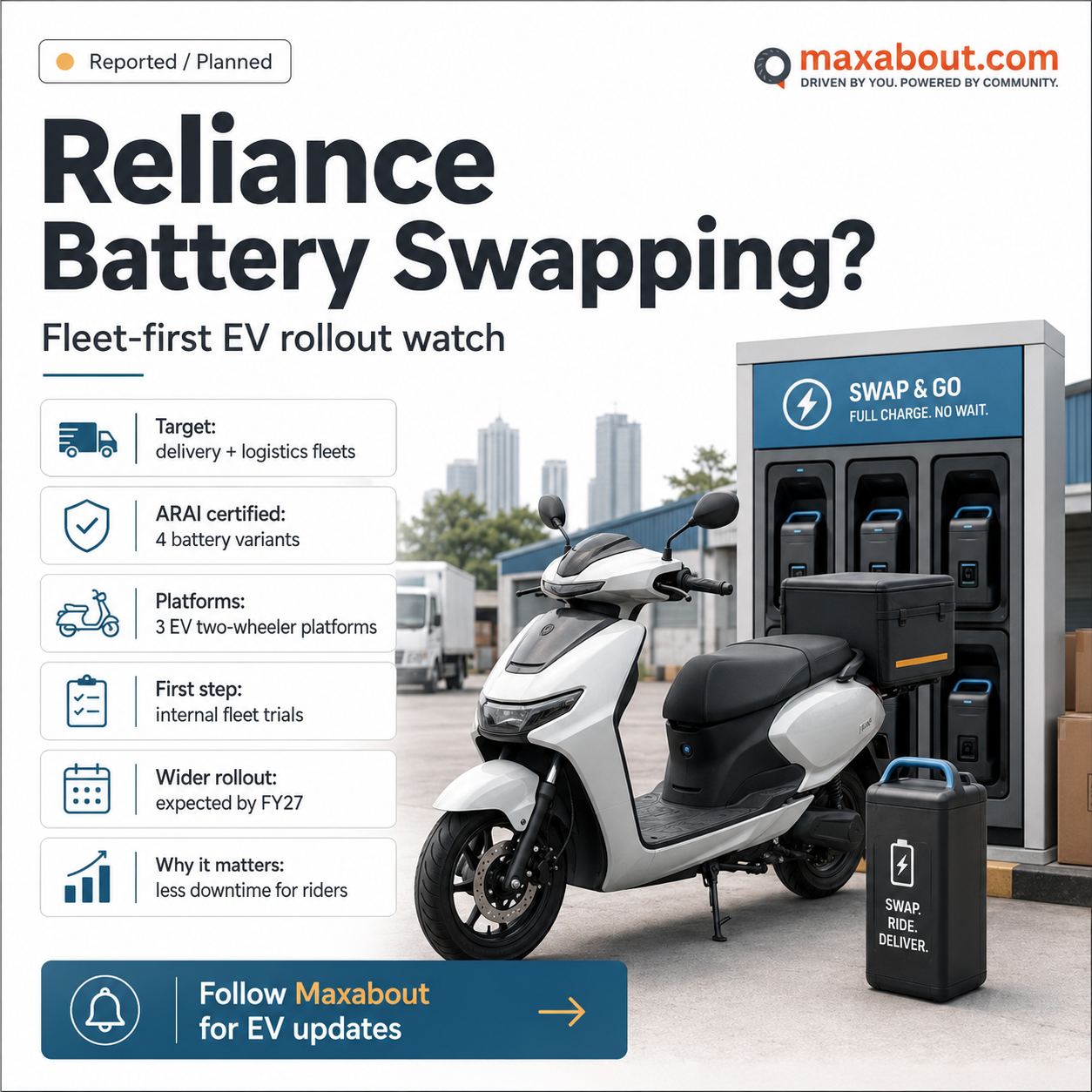
Reported focus: electric two-wheelers used by delivery, logistics, and last-mile fleet operators.
Certification detail: the report mentions ARAI certification for four battery variants and three two-wheeler platforms.
Trial path: initial testing is expected within Reliance's own fleet before wider city pilots.
Timeline watch: broader commercial rollout is anticipated around FY27, but this should be treated as planned/reported, not guaranteed.
Why Delivery Fleets Come First
Battery swapping makes the clearest business case when a vehicle is earning money through the day. For a delivery rider or fleet operator, the difference between a long charging stop and a quick battery swap can affect order capacity, route planning, rider utilisation, and vehicle uptime. That is why a fleet-first strategy makes more sense than launching immediately as a mass consumer scooter feature.
The reported plan also fits a controlled rollout model. Internal fleet trials can test battery durability, station workflow, charging safety, pack availability, rider behaviour, and real-world operating cost before a larger public network is attempted.
Key Reported Details
| Detail | What is known |
|---|---|
| Business area | Battery swapping for electric two-wheelers, with possible use across scooters, three-wheelers, and light commercial vehicles. |
| Initial customer type | Commercial fleet operators, especially delivery and logistics users. |
| Certification | ARAI certification is reported for four battery variants and three two-wheeler platforms. |
| Testing route | Internal fleet testing first, followed by possible city-level pilots. |
| Rollout timing | Commercial rollout is anticipated by FY27 if trials progress, but no fixed launch date has been confirmed. |
What Remains Unclear
The reported Reliance New Energy battery swapping plan still has important unanswered questions. There is no confirmed public city list, swap-station count, consumer pricing model, fleet subscription structure, battery deposit model, partner OEM list, or final commercial launch date. These details will decide whether the network becomes a practical fleet solution or remains a limited pilot.
For now, the safest interpretation is that Reliance is preparing the ecosystem and certification base for a fleet-led rollout, while the commercial model is still awaited.
Why It Matters For India's EV Market
If executed well, battery swapping for electric scooters could reduce one of the biggest friction points for high-usage EVs: charging downtime. Delivery fleets need predictable turnaround, standardised battery health, and dependable station access. A large energy-backed player entering this space could push more serious competition around fleet electrification, charging infrastructure, and battery-as-a-service models.
For private buyers, the immediate impact may be limited because the reported first phase is fleet-oriented. But successful fleet adoption can still influence scooter design, removable battery standards, urban swap infrastructure, and future consumer EV ownership models.
FAQs
Is Reliance launching battery swapping for all electric scooter buyers?
Not yet. The current report points to a fleet-first plan for delivery and logistics operators, with internal trials expected before wider commercial rollout.
What has been certified?
The report says ARAI certification has been secured for four battery variants and three electric two-wheeler platforms.
When could the wider rollout happen?
A broader rollout is anticipated around FY27, but this remains a reported timeline and should not be treated as a confirmed launch date.
Why is battery swapping useful for delivery fleets?
Delivery fleets value uptime. Swapping a discharged pack for a charged one can be faster than waiting for a vehicle to charge, improving rider productivity if the network is reliable.
The Reliance battery swapping EV two-wheelers plan is still in the reported/preparatory stage, but it is worth tracking because fleet-first battery swapping could become a practical bridge between electric mobility, logistics demand, and urban charging infrastructure in India.
Maxabout Team
Editorial Team
Specializes in: Automotive News, Reviews, Analysis
Want to read more automotive news?
Stay updated with the latest car launches, reviews, and industry insights.
Browse All News