
N.A.N. MagneTech’s ₹1,250 Crore Andhra Magnet Plant: Capacity, Timeline and EV Impact
N.A.N. GreenMet plans to establish N.A.N. MagneTech and build an integrated neodymium-iron-boron magnet facility at Naidupeta in Andhra Pradesh. The first phase carries an investment of approximately ₹1,250 crore and an initial planned capacity of 1,200 tonnes per annum. Commercial production is tar...
Editorial Team
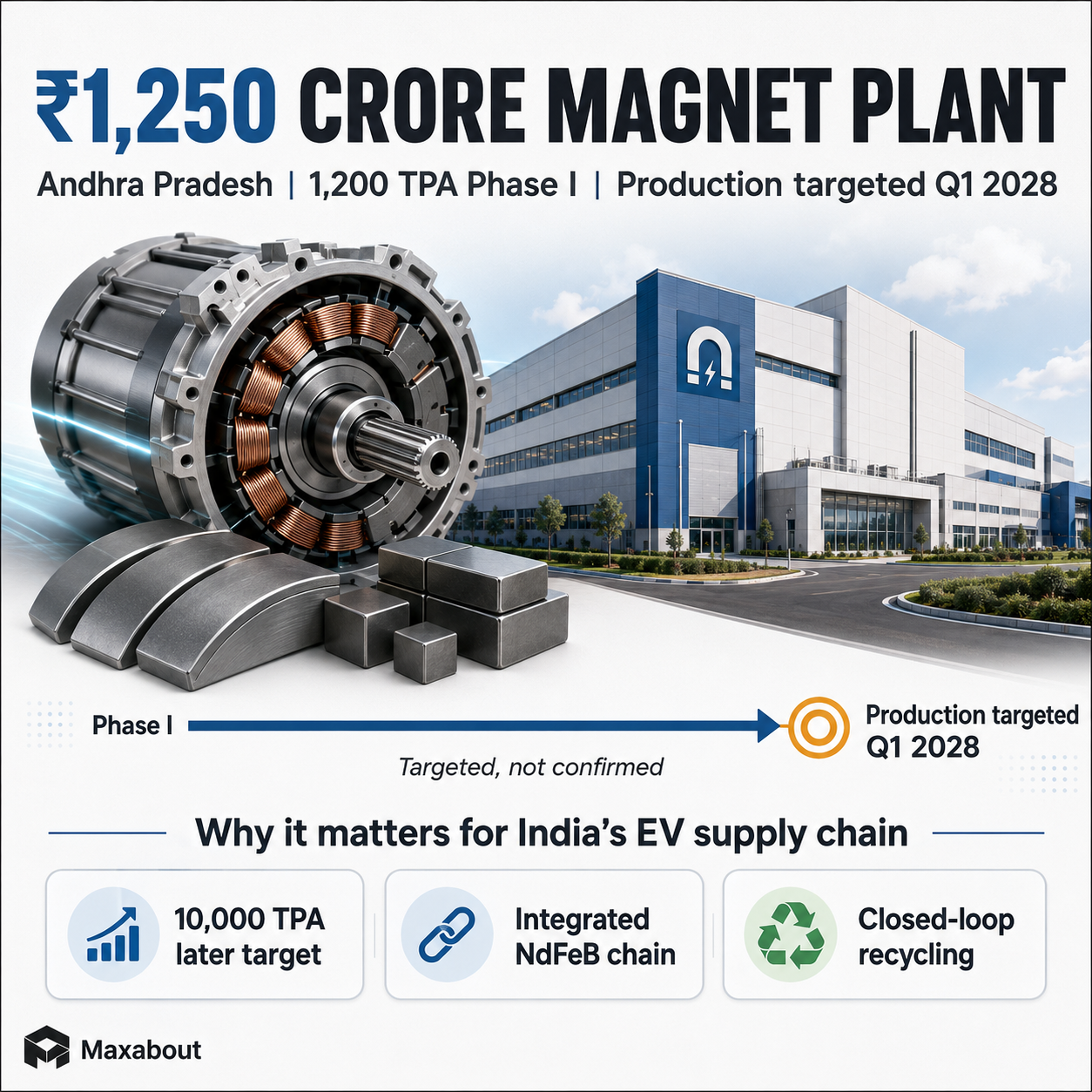
N.A.N. GreenMet plans to establish N.A.N. MagneTech and build an integrated neodymium-iron-boron magnet facility at Naidupeta in Andhra Pradesh. The first phase carries an investment of approximately ₹1,250 crore and an initial planned capacity of 1,200 tonnes per annum. Commercial production is targeted for Q1 2028, making the project a notable step in India’s effort to localise critical components used in electric motors.
What you need to know
Phase-I investment: approximately ₹1,250 crore.
Initial capacity: 1,200 tonnes of NdFeB magnets per year.
Longer-term target: capacity could scale to 10,000 TPA.
Location: Naidupeta, Andhra Pradesh.
Production target: Q1 2028, subject to project execution.
Planned capacity and scope
| Project element | Reported plan |
|---|---|
| Phase-I capital expenditure | About ₹1,250 crore |
| Initial magnet capacity | 1,200 TPA |
| Long-term capacity target | 10,000 TPA |
| Commercial production | Targeted for Q1 2028 |
The project is described as an integrated chain rather than a standalone finishing plant. The planned scope runs from raw materials through metals and alloys to sintered NdFeB magnets, with closed-loop recycling included in the model.
Why NdFeB magnets matter for electric vehicles
NdFeB permanent magnets are widely used in compact, high-performance electric motors because they support strong magnetic fields with relatively low weight and volume. In an EV supply chain, reliable access to these magnets can influence motor availability, localisation and exposure to imported critical materials.
Domestic magnet manufacturing does not remove every raw-material risk, but an integrated Indian operation could shorten parts of the supply chain, support recycling and give automotive suppliers another potential local source. The report also points to long-term raw-material and domestic automotive off-take arrangements, although customer identities and order volumes were not disclosed.
What the Andhra Pradesh plant could change
For Indian EV and component manufacturers, the main significance is supply-chain resilience. Local conversion, alloying, magnet production and recycling could reduce the number of overseas processing steps between raw materials and a finished motor component.
For Andhra Pradesh, the facility would add an advanced-material manufacturing project rather than conventional vehicle assembly alone. Its real impact will depend on execution, qualification by customers, raw-material security and the pace of later capacity expansion.
Confirmed facts and important caveats
| Reported or planned | Not yet confirmed |
|---|---|
| ₹1,250 crore Phase-I investment | Named automotive customers |
| 1,200 TPA initial capacity | Detailed construction milestones |
| Q1 2028 production target | Guaranteed start date or output ramp |
| 10,000 TPA later target | Timing and funding of every expansion phase |
FAQs
Where will the N.A.N. MagneTech plant be built?
The planned facility is at Naidupeta in Andhra Pradesh.
How much will Phase I cost?
The reported Phase-I investment is approximately ₹1,250 crore.
When is production expected to start?
Commercial production is targeted for Q1 2028. This is a project target, not a guarantee that operations have already begun.
What will the plant manufacture?
It is planned as an integrated NdFeB magnet operation covering materials, metals and alloys, sintered magnets and closed-loop recycling.
The N.A.N. MagneTech Andhra Pradesh magnet plant could become an important localisation link for India’s EV-motor ecosystem. The next evidence to watch is project execution, customer qualification and progress toward the targeted Q1 2028 production start.
No comments yet
Be the first to share your thoughts!
Want to read more automotive news?
Stay updated with the latest car launches, reviews, and industry insights.
Browse All News