
MG Starlight EV: 7-Seater Electric SUV Spied Testing in India
MG Starlight EV: The Next Big EV SUV for Indian FamiliesThe electric vehicle landscape in India is about to get more interesting with the upcoming MG Starlight EV. Recent spy shots have revealed this 7-seater SUV undergoing testing on Indian roads, suggesting MG is serious about expanding its electr...
Editorial Team
MG Starlight EV: The Next Big EV SUV for Indian Families
The electric vehicle landscape in India is about to get more interesting with the upcoming MG Starlight EV. Recent spy shots have revealed this 7-seater SUV undergoing testing on Indian roads, suggesting MG is serious about expanding its electric portfolio beyond the popular ZS EV and Comet EV.
What makes the Starlight particularly noteworthy is its 7-seater configuration – something that's still quite rare in the Indian electric vehicle market. For families looking to make the switch to electric without compromising on space, this could be the answer many have been waiting for.
The Starlight EV appears to be part of MG's broader strategy to offer electric vehicles across different segments and price points in India. With the government pushing for EV adoption and increasing consumer interest in sustainable mobility, the timing seems strategic.
In this article, I'll dive into what we know so far about the MG Starlight EV based on spy images, expected specifications, potential pricing, and how it might position itself against both electric and conventional 7-seater SUVs in the Indian market.
Design & Exterior: What the Spy Shots Reveal
The recently captured spy images of the MG Starlight EV showcase a substantial SUV with bold proportions. From what I can see, it features a sleek, futuristic design language that's quite different from the current Hector Plus, with a more streamlined approach typical of modern EVs. The front appears to sport a closed-off grille - a signature EV design element - flanked by slim LED headlights that create a sophisticated light signature.
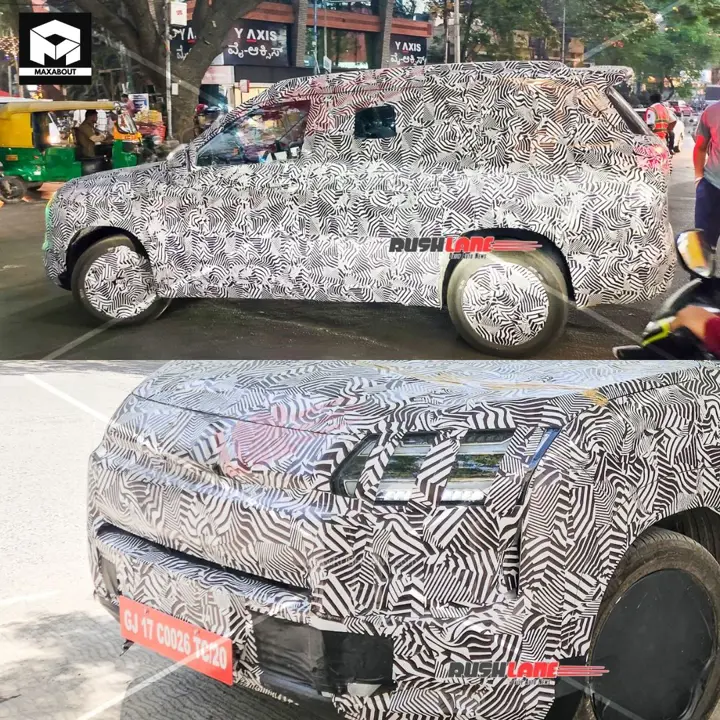 The side profile reveals a lengthy wheelbase, which should translate to generous interior space - critical for Indian families who often travel with extended family members. Ground clearance looks impressive too, something I think is absolutely essential for navigating our unpredictable road conditions, especially during monsoon seasons in cities like Mumbai and Bengaluru.
Compared to MG's current ZS EV, the Starlight appears significantly larger and more premium in its stance. The rear seems to feature connected LED taillights - a trendy design element that gives it a contemporary look. Some other notable elements include:
Flush door handles (likely for improved aerodynamics)
Large panoramic glass roof (visible in some angles)
Aerodynamic wheel design typical of EVs
Prominent roof rails for practical utility
In terms of dimensions, the Starlight EV looks positioned to compete with larger SUVs, offering the space Indian families value without compromising on style or modern EV aesthetics.
Expected Interior Features & Comfort
Based on the spy shots and MG's recent design language, the Starlight EV's interior promises to be quite impressive. The 7-seater configuration appears thoughtfully designed with what looks like captain seats in the second row – a feature many Indian families appreciate for those long highway trips between cities.
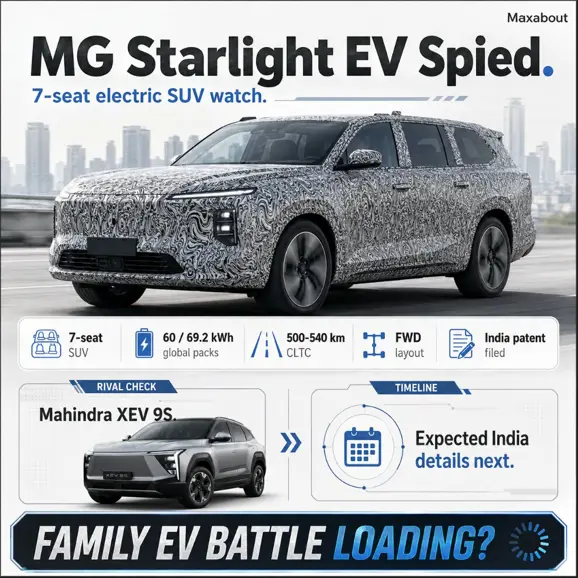 I expect the dashboard to feature a large touchscreen infotainment system, possibly 12-14 inches, with wireless Android Auto and Apple CarPlay. MG typically excels with tech, so we might see their advanced connected car features with expanded capabilities beyond what's in the current Hector and ZS EV.
Comfort Across All Three Rows
What stands out from the proportions is the likely generous legroom, even in the third row – something rare in the Indian market. The large panoramic roof should make the cabin feel airy, addressing the claustrophobic feeling often experienced by third-row passengers.
For comfort features, we can expect:
Multi-zone climate control with vents for all rows
Ventilated seats (at least front row)
Reclining second row for improved comfort
USB charging ports throughout the cabin
Flexible seating configurations for varied luggage needs
Given the ₹30-40 lakh expected price bracket, the interior materials should be premium with soft-touch surfaces, though I suspect MG might use sustainable materials in keeping with the EV ethos. The overall layout appears focused on maximizing interior space – critical for success in our market where family outings often include extended family members.
Projected Battery & Performance Specifications
Based on recent spy shots and industry analysis, the 2027 MG Starlight EV will likely pack a 60-70 kWh battery – substantially larger than most current Indian EV offerings. I expect a real-world range of around 400-450 km, which should comfortably handle weekly commuting in cities like Bangalore or Delhi with just one or two charges.
Charging capabilities will probably include both standard AC charging (likely 7.4 kW) and DC fast charging (around 100-120 kW), enabling a 30-80% charge in approximately 35 minutes at compatible stations. This makes sense for Indian highways where charging infrastructure, while improving, remains limited to major corridors.
Performance-wise, I anticipate:
Twin-motor AWD configuration with around 300-350 bhp combined output
0-100 km/h acceleration in 6-7 seconds – brisk but not excessive
Electronic stability control and multiple drive modes optimized for efficiency
The thermal management system will be crucial given our harsh summers. I expect MG will implement a liquid-cooling solution similar to their existing ZS EV but upgraded for the larger battery. This should prevent performance degradation during peak summer temperatures in regions like Rajasthan or Gujarat where temperatures regularly exceed 40°C.
For Indian conditions, I'd be particularly interested in the ground clearance specs, which need to accommodate our notorious speed breakers and occasional waterlogged streets during monsoons.
Expected Price & Market Positioning
When it comes to pricing, I expect the MG Starlight EV to be positioned in the ₹25-30 lakh range (ex-showroom), with the base variant possibly starting around ₹23 lakh. This would place it strategically between the Tata Nexon EV and higher-end options like the Hyundai Kona.
The TCO calculations make interesting reading for potential buyers. While the upfront cost will be higher than equivalent combustion engine 7-seaters like the Mahindra XUV700 or Tata Safari, the ownership math changes over a 5-year period. Considering electricity costs at roughly ₹8-10 per unit versus petrol at ₹100+ per liter, you're looking at significant running cost savings—potentially ₹3-4 lakh over five years of typical family use.
Maintenance costs should be about 30-40% lower too, with fewer moving parts and no oil changes. The resale value remains a question mark, though I think MG's battery warranty will help protect some value.
States like Delhi, Maharashtra and Gujarat offer additional incentives beyond central government schemes, which could knock off another ₹1-1.5 lakh from the effective price, making the value proposition even stronger for urban families looking for a spacious, modern electric SUV.
How Starlight EV Could Change Family Travel in India
The introduction of a 7-seater EV like the Starlight could fundamentally reshape how Indian families approach travel. For joint families, which are still common across India, having a single vehicle that accommodates everyone while being environmentally friendly solves a real dilemma.
Range anxiety has been the biggest psychological barrier for family EV adoption, especially for those weekend trips to Lonavala from Mumbai or driving from Delhi to Jaipur. With the Starlight's expected 500+ km range, these concerns become less relevant for most intercity travel patterns.
I think the silent cabin will transform the family travel experience too. Imagine driving through chaotic city traffic in Bangalore or Mumbai without engine noise – conversations become easier, children can study in the back, and the overall stress level drops significantly.
For daily use, having a large EV makes practical sense in our urban environments. School runs with multiple kids, grocery shopping, and weekend family outings all become more economical over time. The higher initial investment gets offset by lower running costs, especially as petrol crosses ₹100/liter in most cities.
The charging infrastructure remains challenging, but with home charging becoming more accessible in apartment complexes and public charging networks expanding along highways, the practicality gap between ICE vehicles and EVs for family use is rapidly closing.
Competition & Market Landscape
When the MG Starlight EV launches, it'll enter a segment that's still developing in India. Currently, the 7-seater EV market is quite limited, with the BYD e6 being one of the few options, though it's more MPV than SUV. The upcoming Mahindra BE series and potential Tata Sierra EV (rumored to have a 7-seat variant) will likely be direct competitors.
In the conventional space, the Starlight will face stiff competition from the likes of Toyota Innova Hycross, Mahindra XUV700, and Tata Safari - all established models with strong followings. The hybrid Hycross, in particular, offers a stepping stone between ICE and full electric.
MG's service network is actually quite impressive for its scale in India. With around 300 touchpoints, they've managed decent coverage in metro areas and tier-1 cities. However, compared to Tata and Mahindra's vast networks, there's still ground to cover, especially in smaller towns where EV servicing expertise is crucial.
I think MG's advantage lies in their early commitment to EVs with the ZS EV and Comet. Their experience with electric drivetrains might give the Starlight an edge in reliability compared to first-generation EVs from competitors entering the space.
Conclusion: Is the MG Starlight EV Worth Waiting For?
After weighing everything we know about the Starlight EV, I think it presents an intriguing proposition for Indian families considering the electric transition. With its 7-seater configuration, MG appears to be addressing a genuine gap in our market where large family EVs remain scarce.
If you're planning a new car purchase in the next 6-8 months, waiting for the Starlight makes sense - especially if you need that third row. Expected to launch around mid-2024, we should see more concrete specifications closer to the Auto Expo. The estimated ₹25-30 lakh price tag positions it as premium but potentially good value if the range and features align with expectations.
However, those with immediate needs might consider existing options like the Tata Nexon EV or upcoming Mahindra XUV400 instead. The real question remains: are Indian families ready to commit to large electric SUVs? And will infrastructure development keep pace with these ambitious vehicles? As charging networks expand beyond highways into residential areas, the practicality of family EVs like the Starlight will only improve.
No comments yet
Be the first to share your thoughts!
Want to read more automotive news?
Stay updated with the latest car launches, reviews, and industry insights.
Browse All News