
Maruti Targets 36-Month Car Development Cycle
Maruti Suzuki's 36 month development cycle target could become one of the most important parts of its next product push. The company is reportedly working to reduce vehicle development time from about 48 months to 36 months, a 25 percent faster cycle, while preparing nine new models over the next th...
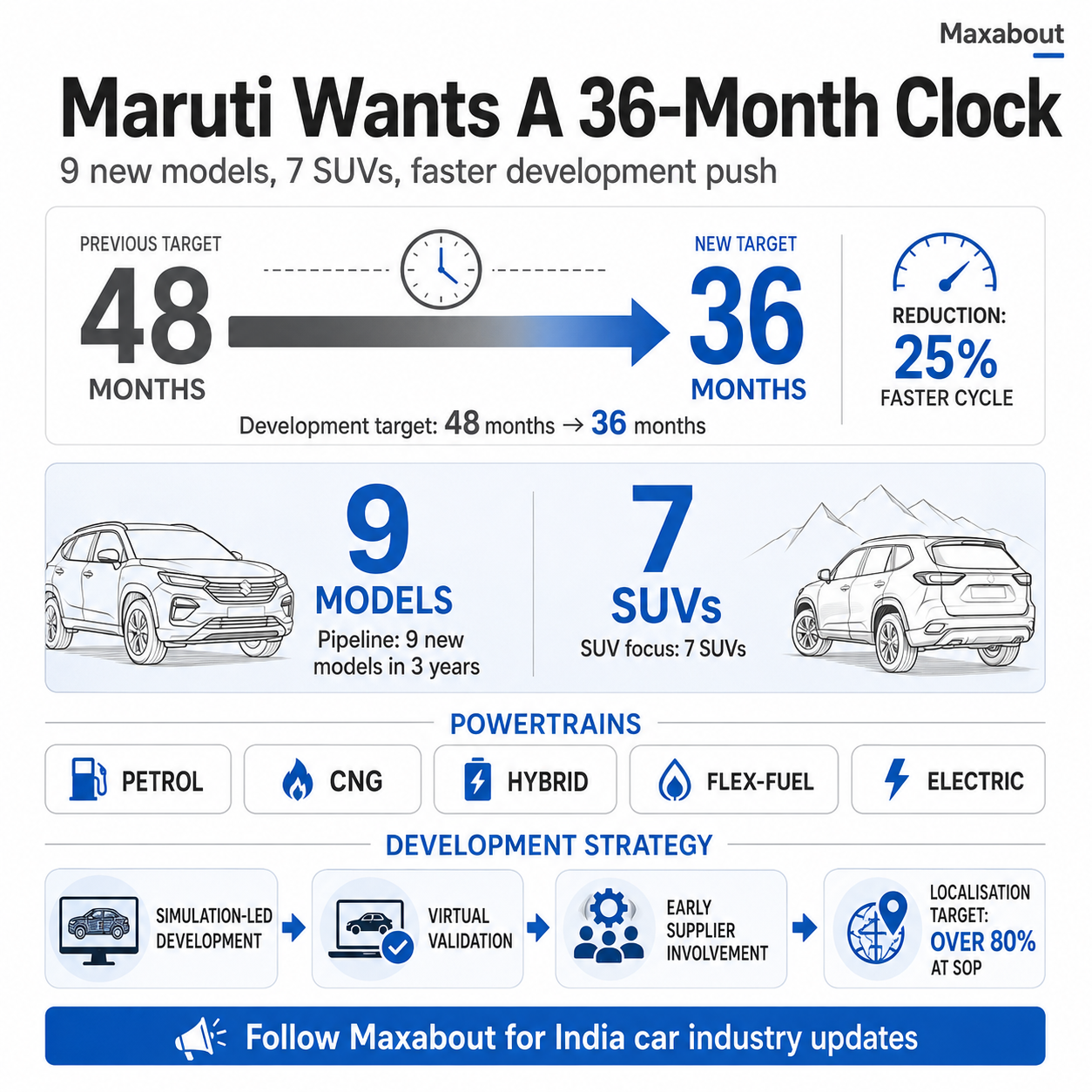
Maruti Suzuki's 36 month development cycle target could become one of the most important parts of its next product push. The company is reportedly working to reduce vehicle development time from about 48 months to 36 months, a 25 percent faster cycle, while preparing nine new models over the next three years. The pipeline is expected to be SUV-heavy, with seven SUVs planned, and it points to a more complex future across petrol, CNG, hybrid, flex-fuel and electric powertrains.
What You Need To Know
Development target: 36 months, down from 48 months.
Speed improvement: About 25 percent faster product development.
Pipeline: Nine new models over the next three years.
SUV focus: Seven SUVs are part of the upcoming programme.
Powertrain spread: Petrol, CNG, hybrid, flex-fuel and electric workstreams are expected.
Why A 36-Month Cycle Matters
For India's largest carmaker, a shorter development cycle is not just an internal efficiency target. It can decide how quickly Maruti responds to changing SUV demand, emissions rules, hybrid adoption, EV readiness and buyer expectations. A 48-month cycle can feel slow in a market where rivals update designs, features and powertrains quickly. A 36-month target gives Maruti a better chance to close product gaps before they become market-share gaps.
Key Facts From The Pipeline
| Area | Reported Direction | Why It Matters |
|---|---|---|
| Development cycle | 48 months to 36 months | Faster response to market shifts |
| New models | Nine over three years | Higher launch cadence |
| SUVs | Seven SUVs planned | Targets India's strongest passenger-car growth area |
| Powertrains | Petrol, CNG, hybrid, flex-fuel, electric | Supports different buyer and regulation needs |
| Localisation | Over 80 percent at SOP target | Can improve cost control and supplier readiness |
The Hard Part: Speed Without Guesswork
Compressing development timelines is difficult because modern vehicles need more validation, more software work and more supplier coordination than before. The reported approach includes simulation-led development, virtual validation, digital testing, AI/ML analysis and earlier supplier involvement. That means the goal is not simply to rush cars to market; it is to shift more decisions and testing earlier in the process.
What It Means For Buyers
For buyers, the biggest practical impact could be a fresher Maruti lineup, especially in SUVs. A faster cycle may help bring newer features, updated cabins, more safety equipment and wider powertrain options sooner. But the exact model names, prices and launch dates are not confirmed in this card, so the right takeaway is strategic: Maruti appears to be preparing for a faster and broader product rhythm.
FAQs
What is Maruti's reported new vehicle development target?
Maruti Suzuki is reportedly targeting a 36-month vehicle development cycle, down from about 48 months.
How many new Maruti models are planned?
The reported pipeline includes nine new models over the next three years.
How many SUVs are part of the plan?
The upcoming programme reportedly includes seven SUVs.
Are exact model names confirmed?
No. This card does not confirm exact model names, prices or launch dates, so those details should not be treated as official.
Maruti's 36-month development-cycle target matters because it shows how seriously the company is treating launch speed, SUV demand and powertrain complexity. If executed well, the plan could make Maruti's next three years far more aggressive than a normal product refresh cycle.
Maxabout Team
Editorial Team
Specializes in: Automotive News, Reviews, Analysis
Want to read more automotive news?
Stay updated with the latest car launches, reviews, and industry insights.
Browse All News