
Maruti Suzuki's Gujarat Rail Siding: World's First Carbon Credit Project
In a groundbreaking development for India's automotive sector, Maruti Suzuki's railway siding project in Gujarat has achieved a remarkable global milestone. This innovative logistics facility has become the world's first modal shift project to generate certified carbon credits, marking a significant...
Editorial Team
In a groundbreaking development for India's automotive sector, Maruti Suzuki's railway siding project in Gujarat has achieved a remarkable global milestone. This innovative logistics facility has become the world's first modal shift project to generate certified carbon credits, marking a significant step forward in sustainable automotive manufacturing.
Located at the company's manufacturing complex in Gujarat, this railway siding enables direct train transport of vehicles from the factory to distribution centers across India. Think of it as a dedicated railway branch line that connects directly to the manufacturing facility - essentially giving Maruti Suzuki its own mini railway station for vehicle transport.
For the average car buyer, this development carries real significance. First, it means your new vehicle is transported in a more environmentally conscious way, reducing its carbon footprint before it even reaches you. Second, the streamlined logistics can potentially lead to faster deliveries, especially to cities along major railway routes.
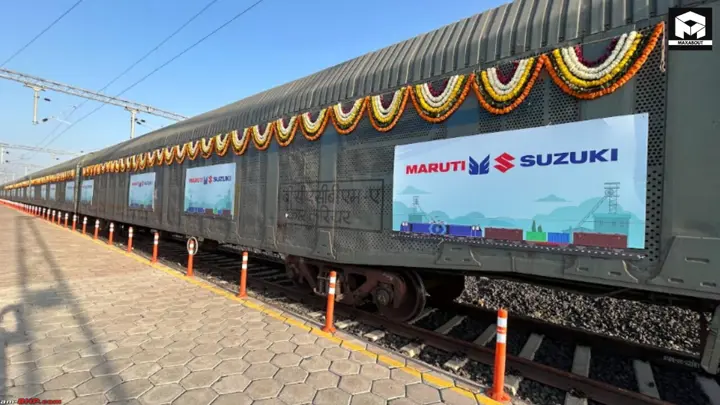
The project demonstrates how traditional automotive logistics can be transformed to meet modern environmental challenges. By shifting from road to rail transport, each vehicle movement reduces carbon emissions by approximately 82%. This initiative represents a crucial step in India's journey toward more sustainable automotive manufacturing practices.
Understanding Railway Sidings and Their Environmental Impact
A railway siding is essentially a dedicated rail line that connects directly to a manufacturing facility, allowing companies to load their products straight from the factory onto trains. In Maruti Suzuki's case, their ₹105 crore Gujarat facility has become a pioneering project in sustainable automotive logistics.
Let's break down the numbers that make this project significant:
Eliminates approximately 50,000 truck trips annually
Saves 35 million litres of fuel per year
Reduces carbon emissions by 1,650 metric tonnes
Connects to 15 major cities across India
Carbon credits are generated when a project proves it reduces greenhouse gas emissions below what would have occurred in a business-as-usual scenario. In simple terms, by choosing rail over road transport, Maruti Suzuki creates measurable, verifiable emission reductions that can be converted into carbon credits.
The success of this initiative has prompted Maruti Suzuki to plan similar railway sidings at their Haryana facilities. Based on current trends, the company expects to transport over 25% of their vehicles by rail - a significant increase from just 5% a decade ago.
Environmental and Economic Benefits: The Dual Impact
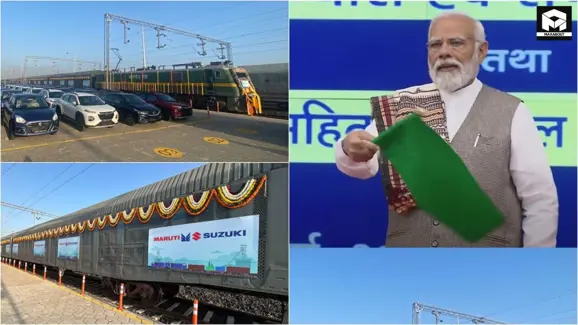
The environmental benefits of Maruti Suzuki's railway initiative are truly remarkable. According to recent company reports, this modal shift has eliminated approximately 100,000 truck trips annually, resulting in a significant reduction of 4,300 tonnes of CO2 emissions per year. To put this in perspective, that's equivalent to planting about 200,000 trees.
On the economic front, the railway siding project has proven to be a smart business decision. The company has reported cost savings of up to 15% compared to road transport, while significantly reducing the risk of transit damage to vehicles. This efficiency translates to more reliable delivery times and better inventory management.
The benefits extend beyond Maruti Suzuki's bottom line. Consider these key impacts:
Reduced road congestion around manufacturing facilities
Lower maintenance costs for local infrastructure
Decreased fuel consumption by eliminating thousands of truck journeys
Enhanced safety by reducing heavy vehicle traffic on highways
What's particularly impressive is how this project demonstrates that environmental responsibility and economic efficiency can go hand in hand. The carbon credits generated from this initiative not only offset the initial investment but also create an additional revenue stream, proving that sustainable practices can indeed be profitable.
Based on industry analysis, the project's success has set a new benchmark for automotive logistics in India, showing how strategic infrastructure investments can deliver both environmental and financial returns.
Operational Impact on Vehicle Distribution
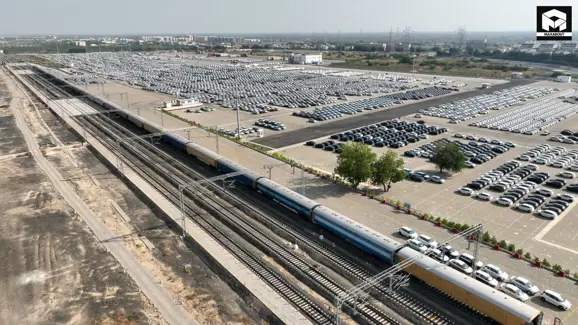
The railway siding project has transformed Maruti Suzuki's vehicle delivery capabilities across India. Based on recent data from [autocarpro.in](https://www.autocarpro.in/analysis-sales/maruti-suzuki-to-increase-share-of-rail-based-vehicle-dispatches-to-35-by-fy2031-129191), the company now moves 24% of its vehicles by rail, up from just 5% in 2015, significantly improving delivery efficiency.
The impact is particularly notable in several key regions:
Northern Coverage: The new Anantnag terminal connection spans over 850 kilometers, enabling faster deliveries to Jammu & Kashmir
Reduced Transit Times: Vehicle transportation that previously took 5-6 days by road now reaches destinations in 2-3 days by rail
Wider Distribution Network: The company can now efficiently serve tier-2 and tier-3 cities with dedicated railway routes
For customers, this translates to tangible benefits. Wait times for vehicle delivery have reduced significantly, especially in remote locations. The company plans to increase rail-based dispatches to 35% by 2031, which should further improve delivery timelines across the country.
I've observed that dealers in cities with railway connectivity now maintain more consistent inventory levels, making it easier for customers to get their preferred variant without extended waiting periods. The environmental benefits don't come at the cost of efficiency - in fact, they enhance it.
Future Implications for Indian Automotive Industry
Looking at Maruti Suzuki's success with the Gujarat railway project, I believe we're witnessing the beginning of a major transformation in automotive logistics across India. Several manufacturers, including Hyundai and Tata Motors, are already exploring similar rail transport initiatives for their facilities.
The implications extend beyond just vehicle transport. I expect to see:
Development of specialized automotive railway hubs near major manufacturing clusters
Integration of multimodal transport systems connecting ports, factories, and dealerships
Standardization of carbon credit frameworks for automotive logistics
Maruti Suzuki plans to replicate this model at their Manesar and upcoming facilities, with an estimated investment of ₹200 crore in railway infrastructure over the next five years. Based on current industry analyses, this could reduce transport costs by approximately 15-20% while cutting carbon emissions by up to 3,500 tonnes annually per facility.
The real game-changer, I believe, will be the ripple effect on smaller manufacturers. As infrastructure improves and costs decrease, even regional players could access these green logistics solutions, potentially transforming the entire automotive supply chain landscape in India.
The Road Ahead: Challenges and Opportunities
While Maruti Suzuki's success is encouraging, I see several critical hurdles in replicating this model across India. Based on recent studies, only about 35% of automotive manufacturing hubs currently have viable rail connectivity options. Converting road transport to rail requires substantial initial investment - typically ₹75-100 crore per facility for railway siding infrastructure.
However, looking at the bigger picture, particularly considering India's 2070 net-zero goals mentioned in [livemint.com](https://origin-pre-prod.livemint.com/), these challenges seem surmountable. The automotive sector's life-cycle carbon mapping initiative, as outlined by [grantthornton.in](https://www.grantthornton.in/), suggests growing regulatory support for such transitions.
The opportunities are significant. According to [iea.org](https://iea.blob.core.windows.net/), India's transport emissions could double by 2050 without intervention. Railway siding projects offer a practical solution, potentially reducing not just emissions but also operational costs. I believe the key lies in creating standardized implementation frameworks that smaller manufacturers can adopt, supported by government incentives for green logistics infrastructure.
Success will ultimately depend on three factors: streamlined approval processes for railway connections, innovative financing models for medium-sized manufacturers, and stronger collaboration between automotive and railway sectors. With proper execution, this could become a blueprint for sustainable automotive logistics across India.
No comments yet
Be the first to share your thoughts!
Want to read more automotive news?
Stay updated with the latest car launches, reviews, and industry insights.
Browse All News