
Mahindra XEV 9S vs 7-Seater EV Rivals: Price & Specs Compared 2025
The Electric Challenger Enters a Crowded ArenaMahindra's XEV 9S represents a bold statement in India's competitive 7-seater SUV segment. I've watched this space evolve dramatically over the past few years, and the arrival of a premium electric option changes the conversation entirely. But here's the...
Automotive Writer
The Electric Challenger Enters a Crowded Arena
Mahindra's XEV 9S represents a bold statement in India's competitive 7-seater SUV segment. I've watched this space evolve dramatically over the past few years, and the arrival of a premium electric option changes the conversation entirely. But here's the thing – most buyers shopping for spacious family SUVs are still weighing traditional ICE vehicles against newer electric alternatives.
The XEV 9S doesn't just compete on being electric. It's positioning itself as a tech-forward, premium offering that happens to run on batteries. That's a crucial distinction, because families shopping in this segment prioritize space, comfort, features, and value above all else.
Let me walk you through how the XEV 9S measures up against the established players that have been dominating this space.
Price Positioning: Where Does Your Money Go?
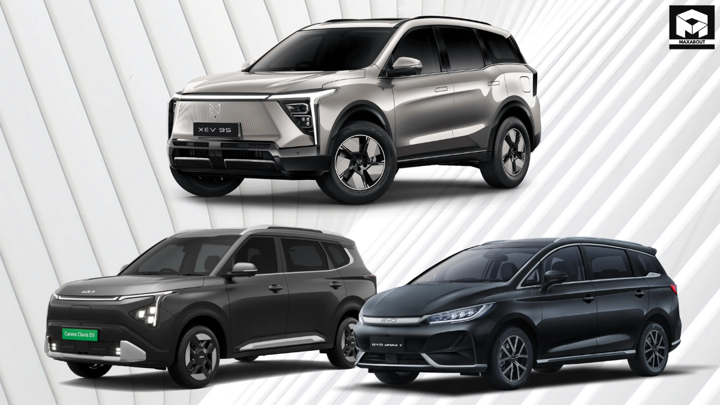
Pricing is where things get interesting. The XEV 9S is expected to launch with a starting price around ₹35-40 lakhs (ex-showroom), positioning it firmly in premium territory. That's significantly higher than conventional 7-seaters, and there's a reason for that.
Comparing the Price Landscape
Here's how the competition typically lines up in terms of pricing:
- Tata Safari: ₹15.50 - 25.00 lakhs (ex-showroom)
- MG Hector Plus: ₹17.00 - 23.00 lakhs (ex-showroom)
- Hyundai Alcazar: ₹16.80 - 21.00 lakhs (ex-showroom)
- Mahindra XEV 9S: Expected ₹35.00 - 40.00 lakhs (ex-showroom)
At first glance, you might think the XEV 9S is overpriced. But I'd argue you're not comparing apples to apples here. The electric powertrain, advanced battery technology, and the premium tech suite justify a significant portion of that premium. However, that doesn't mean it's automatically worth it for every buyer.
The Total Cost of Ownership Angle
What many buyers overlook is the running cost equation. Electric vehicles typically offer substantially lower running costs – we're talking about ₹1-2 per kilometer versus ₹6-8 per kilometer for diesel SUVs. If you're clocking 15,000-20,000 kilometers annually, that difference adds up to approximately ₹90,000-₹1,20,000 saved per year on fuel alone.
Maintenance costs for EVs are generally lower too, since there are fewer moving parts and no oil changes required. Over a 5-year ownership period, the total cost of ownership gap narrows considerably.
Specification Showdown: What You Actually Get
Specs tell a story, but only if you know what to look for. Let me break down the critical numbers that actually matter for daily use.
Dimensions and Space
The XEV 9S measures approximately 4,790mm in length, with a wheelbase around 2,900mm. That's competitive with its rivals:
| Model | Length (mm) | Wheelbase (mm) | Seating Configuration |
|---|---|---|---|
| Mahindra XEV 9S | ~4,790 | ~2,900 | 6/7-seater |
| Tata Safari | 4,661 | 2,741 | 6/7-seater |
| MG Hector Plus | 4,655 | 2,750 | 6/7-seater |
| Hyundai Alcazar | 4,500 | 2,760 | |
| 6/7-seater |
That longer wheelbase on the XEV 9S should translate to better third-row legroom – something that's often compromised in 7-seaters. Based on what we typically see with extended wheelbases, the third row should actually be usable for adults on longer journeys, not just a cramped kids-only zone.
Powertrain and Performance
The XEV 9S is expected to pack a dual-motor setup producing around 360 PS of combined power. That's substantially more than any of its ICE rivals:
- Safari: 170 PS / 350 Nm (2.0L diesel)
- Hector Plus: 170 PS / 350 Nm (2.0L diesel)
- Alcazar: 160 PS / 253 Nm (1.5L turbo-petrol) or 115 PS / 250 Nm (1.5L diesel)
Here's where EVs fundamentally change the game. That instant torque delivery means the XEV 9S will feel dramatically quicker in real-world driving. Overtaking on highways, merging into traffic, climbing ghats – all of these become effortless experiences.
Battery and Range Reality
Reports suggest the XEV 9S will feature a battery pack in the 60-80 kWh range, potentially delivering 400-500 km on a full charge. Now, I always recommend taking manufacturer range claims with a grain of salt. Real-world range typically sits around 70-80% of claimed figures, especially with full passenger loads and AC running.
For comparison, your ICE rivals typically offer 800-1,000 km range on a full tank. That's the electric vehicle compromise you need to consider carefully based on your driving patterns.
Features and Technology: The Premium Differentiator
Mahindra appears to be loading the XEV 9S with premium features that position it above conventional competitors.
Expected Technology Highlights
- Dual-screen setup (likely 12.3-inch digital cluster and infotainment)
- Advanced driver assistance systems (ADAS) Level 2
- Connected car technology with OTA updates
- Premium audio system
- Panoramic sunroof
- Wireless charging and multiple USB-C ports
- Ambient lighting with customization
The ICE rivals offer decent feature sets too – especially the Safari and Alcazar at their top trims. But the integration of ADAS and OTA capabilities gives the XEV 9S a technological edge that'll age better over time.
What Actually Matters Daily
From my understanding of what SUV buyers prioritize, climate control effectiveness matters more than fancy light shows. Third-row AC vents are non-negotiable. Charging port placement needs to be practical. These are the details that separate genuinely well-thought-out vehicles from spec-sheet warriors.
The established players have refined their offerings through multiple iterations based on user feedback. Mahindra's challenge is getting those details right from day one with the XEV 9S.
The Real-World Usage Question
Here's where theory meets reality. Can the XEV 9S actually replace a conventional 7-seater for most families?
Charging Infrastructure Considerations
If you've got home charging sorted, the XEV 9S makes tremendous sense for daily commutes and weekend drives within your city or region. The challenge comes with longer road trips. India's charging infrastructure is improving, but it's nowhere near as convenient as fuel stations yet.
Planning a Pune to Goa trip? You'll need to map charging stops. Heading to a remote hill station? Better check charging availability first. Your diesel Safari or Hector Plus? Just fill up and go.
The Family Hauler Test
For hauling kids to school, weekend mall runs, and monthly highway trips to visit relatives within 200-300 km, the XEV 9S should handle everything beautifully. That silent operation will be genuinely appreciated during early morning drives.
But families who regularly undertake 800+ km road trips or visit areas with uncertain charging infrastructure might find the conventional options more practical – at least for now.
Value Proposition: Who Should Consider What
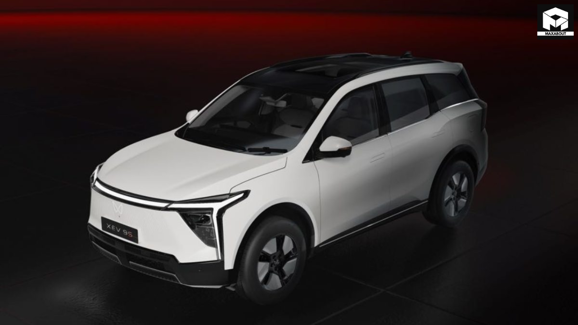
Let me break this down practically based on different buyer profiles.
The XEV 9S Makes Sense If You:
- Have reliable home or office charging access
- Primarily drive within city limits with occasional highway trips
- Want cutting-edge technology and premium features
- Value lower running costs over upfront savings
- Are environmentally conscious and prefer electric mobility
- Can handle the higher upfront investment
Conventional Rivals Make More Sense If You:
- Frequently undertake long-distance road trips (500+ km)
- Don't have reliable charging infrastructure access
- Need maximum flexibility without range anxiety
- Have a tighter upfront budget (₹15-25 lakhs)
- Prefer proven, refined platforms with established service networks
The Verdict: Different Winners for Different Buyers
There's no universal "best" choice here – it genuinely depends on your specific circumstances.
The Tata Safari offers the most refined driving experience among ICE options, with strong build quality and a comprehensive feature set. It's my top recommendation for buyers wanting a proven, conventional 7-seater.
The Hyundai Alcazar brings that Korean attention to detail and reliability, with possibly the best after-sales experience in this segment. If peace of mind matters most, this is your pick.
The MG Hector Plus delivers maximum features per rupee, though quality perception varies. It's worth considering if you want loaded variants without stretching your budget.
The Mahindra XEV 9S? It's the forward-looking choice. If your usage pattern fits electric vehicle strengths and you're excited about the technology shift, that premium pricing buys you a genuinely different experience. The silence, the performance, the tech integration – it's all a substantial step above.
But be honest about your needs. Don't buy an EV because it's trendy if your usage demands a conventional powertrain. And don't stick with dinosaur juice just because it's familiar if electric actually fits your life better.
Frequently Asked Questions
Is the Mahindra XEV 9S worth the premium over conventional 7-seaters?
It depends on your usage pattern. If you have charging access and primarily drive within the vehicle's range, the lower running costs and superior technology can justify the premium over 5-7 years of ownership. For frequent long-distance travelers, conventional options offer better practicality currently.
What's the real-world range I can expect from the XEV 9S?
While official figures may claim 400-500 km, real-world range with full passenger load, AC usage, and mixed driving typically falls around 320-400 km. Always plan trips assuming 70-80% of claimed range for realistic expectations.
How does charging time compare to refueling?
Fast charging can replenish 80% battery in 30-45 minutes, while regular fuel stops take 5 minutes. However, if you charge overnight at home, you start every day with a "full tank" – something impossible with conventional vehicles. It's a different paradigm rather than a direct comparison.
Which conventional 7-seater offers the best value?
The Tata Safari offers the best overall package of refinement, features, space, and brand trust. The Hyundai Alcazar provides superior after-sales confidence. The MG Hector Plus maximizes features per rupee spent. Your priorities determine the best value.
Will the XEV 9S hold its resale value?
EV resale values remain uncertain in India's developing market. Battery degradation concerns and rapid technology advancement typically impact electric vehicle residuals more than conventional cars. Consider this carefully if you plan to sell within 3-5 years.
Final Thoughts: Choose Based on Your Reality
The Mahindra XEV 9S represents an exciting evolution in India's SUV market. It's genuinely premium, technologically advanced, and offers a compelling ownership experience – if your usage pattern aligns with electric vehicle strengths.
The conventional rivals aren't inferior choices. They're proven, practical, and often more suitable for diverse Indian driving conditions and infrastructure realities. The Safari, Alcazar, and Hector Plus have earned their market positions through consistent delivery of what families actually need.
My advice? Test drive everything within your budget. Honestly assess your daily driving patterns, charging access, and long-distance travel frequency. Calculate real ownership costs over your intended holding period. The right choice will become obvious once you strip away the marketing noise and focus on your actual requirements.
No comments yet
Be the first to share your thoughts!
Want to read more automotive news?
Stay updated with the latest car launches, reviews, and industry insights.
Browse All News