

Made-in-India EVs Go Global: Q1 Exports Cross 15,000 Units as Global Demand Soars
India's electric-car exports rose to 15,641 units in the April-June quarter, compared with 1,122 units a year earlier. The roughly 14-fold jump marks a sharp change in scale for India-made EV shipments, with Maruti Suzuki accounting for most of the quarter's volume while Tata Motors and Mahindra pre...
India's electric-car exports rose to 15,641 units in the April-June quarter, compared with 1,122 units a year earlier. The roughly 14-fold jump marks a sharp change in scale for India-made EV shipments, with Maruti Suzuki accounting for most of the quarter's volume while Tata Motors and Mahindra prepare phased expansion into more overseas markets.
What you need to know
Q1 EV exports: 15,641 units.
Year-ago quarter: 1,122 units.
Maruti shipments: 15,210 EVs sent to 47 countries.
Largest destination: the United Kingdom.
Why the 14-fold increase stands out
The latest quarter alone exceeded half of the 28,652 electric cars exported during FY2026. That suggests India's EV export story is moving beyond occasional shipments toward repeatable industrial scale, although one quarter does not by itself establish a permanent growth rate.
Maruti's contribution was decisive: its shipments represented the overwhelming majority of the reported Q1 total. Tata and Mahindra are also preparing to expand in additional right-hand-drive markets, which could make the export base less concentrated over time.
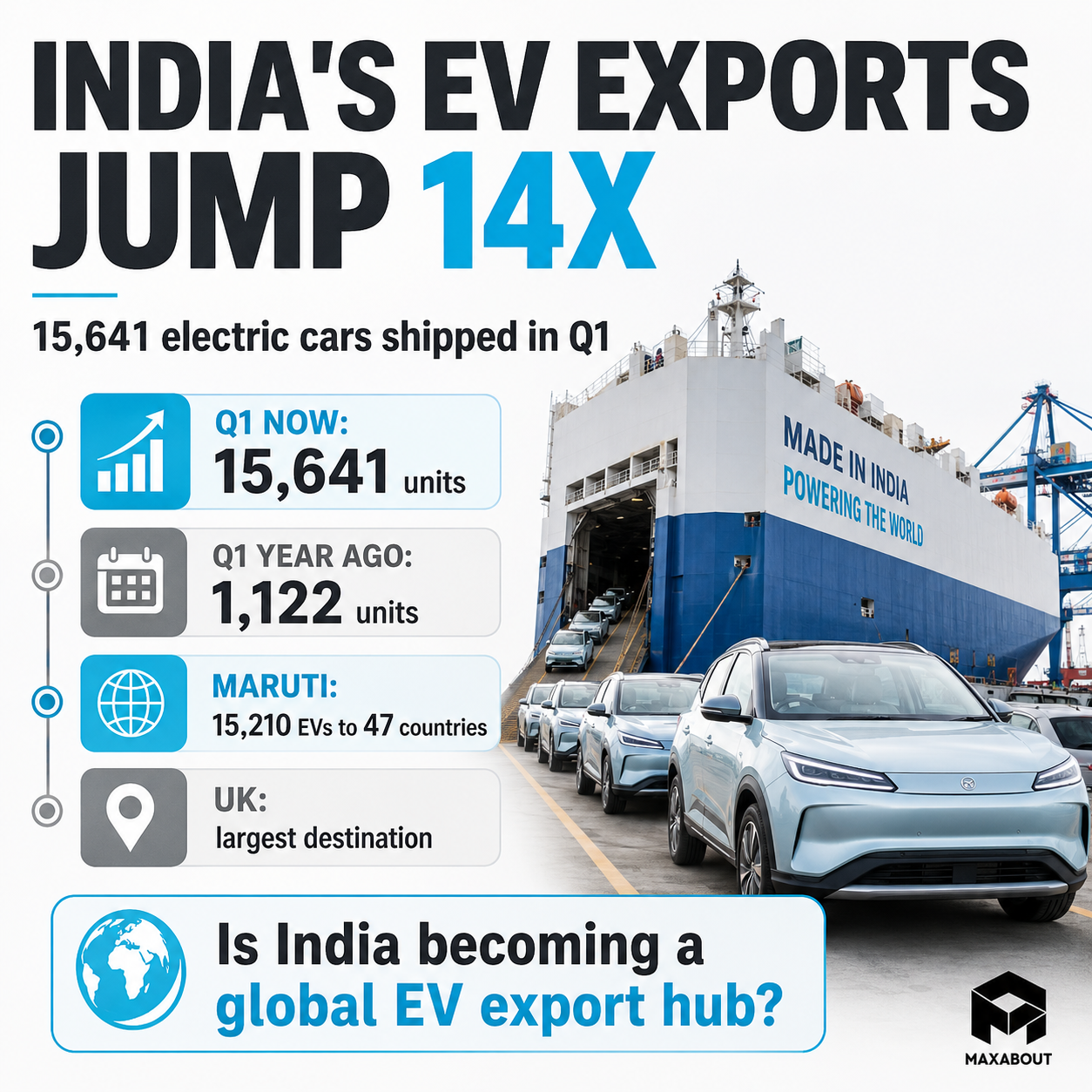
India EV export facts
| Metric | Reported figure |
|---|---|
| April-June EV exports | 15,641 units |
| Same quarter a year earlier | 1,122 units |
| Approximate growth | 14-fold |
| FY2026 EV exports | 28,652 units |
| Maruti Q1 shipments | 15,210 units to 47 countries |
| Largest destination | United Kingdom |
What it means for India's auto industry
Higher export volumes can improve plant utilisation, spread development costs across more vehicles and strengthen the case for local EV components. Global shipments also expose Indian factories to demanding quality, safety and delivery standards. The long-term opportunity depends on sustained orders, competitive logistics, battery localisation and the ability of multiple manufacturers to build durable overseas distribution.
For Indian buyers, export success does not automatically guarantee lower prices, but larger production runs can support better economies of scale and faster product maturity. It may also encourage carmakers to engineer India-built EVs for both domestic and international requirements from the outset.
What to watch next
Whether quarterly exports remain elevated after the initial surge.
How quickly Tata and Mahindra enter additional right-hand-drive markets.
Whether more destinations diversify volumes beyond the UK.
Growth in locally sourced batteries, motors and power electronics.
FAQs
How many electric cars did India export in Q1?
Reported exports reached 15,641 units in the April-June quarter.
Which company led India's EV exports?
Maruti Suzuki led the quarter with 15,210 EV shipments to 47 countries.
Does a 14-fold jump mean exports will keep growing at the same rate?
No. It shows a very strong year-on-year comparison, but future growth depends on sustained demand, model rollouts and expansion into more markets.
India's 14-fold EV export surge is an important manufacturing signal. The next test is whether the industry can convert one exceptional quarter into diversified, repeatable global growth.
Maxabout Team
Editorial Team
Specializes in: Automotive News, Reviews, Analysis
Want to read more automotive news?
Stay updated with the latest car launches, reviews, and industry insights.
Browse All News