

Indofast Energy & Hala Mobility Partner to Deploy 40,000 EVs in India by 2027
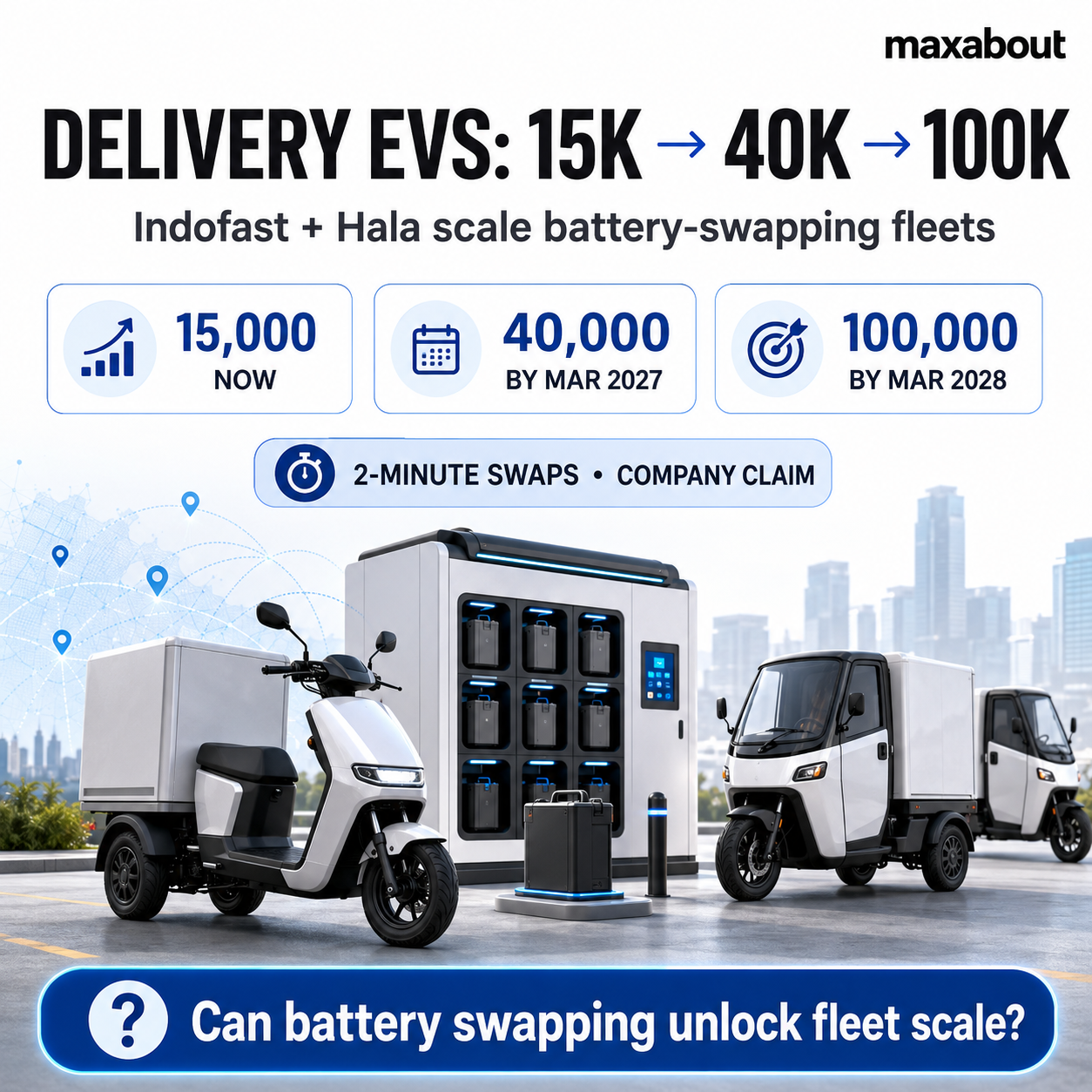
Indofast Energy and Hala Mobility are scaling their battery-swapping fleet partnership after deploying 15,000 electric vehicles in under a year. The companies now target 40,000 delivery EVs by March 2027 and 100,000 by March 2028. The plan matters because commercial riders depend on high daily utili...
Indofast Energy and Hala Mobility are scaling their battery-swapping fleet partnership after deploying 15,000 electric vehicles in under a year. The companies now target 40,000 delivery EVs by March 2027 and 100,000 by March 2028. The plan matters because commercial riders depend on high daily utilisation, while battery swapping aims to reduce charging downtime. Deployment, network and cost figures are company-reported rather than independently audited.
What you need to know
Current deployment: 15,000 vehicles in under one year.
March 2027 target: 40,000 vehicles.
March 2028 target: 100,000 vehicles.
Current cities: Hyderabad, Bengaluru, Delhi NCR and Mumbai.
Next cities: Pune, Chennai and Jaipur.
How the fleet expansion is planned
| Milestone | Target | Status |
|---|---|---|
| Initial scale-up | 15,000 EVs | Company says deployed |
| Next phase | 40,000 EVs by March 2027 | Target |
| Longer-term phase | 100,000 EVs by March 2028 | Target |
Why battery swapping matters for delivery riders
Delivery riders who cover 80–100 km a day need predictable uptime. Indofast says a battery exchange takes about two minutes, potentially allowing riders to return to work faster than with conventional charging. The company also claims operating costs can be up to 40% lower than comparable petrol vehicles; actual savings will vary with vehicle use, subscription pricing, route and local energy economics.
Network footprint and expansion
Indofast reports more than 1,900 swap stations across 24 cities. The partnership currently focuses on Hyderabad, Bengaluru, Delhi NCR and Mumbai, with Pune, Chennai and Jaipur named for expansion. Reaching the stated fleet targets will depend on reliable station availability, compatible vehicles and enough demand from last-mile operators.
What it means for India's EV industry
If the targets are met, the programme would provide a notable real-world test of battery swapping at commercial scale. The key measure will not be vehicle deployment alone, but sustained utilisation: swap availability, battery reliability, rider economics and service consistency will determine whether the model can expand beyond major delivery hubs.
FAQs
How many EVs have Indofast and Hala deployed?
The companies report 15,000 vehicles deployed in under a year.
What is the 2027 target?
They aim to reach 40,000 deployed EVs by March 2027.
How fast is a battery swap?
Indofast says an exchange takes about two minutes. This is a company claim and may vary by station and operating conditions.
Which cities are next?
Pune, Chennai and Jaipur are named as planned expansion markets.
Conclusion
The Indofast Hala delivery EV partnership is moving from an early rollout toward a much larger 40,000-vehicle target. Its progress will offer a useful signal on whether battery swapping can deliver dependable uptime and viable costs for India's last-mile fleets.
Maxabout Team
Editorial Team
Specializes in: Automotive News, Reviews, Analysis
Want to read more automotive news?
Stay updated with the latest car launches, reviews, and industry insights.
Browse All News