

India De-licenses V2X and 77-81 GHz Radar Bands: What It Means for ADAS and Auto Industry
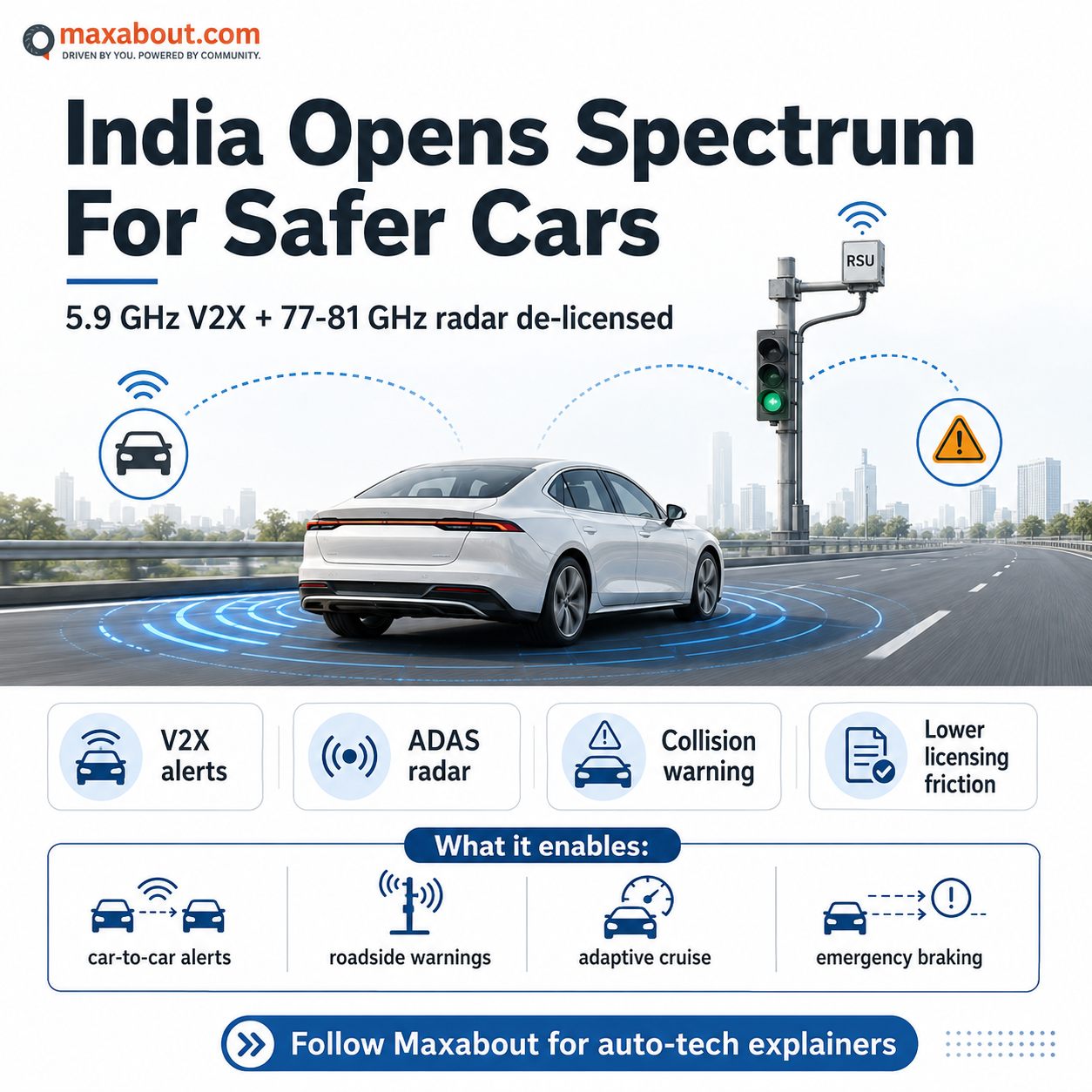
India has opened an important path for connected-car safety by de-licensing spectrum used for vehicle-to-everything (V2X) communication and automotive radar. The move covers the 5.9 GHz V2X band and the 77-81 GHz radar band, two frequency ranges that matter for future ADAS, collision warning, adapti...
India has opened an important path for connected-car safety by de-licensing spectrum used for vehicle-to-everything (V2X) communication and automotive radar. The move covers the 5.9 GHz V2X band and the 77-81 GHz radar band, two frequency ranges that matter for future ADAS, collision warning, adaptive cruise control, and safer road-infrastructure communication.
What you need to know
Key update: India has de-licensed spectrum for 5.9 GHz V2X and 77-81 GHz automotive radar applications.
Status: The update is a policy and licensing change; it does not mean every car will immediately get V2X or advanced radar hardware.
Why it matters: Automakers and suppliers can plan around globally used safety-tech bands with lower licensing friction.
What 5.9 GHz V2X does
V2X allows vehicles to exchange safety information with other vehicles and roadside infrastructure. In practical terms, this can support alerts for traffic signals, road hazards, emergency braking events, blind intersections, and future connected-highway systems.
Why the 77-81 GHz radar band matters
The 77-81 GHz band is widely associated with automotive radar. Radar sensors help a vehicle detect distance, speed, and movement around it, which is why the band is important for features such as automatic emergency braking, adaptive cruise control, blind-spot detection, collision warnings, and automated parking support.
| Band | Primary use | Possible vehicle benefit |
|---|---|---|
| 5.9 GHz | V2X communication | Car-to-car and car-to-infrastructure alerts |
| 77-81 GHz | Automotive radar | ADAS sensing, emergency braking, adaptive cruise |
What it means for Indian buyers
For buyers, the immediate takeaway is not a new feature list on a specific car. The bigger story is that India is creating a clearer regulatory path for safety hardware and connected-road technology. Over time, this can make it easier for brands to offer globally aligned ADAS and V2X-ready systems in India without a separate licensing hurdle for these bands.
What to watch next
Automaker announcements around V2X-ready platforms or radar-based ADAS upgrades.
Road-infrastructure pilots that use connected traffic signals, warning beacons, or highway safety alerts.
More affordable ADAS hardware as suppliers standardise around common global frequency bands.
FAQs
Does this make V2X mandatory in India?
No. The update removes a licensing barrier for the bands; it does not by itself mandate V2X hardware in all vehicles.
Will current cars receive these features automatically?
No. V2X and radar-based ADAS require suitable sensors, processors, software, and in many cases supporting road infrastructure.
Why is 77-81 GHz important for ADAS?
It is a key automotive radar range used globally for sensing nearby objects and supporting safety features like adaptive cruise control and emergency braking.
The India V2X radar spectrum update is a technical policy change, but its impact could be very practical: fewer barriers for safer, more connected vehicles and a stronger foundation for future ADAS adoption in India.
Maxabout Team
Editorial Team
Specializes in: Automotive News, Reviews, Analysis
Want to read more automotive news?
Stay updated with the latest car launches, reviews, and industry insights.
Browse All News