
Hyundai Low-Speed EV Rule Limits Under Review
India's low-speed electric two-wheeler rules are back under scrutiny, with testing and certification agencies reviewing whether the current exemption framework still fits today's market. The present category is built around a 250W motor output, 60kg unladen weight and 25kph top-speed cap. The top-sp...
Editorial Team
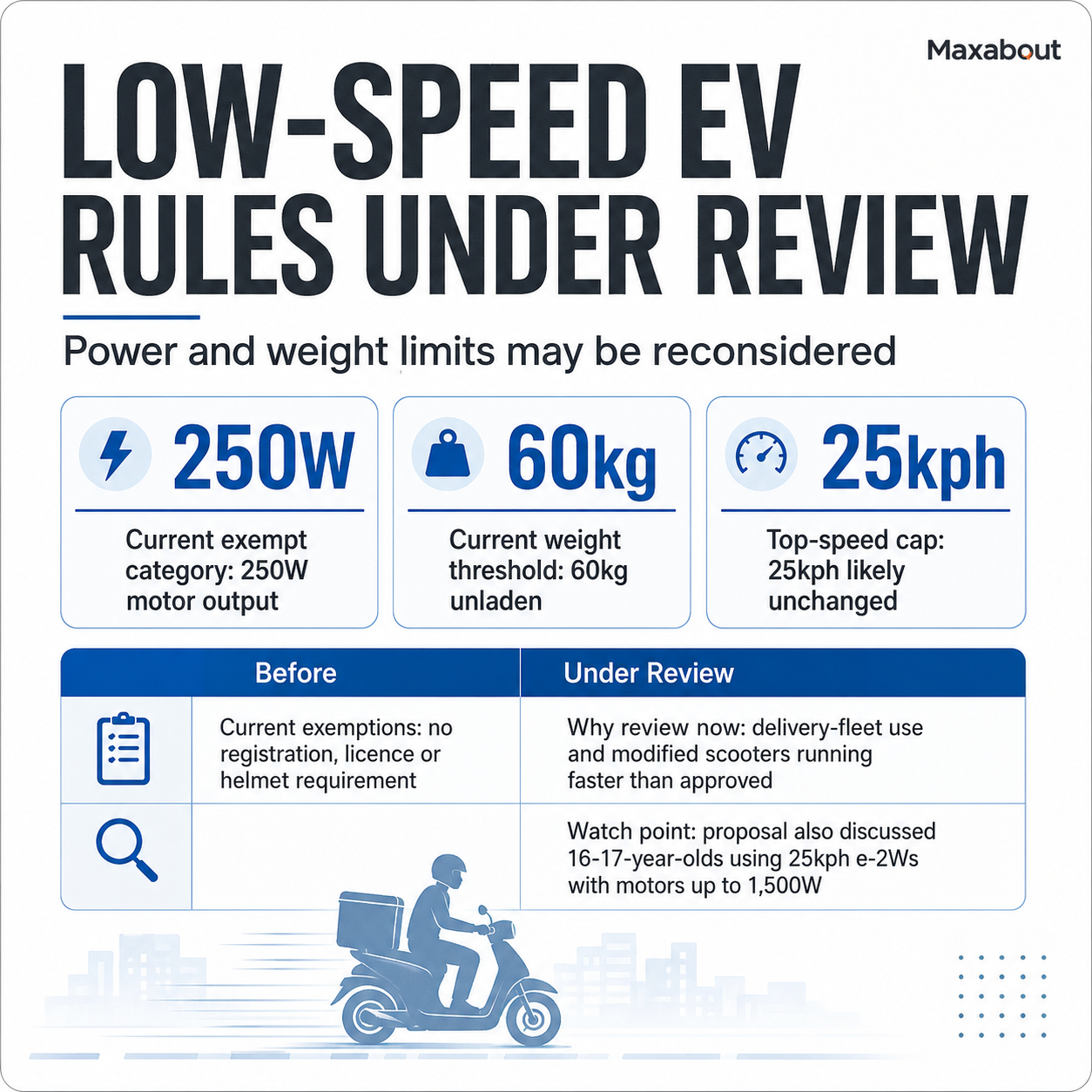
India's low-speed electric two-wheeler rules are back under scrutiny, with testing and certification agencies reviewing whether the current exemption framework still fits today's market. The present category is built around a 250W motor output, 60kg unladen weight and 25kph top-speed cap. The top-speed limit is expected to remain the key safety boundary, but power and weight limits may be reconsidered as low-speed EVs are used more heavily by delivery fleets and urban commuters.
What You Need To Know
Current motor limit: 250W output.
Current unladen weight threshold: 60kg.
Current speed cap: 25kph.
Current exemption: qualifying low-speed e-2Ws do not need registration, a driving licence or helmet compliance under the same framework as regular two-wheelers.
Why it matters: regulators are watching modified or misused low-speed scooters, especially in delivery use cases.
Current Low-Speed EV Rule Snapshot
| Rule Area | Current Threshold | Status |
|---|---|---|
| Motor output | 250W | Under review |
| Unladen weight | 60kg | Under review |
| Top speed | 25kph | Likely to remain unchanged |
| Registration/licence exemption | Applies to qualifying low-speed models | Dependent on final framework |
Why The Rules Are Being Reviewed
The low-speed exemption was designed for light, slow electric two-wheelers. The market has changed. Electric scooters are now used by quick-commerce riders, hyperlocal delivery fleets and daily commuters who need more durability and load capacity than early low-speed products offered.
The concern is not just product evolution. Authorities have also warned about vehicles that pass approval as low-speed models but are later modified or marketed in ways that allow much higher real-world speeds. That is why the review is best understood as an enforcement and safety watch, not simply a move against affordable EVs.
What It Means For Buyers And Fleets
For private buyers, the key point is caution. A scooter advertised as no-licence or no-registration should still be checked for its approved speed, motor output and compliance status. If the framework changes, buyers may see clearer product categories and fewer grey-area claims.
For delivery fleets, revised limits could affect which models qualify for low-speed use. A sturdier scooter with more power may be useful for commercial duty, but it may also need a different compliance route if it no longer fits the exemption category.
FAQs
What is the current top-speed limit for low-speed electric two-wheelers in India?
The current low-speed threshold is 25kph, and this cap is expected to remain central to the category.
Do low-speed electric scooters need registration?
Qualifying low-speed electric two-wheelers are currently exempt from registration and driving licence requirements, but buyers should verify that the exact model is approved under the low-speed category.
Have the rules changed already?
No final rule change is confirmed in this card's source context. The current story is a regulatory review watch focused on power and weight limits.
The practical takeaway is simple: India's low-speed EV scooter rules may get tighter or clearer, but the 25kph safety boundary remains the most important marker to watch.
No comments yet
Be the first to share your thoughts!
Want to read more automotive news?
Stay updated with the latest car launches, reviews, and industry insights.
Browse All News