
Honda HDII: India Digital Innovation Unit Explained
Honda just did something that deserves more attention than it's getting. The company has quietly set up HDII — Honda Digital Innovation India — a dedicated digital services unit based right here in India. That might sound like a dry corporate move, but think about what it actually signals.Indian car...
Honda just did something that deserves more attention than it's getting. The company has quietly set up HDII — Honda Digital Innovation India — a dedicated digital services unit based right here in India. That might sound like a dry corporate move, but think about what it actually signals.
Indian car buyers have changed. Dramatically. Someone researching a City or an Amaze today isn't walking into a showroom first — they're spending weeks on their phone, comparing specs, reading ownership experiences, watching walkaround videos. And after they buy? They expect a proper app, real-time service updates, maybe even remote diagnostics. The bar has shifted considerably.
Honda clearly recognizes this. Setting up a dedicated innovation unit in India — rather than routing everything through global headquarters — suggests the brand wants to build digital solutions that actually fit how Indians use their cars. Bengaluru traffic is not Tokyo traffic. A service reminder system built for Japan doesn't automatically make sense for someone dealing with monsoon-damaged roads in Chennai or Pune.
From what industry observers are noting, this feels less like a checkbox exercise and more like a genuine structural commitment. Whether HDII delivers on that promise is the real question — and it's one worth watching closely.
What Exactly Is HDII and What Will It Do?
Honda Digital Innovation India — HDII — is Honda's newly established digital services unit based in India. According to official announcements, its core mandate is to develop and deploy digital solutions that support Honda's broader operations, with a clear emphasis on India as both a development hub and a primary market.
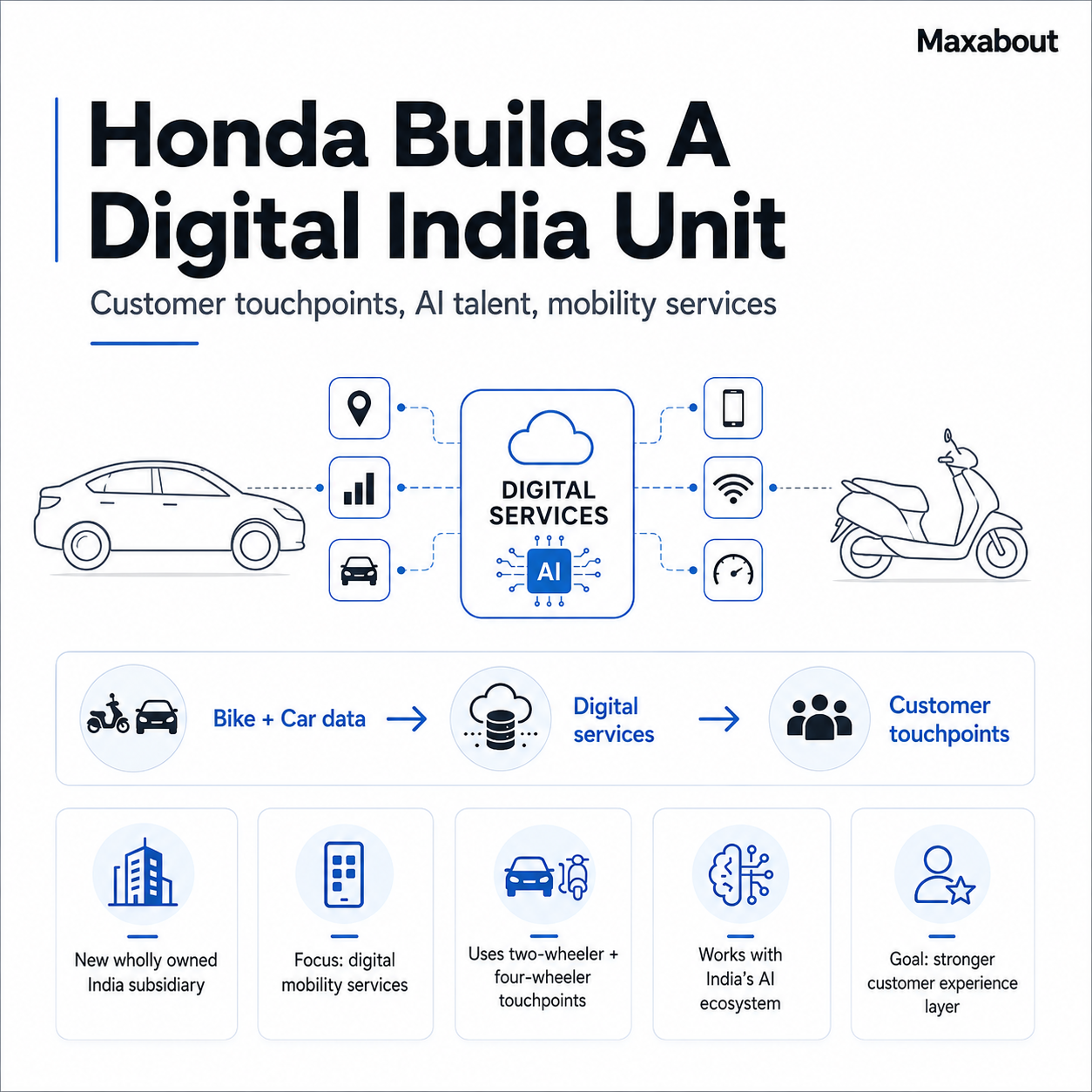 The scope, based on what has been publicly shared, appears to span several areas. Connected vehicle technology is likely a central focus — think real-time diagnostics, over-the-air updates, and features that integrate with how Indian drivers actually use their vehicles day-to-day. Customer-facing applications, dealer management platforms, and after-sales service systems are also expected to fall within HDII's remit.
What is genuinely interesting is the dual role this unit seems designed to play. It is not purely an India-facing operation. Industry reports suggest HDII could also contribute to Honda's global digital development pipeline, meaning solutions built here may eventually influence products in other markets too.
That said, several specifics remain unconfirmed. The exact product roadmap, timelines, and which Honda vehicle lines will benefit first have not been clearly detailed in official communications. It would be premature to assume full clarity on how HDII's output reaches the end customer — that part of the picture is still taking shape.
India's Growing Role as a Digital Hub for Global Automakers
Honda's move with HDII doesn't exist in isolation. It's part of a much larger shift happening across the global automotive industry, and India sits right at the center of it.
The reasons aren't hard to understand. India produces a large volume of software engineers and technology graduates every year, many of whom have deep experience in embedded systems, cloud infrastructure, and data engineering — precisely the skills modern vehicle development demands. Combine that with relatively lower operational costs compared to engineering centers in Europe, Japan, or North America, and the case for setting up shop here becomes quite compelling for any global automaker.
But this is about more than just cost savings. India's software ecosystem has matured considerably. From fintech to enterprise software, Indian engineering talent has demonstrated it can handle complex, globally deployed products. Automakers are now recognizing that same capability applies to connected vehicle platforms, digital cockpit systems, and mobility services.
Several major international automotive groups have quietly expanded their India-based technology operations in recent years, moving beyond basic IT support toward genuine research and product development. Industry reports suggest this trend is accelerating, not slowing down.
What's changing is the nature of the work being done here — from execution to original thinking. That evolution matters.
How This Could Improve the Honda Ownership Experience in India
For anyone who has sat in a Honda dealership waiting room, watching service advisors juggle paper job cards and phone calls simultaneously, the promise of a dedicated digital unit feels genuinely exciting. The question is whether it actually translates into something tangible for the person who just bought a City or an Amaze.
The honest answer is: not immediately. These things take time. But the direction matters.
Right now, Honda's connected car features lag noticeably behind what some rivals offer. Real-time vehicle diagnostics, remote door lock status, trip analytics — features that competitors have normalised — still feel limited or inconsistently implemented across Honda's India lineup. A dedicated digital unit working specifically on these problems could meaningfully close that gap.
Service transparency is another area where Honda owners frequently express frustration. From what I've gathered across owner forums and word-of-mouth, the core complaints are consistent — unclear repair timelines, limited service status updates, and difficulty tracking what work was actually done. A smarter dealer interface and a properly functional service booking app could address much of this without requiring dramatic changes to the physical dealership experience.
Faster complaint resolution through digital channels is perhaps the most underrated potential benefit here. Currently, escalations often feel slow and opaque. Better digital touchpoints could genuinely change that dynamic.
Realistic expectations still matter, though. Infrastructure improvements inside dealerships, staff retraining, and actual software rollouts across a vast network take considerable time to execute properly.
Connected Cars and the Indian Road Reality: Challenges Ahead
Optimism is reasonable here. But so is a clear-eyed look at what actually stands between connected car promises and everyday Indian driving conditions.
Start with something basic: internet connectivity on Indian highways remains genuinely patchy. Drive from Pune to Nashik, or through stretches of the Delhi-Jaipur expressway, and you will encounter dead zones that no amount of corporate enthusiasm can immediately fix. Features that depend on real-time data streaming simply become unreliable in these gaps. That is not Honda's fault, but it is a problem they must design around.
Data privacy is another honest concern. Indian consumers are increasingly aware that connected vehicles collect significant amounts of location and behavior data. Trust around how that data gets stored, shared, or potentially sold is still fragile. Without transparent communication, even genuinely useful features can feel intrusive.
Tech literacy varies enormously across Honda's customer base too. A buyer in Bengaluru and a first-time car owner in a smaller town like Gorakhpur approach digital interfaces very differently. Features designed for one segment can feel overwhelming or irrelevant to another.
Cybersecurity deserves mention as well. Connected vehicles represent a real attack surface. These are not theoretical risks anymore.
None of this makes the HDII initiative misguided. It simply means execution will matter far more than announcements.
What Honda Owners and Prospective Buyers Should Expect - And When
Honestly, if you own a City or an Elevate right now, I would not expect dramatic changes overnight. Digital units like HDII typically spend their first twelve to eighteen months building internal infrastructure — data pipelines, compliance frameworks, team structures. The visible consumer-facing output comes later.
The Amaze buyer will likely feel the early wins first. Simpler things: smoother service booking through the Honda Connect app, better dealership communication, clearer service cost estimates before you walk in. That kind of friction reduction is achievable relatively quickly and genuinely matters to budget-conscious buyers.
For Elevate owners, connected features like remote diagnostics and over-the-air updates for infotainment feel more plausible within two to three years, based on how similar initiatives unfolded at other manufacturers. The City, sitting in the premium space, could eventually see deeper integration — predictive maintenance alerts, perhaps better data from highway runs on the Mumbai-Pune expressway or the Delhi-Jaipur stretch.
My honest advice: watch the Honda Connect app updates closely. That is your earliest indicator of whether HDII's work is translating into something real. Announcements are easy. Consistent app improvements are the actual proof.
Is Honda Making the Right Bet with HDII in India?
From what I can tell, this is a genuinely interesting strategic move — but not without real risk. Honda's position in India is somewhat paradoxical. The brand carries strong credibility, especially with the City and the Activa, yet it has visibly lagged behind rivals on connected features and digital customer experience. Maruti Suzuki's subscription ecosystem and Tata's connected car platform have both moved faster.
In my view, a dedicated India-based digital unit is the right structural response to that gap. A local team understands Indian network conditions, regional language preferences, and the specific frustrations of customers dealing with patchy connectivity on routes outside metro areas. That ground-level awareness matters enormously and is difficult to replicate from a global headquarters.
That said, execution risk is the real concern here. Setting up a unit and actually delivering consistent, meaningful digital improvements are two very different things. India has seen several manufacturer tech initiatives that generated strong press releases and then quietly stalled.
So my honest read is this — HDII is the right idea, structured sensibly, but the proof will come slowly. If Honda can demonstrate real iteration speed over the next 18 months, this bet looks smart. If the unit becomes another internal layer of bureaucracy, the competitive gap will only widen.
Final Thoughts: A Step in the Right Direction, But Results Will Tell the Story
At the end of it all, HDII represents something Honda has not always been known for in India — genuine forward thinking on the digital front. That deserves acknowledgment. Setting up a dedicated unit, hiring local talent, and committing to India-specific development is not a trivial decision for any global manufacturer.
But I'll be honest — I'm cautiously optimistic, not enthusiastic. The gap between a well-structured announcement and a meaningfully better ownership experience is wide. Indian car buyers have been patient for a long time.
If you're an existing Honda owner or actively considering one, here's what I'd suggest watching for over the next year or so:
Tangible connected car feature updates pushed to existing vehicles
Improved service transparency through the Honda app
Faster response to software issues reported by owners
Those small, practical wins will tell you far more about HDII's real impact than any press release ever could. That's where the story actually gets written.
I genuinely want Honda to deliver here. Indian buyers deserve better digital experiences — and if HDII makes that happen, it will have been absolutely worth it.
Maxabout Team
Editorial Team
Specializes in: Automotive News, Reviews, Analysis
Want to read more automotive news?
Stay updated with the latest car launches, reviews, and industry insights.
Browse All News