
Hidden Costs of Car Ownership in India That Buyers Often Overlook
Buying a car feels like a one-time decision. The price is set, the loan is sanctioned, and the EMI is fixed. Once that part is sorted, most buyers assume the financial planning is done. A car comes with several ongoing costs that only become visible over time. Many of these are predictable but often...
Editorial Team
Buying a car feels like a one-time decision. The price is set, the loan is sanctioned, and the EMI is fixed. Once that part is sorted, most buyers assume the financial planning is done. A car comes with several ongoing costs that only become visible over time. Many of these are predictable but often overlooked during purchase.
The Common Costs Everyone Accounts For
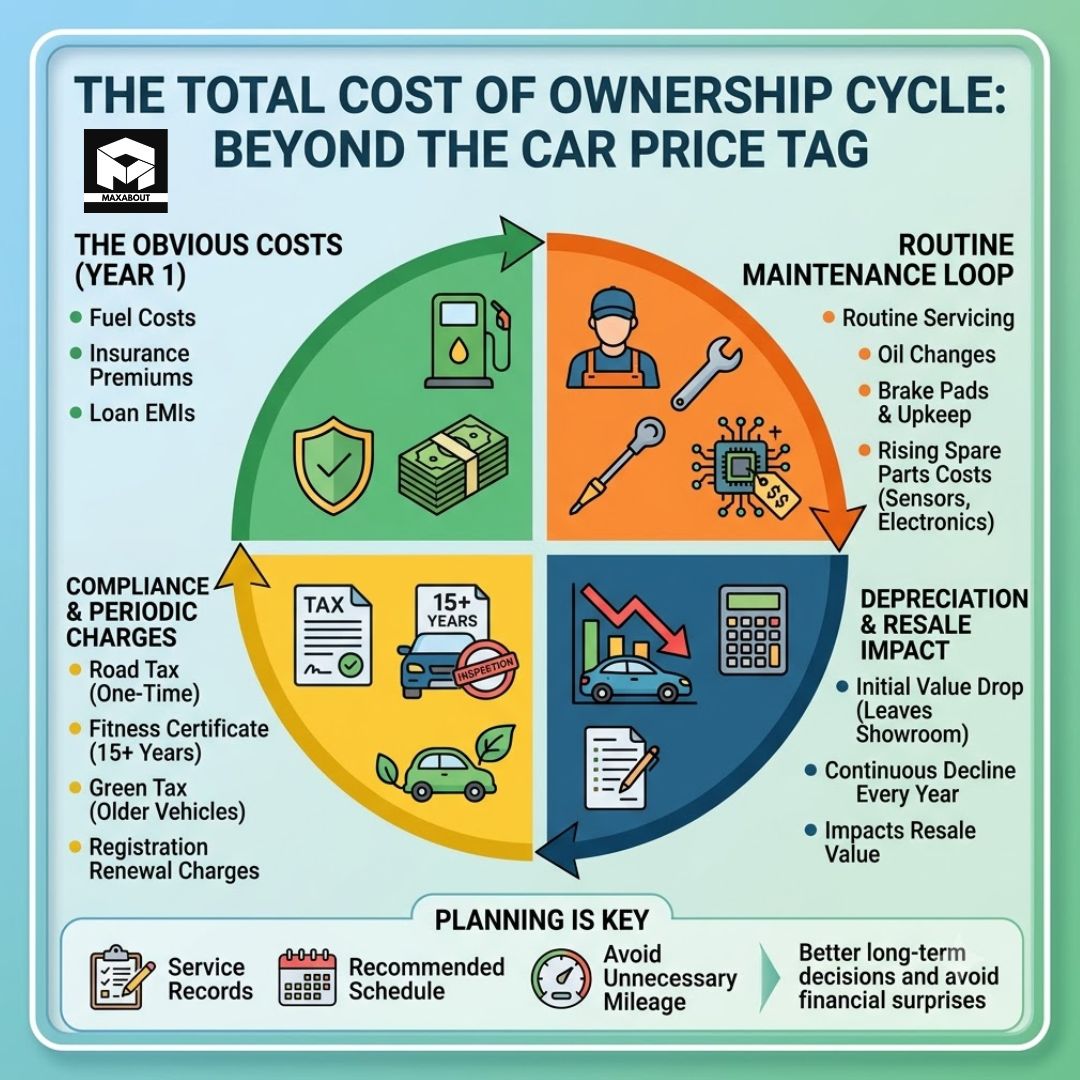
Most buyers do think about the obvious expenses before signing the paperwork. Fuel costs come to mind immediately, especially with how often prices move. Insurance premiums are factored in too, since they are mandatory and renewed every year. Loan EMIs are the most visible cost of all, calculated carefully before the purchase is even finalised.
These are the most visible costs buyers usually plan for. They are also the ones most buyers compare across cars before deciding which one to buy. What gets missed is everything that sits just outside this obvious list—costs that do not show up in a brochure or in a loan calculator, but show up clearly once the car has been driven for a year or two.
Maintenance and Spare Parts Inflation
Routine servicing is one of the first hidden costs buyers underestimate. Oil changes, filter replacements, brake pad wear, and general upkeep add up steadily over the years, and the cost of each of these has been rising.
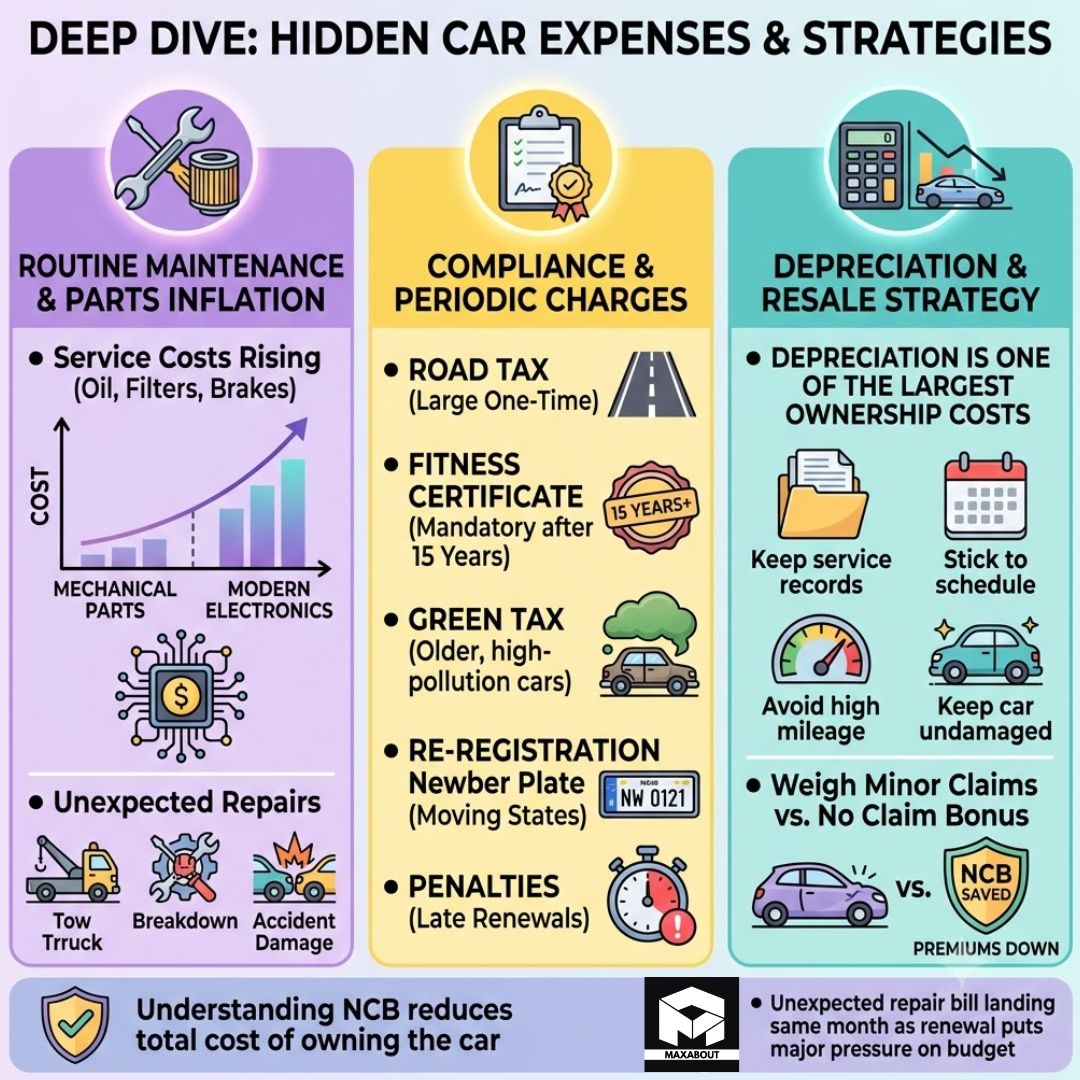
Spare parts, in particular, have become noticeably more expensive. Cars today carry more electronics, sensors, and complex components than they did even a few years ago, and replacing or repairing these parts costs more than replacing a simple mechanical component used to. Repairing modern components is often more expensive than older mechanical parts.
Unexpected Repairs and Accidental Damage
Beyond routine maintenance, there is a separate category of cost that buyers rarely plan for—the unexpected breakdown or the accident that was nobody's fault.
A car that has been driven carefully can still suffer mechanical failure. A part can wear out earlier than expected. An accident, even a minor one, can lead to a repair bill that feels disproportionate to the damage that caused it. These costs are unpredictable and can arise without warning.
This is where having the right car insurance becomes important, as it helps reduce the financial burden of unexpected repair and accident-related expenses.
Depreciation and Resale Value Impact
Depreciation is one of the largest costs of car ownership, and it is also one of the easiest to ignore.
A new car loses a meaningful share of its value the moment it leaves the showroom, and that decline continues every year after. Depreciation is a major hidden cost that directly reduces resale value, and most buyers never calculate exactly how much of their car's price they have effectively lost simply by owning it for a few years.
Certain habits can help reduce depreciation and improve resale value. Keep every service record. Stick to the recommended servicing schedule. Avoid putting on mileage that does not need to happen. Keep the car away from damage where possible. Each one helps the resale value hold up a little better. None of these eliminate depreciation entirely, but they make a measurable difference when the car is eventually sold or exchanged.
Compliance and Periodic Charges
Car ownership also includes recurring legal and administrative costs. A few of the most common ones:
Road tax: Usually paid upfront as a lifetime fee at the time of registration, but it remains one of the largest one-time costs of ownership.
Fitness certificate and renewed registration: Once a private vehicle crosses fifteen years, both become mandatory, along with periodic inspections to confirm the vehicle is still roadworthy.
Green tax: Applies specifically to older vehicles because of their higher pollution levels, and is charged in addition to the fitness certificate renewal.
Re-registration charges: If a vehicle is moved permanently to a different state, re-registration and the associated fees become necessary.
Late fees and penalties: Missing a renewal deadline, whether for the fitness certificate or registration, typically attracts a daily late fee until it is sorted out.
The Risk of Ignoring Financial Planning
These costs rarely come all at once, but can build up over time. The pressure builds gradually, quietly, until one day it is simply there, and by then it is harder to manage.
The EMI only covers the loan. It says nothing about running costs, maintenance, or depreciation. A lot of buyers overlook this distinction, and it costs them later. A buyer who budgets strictly around the EMI, assuming that is the full monthly cost of the car, is likely to be caught off guard within the first year of ownership.
The risk compounds over time. An unplanned repair shows up. A renewal fee was forgotten. A service bill comes in higher than expected. None of these on their own would be a problem. All three landing in the same month puts real pressure on a budget that was never built to absorb them together.
Planning for these costs in advance removes most of this pressure before it becomes a problem.
Why Total Cost of Ownership Matters More Than Purchase Price
The total cost of ownership includes all expenses over time, not just the purchase price.
Two cars priced similarly at purchase can turn out very differently once fuel efficiency, maintenance costs, insurance premiums, and depreciation are factored in over several years. A car that looks like the cheaper option on paper can end up costing more once all of this is added up, and a slightly more expensive car can sometimes turn out to be the better financial decision over its full ownership period.
Buyers who only compare ex-showroom prices are comparing the smallest part of the actual cost. The real comparison only becomes clear once maintenance, depreciation, and compliance costs are added into the picture.
One factor that genuinely affects this total cost is the claims history of the car over its ownership period. Filing small claims repeatedly resets the No Claim Bonus, which increases future premiums. Thus, understanding NCB in car insurance and weighing whether a minor claim is actually worth filing is a small decision that has a real, compounding effect on the total cost of owning the car.
Conclusion: Smart Buying Goes Beyond the Price Tag
A car is rarely just the number on the invoice. Maintenance, unexpected repairs, depreciation, compliance fees, and the slow accumulation of smaller costs all add up over the years a car is owned.
None of these costs are unpredictable in the sense that they cannot be planned for. They are simply easy to overlook at the point of purchase, when the focus is entirely on the price, the loan, and the EMI.
A car’s real cost goes beyond the purchase price. Maintenance, repairs, depreciation, and compliance costs all add up over time. Buyers who consider the total cost of ownership make better long-term decisions and avoid financial surprises later.
No comments yet
Be the first to share your thoughts!
Want to read more automotive news?
Stay updated with the latest car launches, reviews, and industry insights.
Browse All News