
4 min read
164 views
What is GST? Effect of GST on Prices | All You Need to Know
GST stands for Goods and Service Tax. The new tax structure will soon be implemented in order to get away from complicated taxation at different levels of products manufacturing and sales. The ex-showroom price we see on every product is a result of value added tax, excise duty and various other ces...
GST stands for Goods and Service Tax. The new tax structure will soon be implemented in order to get away from complicated taxation at different levels of products manufacturing and sales. The ex-showroom price we see on every product is a result of value added tax, excise duty and various other cess in the Indian market.
These will now fall under a single name and may help Indian buyers secure peace of mind while going out on shopping. The first bill charging GST will be produced on July 1, 2017. The impact of GST is not that huge on everyday products but those in the luxury category have considerable differences in both the segment.
Most brands have started passing the benefits to customers as drop in prices are pretty visible on a selected segment of products. Let's find out how things will change after implementation of GST in India. Bikes under 350cc will enjoy tax relaxation from 30 percent to 28 percent. This will help brands place their products lower than the present prices.
The reduction of 2 percent would be on the manufacturing price of the machine, thus giving the authority to regulate prices in the hands of manufacturers only. For example, Bajaj recently decreased the price of Pulsar NS200 by around INR 900. Royal Enfield has also confirmed officially that the price of their 350cc motorcycles will go down from July 1.
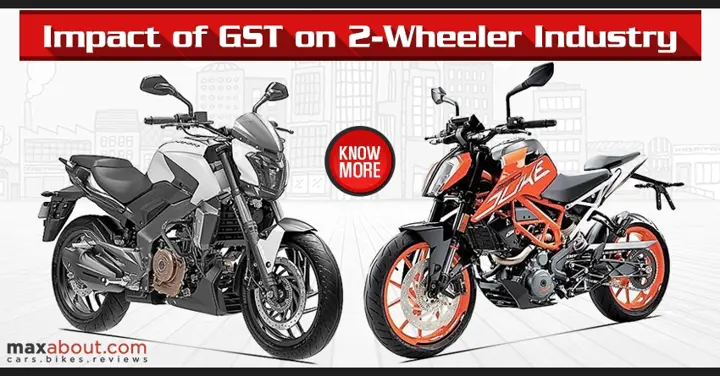 The bikes above 350cc will now face cess of 3 percent on the tax slab of smaller bikes. That practically takes the tax rate up by 1 percent. One can safely assume that the bike that costs INR 13 lakh will now get a price hike of INR 10,000.When the same thing comes to luxury cars, they will get a tax reduction of up to 12 percent. The same is applicable on sports utility vehicles (SUV) as both of the categories now get 43 percent overall tax on them.
 Everyday cars that fall under 4 meter and carry an engine smaller than 1.2L petrol/1.5L diesel will now get 29 percent and 31 percent tax respectively. Petrol cars get 2.5 percent while diesel cars 2.25 percent of tax reduction. Cars with bigger engine or more length than 4 meter will attract a tax rate of 43 percent, making them fall in the same category as SUV's and luxury cars. The change in percentage is lesser on these cars than SUV's.
 Hybrid cars will now become more expensive as government will charge the same 43 percent tax on these vehicles. Smart hybrids will no longer fall in the low tax category while fully electric cars are soon to be cheaper with tax deduction from 20.5 percent to just 12 percent. The effects on cars is much more visible as bigger price tags attract bigger reduction for the buyers. The lowest decrease would even be around INR 6,250 for a car with INR 2.5 lakh price tag.

The bikes above 350cc will now face cess of 3 percent on the tax slab of smaller bikes. That practically takes the tax rate up by 1 percent. One can safely assume that the bike that costs INR 13 lakh will now get a price hike of INR 10,000.When the same thing comes to luxury cars, they will get a tax reduction of up to 12 percent. The same is applicable on sports utility vehicles (SUV) as both of the categories now get 43 percent overall tax on them.
Everyday cars that fall under 4 meter and carry an engine smaller than 1.2L petrol/1.5L diesel will now get 29 percent and 31 percent tax respectively. Petrol cars get 2.5 percent while diesel cars 2.25 percent of tax reduction. Cars with bigger engine or more length than 4 meter will attract a tax rate of 43 percent, making them fall in the same category as SUV's and luxury cars. The change in percentage is lesser on these cars than SUV's.
Hybrid cars will now become more expensive as government will charge the same 43 percent tax on these vehicles. Smart hybrids will no longer fall in the low tax category while fully electric cars are soon to be cheaper with tax deduction from 20.5 percent to just 12 percent. The effects on cars is much more visible as bigger price tags attract bigger reduction for the buyers. The lowest decrease would even be around INR 6,250 for a car with INR 2.5 lakh price tag.
Effect of GST on Mobile Phone Prices
GST will effect everything in the economy, revising prices for most categories that were inappropriately taxed from last few decades. Eating out will have different taxes based on the revenue and air conditioning facility of the place. Technology will become cheaper as smartphones are placed in a low tax slab than other electronic products like air conditioner, microwave etc. GST will help Indians simply the tax calculations for sure. Related Articles 1) Post-GST Bajaj Bikes Price List 2) Post-GST Renegade Price List 3) Post-GST Yamaha Price List 4) Post-GST Honda Price List 5) Post-GST KTM Price List Frequently Asked Questions About GST 1) What is the meaning of GST? 2) What are the GST Tax Slabs? 3) What are the benefits under GST? 4) What is the Full Form of GST? 5) How GST Works? 6) When will GST be Implemented? 7) What are the Taxes that GST Replaces? 8) What will be the Short-term Impact of GST?Ad
I
Immanuel Raja is an Automotive Writer with 8 years of experience covering the Indian automotive landscape. He specializes in Electric Vehicles and Hybrid Technology, with particular expertise in battery systems, charging infrastructure, and the integration of alternative powertrains in Indian road conditions. Raja has extensively tested over 200 vehicles across various segments, from entry-level EVs to premium hybrids, developing nuanced insights into their performance on India's diverse and challenging roads. His analysis encompasses both technical specifications and practical ownership considerations that matter to Indian consumers, including charging accessibility, maintenance costs, and performance in extreme weather conditions. With a finger on the pulse of India's evolving automotive preferences, Raja delivers clear, factual assessments that help readers navigate the transition to electrified mobility in the context of India's unique market dynamics.
About the Author
Comments
No comments yet
Be the first to share your thoughts!
Want to read more automotive news?
Stay updated with the latest car launches, reviews, and industry insights.
Browse All News