
Electric Car Registrations Surge 73 Percent as Tata-Mahindra Cross 65 Percent Share
Electric car registrations in India in July 2026 rose 73% year on year to 31,138 units, according to a Nuvama-referenced industry report. EV penetration nevertheless remained at 7.7%, unchanged from June, because the wider passenger-vehicle market also expanded. Tata Motors and Mahindra together cap...
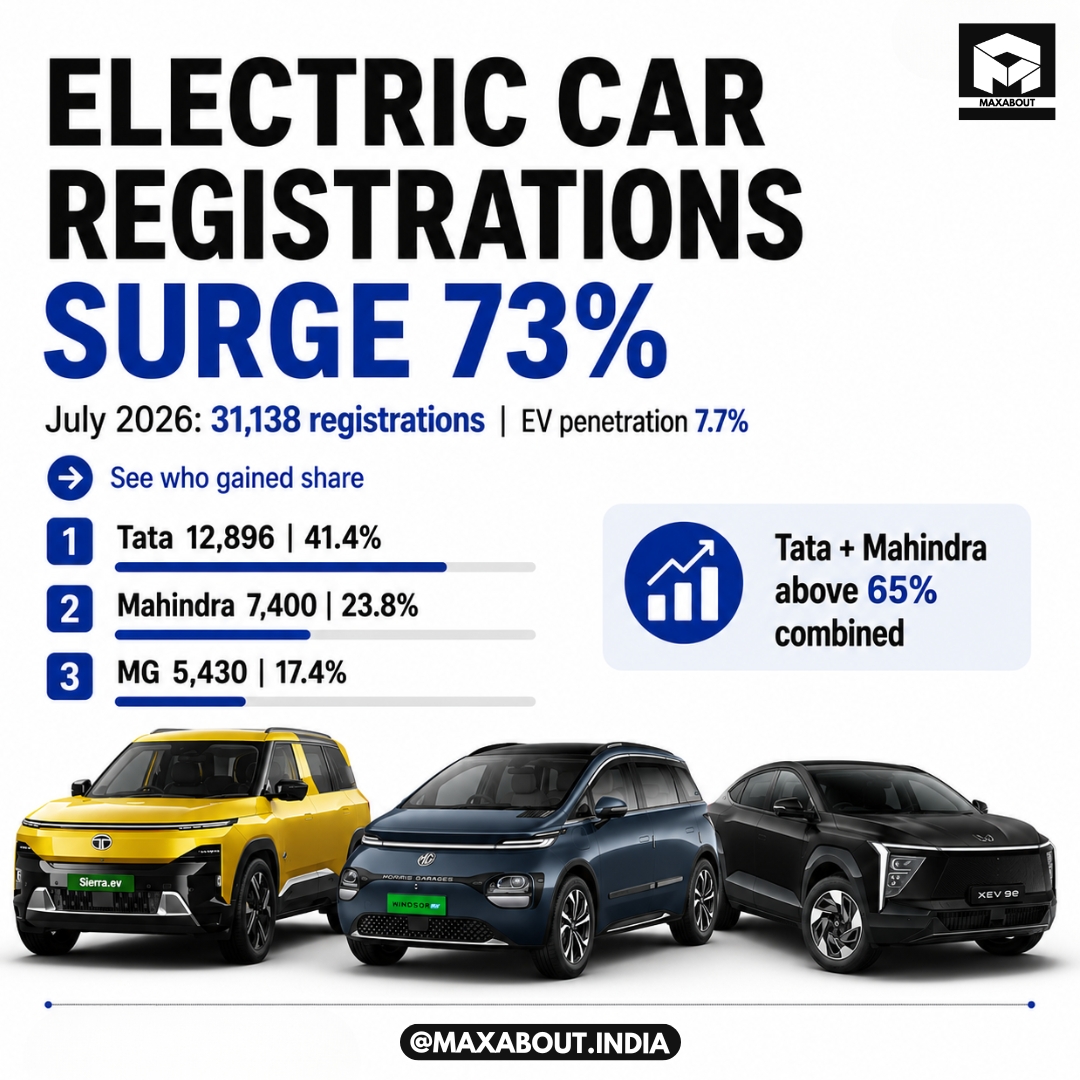
Electric car registrations in India in July 2026 rose 73% year on year to 31,138 units, according to a Nuvama-referenced industry report. EV penetration nevertheless remained at 7.7%, unchanged from June, because the wider passenger-vehicle market also expanded. Tata Motors and Mahindra together captured more than 65% of registrations, while MG’s share narrowed sharply.
What you need to know
Total registrations: 31,138, up 73% year on year.
EV penetration: 7.7%, unchanged from June.
Market leaders: Tata 41.4% and Mahindra 23.8% share.
Share shift: MG fell to 17.4% from 32.8% a year earlier.
July 2026 electric-car leaderboard
| Manufacturer | Registrations | Market share |
|---|---|---|
| Tata Motors | 12,896 | 41.4% |
| Mahindra | 7,400 | 23.8% |
| MG Motor | 5,430 | 17.4% |
| Maruti Suzuki | 1,503 | 4.8% |
| VinFast | 1,448 | 4.7% |
Why registrations surged but penetration stayed flat
A 73% annual rise indicates rapid EV-volume expansion, but penetration measures EVs as a share of all passenger-vehicle registrations. Holding at 7.7% means electric cars grew broadly in line with the total market from June. Volume growth and penetration can therefore tell different but complementary stories.
For April–July FY27, electric passenger-vehicle registrations reached 1,19,343, up 90% from 62,808 a year earlier. This cumulative growth suggests the July result is part of a broader expansion, though the figures remain report-attributed rather than a direct official-dashboard extract.
Tata and Mahindra tighten their grip
Tata registered 12,896 electric passenger vehicles, up 92% year on year, and increased its share to 41.4%. Mahindra recorded 7,400, up 145%, lifting its share to 23.8%. Combined, the two Indian manufacturers accounted for 65.2% of the reported market.
The concentration reflects strong recent product activity, but registration data cannot isolate the impact of individual models, pricing, supply or deliveries. Model-level claims should be supported separately.
MG loses share despite remaining third
MG retained third place with 5,430 registrations, but volume fell 8% year on year and its share dropped to 17.4% from 32.8%. A falling share does not mean the brand has become irrelevant; it shows that rivals expanded faster and that the market mix has changed.
New and smaller players
Maruti Suzuki recorded 1,503 units and VinFast 1,448. BYD registered 713, Hyundai 538 and Kia 445, according to the report. These smaller bases can produce volatile percentage changes, so absolute volume and multi-month trends are more informative than a single growth rate.
What it means for buyers and the industry
More models and stronger manufacturer competition can improve choice, financing and dealer investment. Buyers should still compare real-world range, charging access, warranty terms, service coverage, battery protection and resale expectations rather than treating market share as a product-quality score.
For the industry, sustained penetration above current levels matters more than one high year-on-year comparison. Broader charging confidence and competitive pricing will determine whether registrations continue outgrowing the overall car market.
FAQs
How many electric cars were registered in India in July 2026?
The report records 31,138 electric passenger-vehicle registrations.
Which company led the EV market?
Tata Motors led with 12,896 registrations and a 41.4% share.
What was electric-car penetration?
Penetration was 7.7%, unchanged from June.
Why did MG’s market share fall?
MG’s registrations declined while Tata, Mahindra and the wider market expanded. The registration data alone does not establish the operational causes.
Electric car registrations in India in July 2026 show rapid annual expansion and a decisive shift toward Tata and Mahindra. The next stage will be measured by sustained penetration, not only headline growth.
Maxabout Team
Editorial Team
Specializes in: Automotive News, Reviews, Analysis
Want to read more automotive news?
Stay updated with the latest car launches, reviews, and industry insights.
Browse All News