
Clean-Fuel Commercial Vehicles Get 7-Year Permit Exemption In India
Clean-fuel commercial vehicles in India have received a major regulatory push. Goods and passenger transport vehicles powered by battery electric, ethanol, methanol and hydrogen technologies are reported to receive a seven-year exemption from transport permit requirements, provided they meet the req...
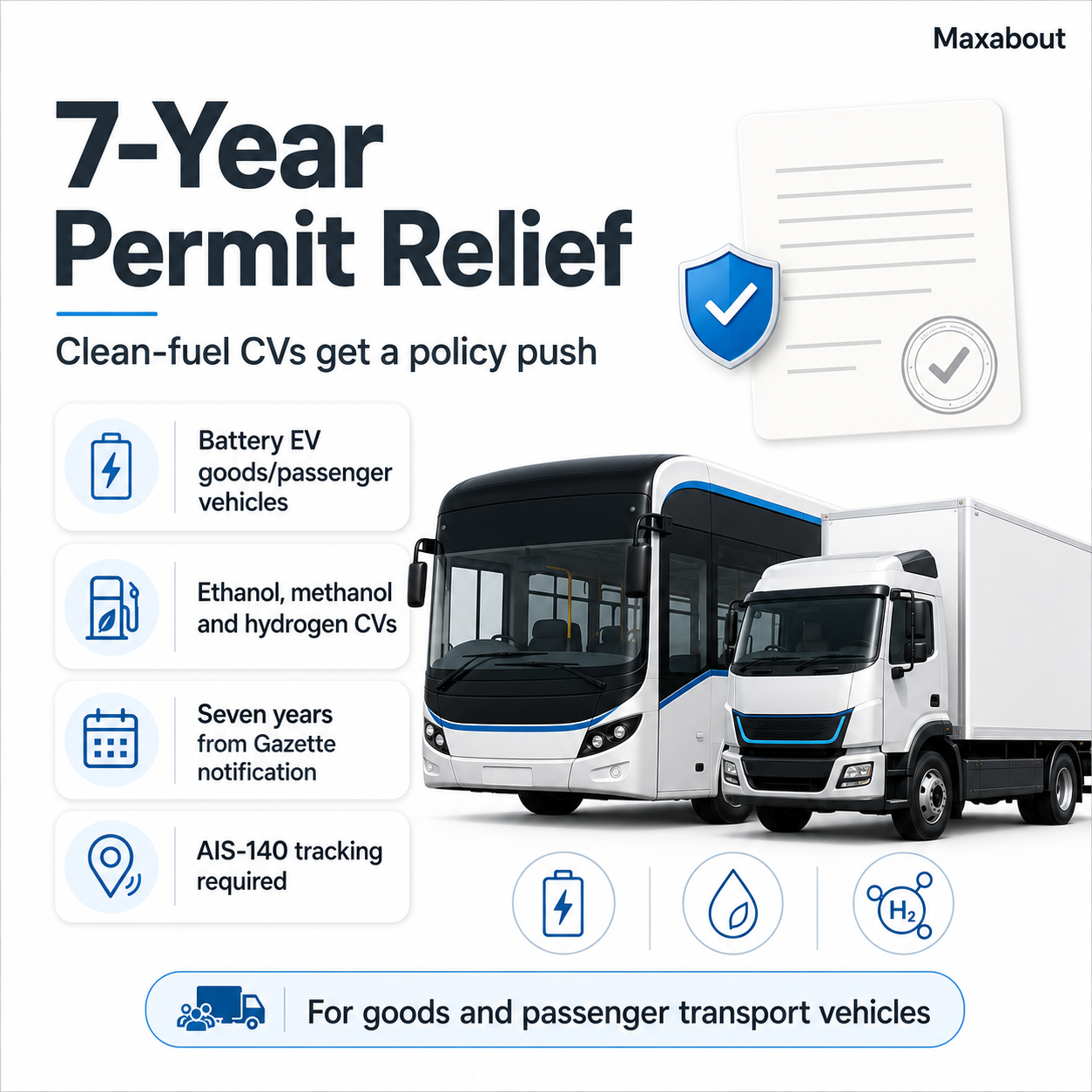
Clean-fuel commercial vehicles in India have received a major regulatory push. Goods and passenger transport vehicles powered by battery electric, ethanol, methanol and hydrogen technologies are reported to receive a seven-year exemption from transport permit requirements, provided they meet the required vehicle-tracking condition.
What you need to know
The reported exemption covers goods and passenger transport vehicles, not private cars.
Eligible powertrains include battery electric, ethanol, methanol and hydrogen.
The relief runs for seven years from the July 6, 2026 Gazette notification date.
Vehicles using the exemption must have an AIS-140 compliant vehicle location tracking device.
Which vehicles benefit?
The clean fuel commercial vehicle permit exemption is aimed at transport vehicles used for carrying goods or passengers. That makes it relevant for electric buses, electric goods carriers, electric trucks, and emerging alternative-fuel commercial vehicles using ethanol, methanol or hydrogen.
| Category | Status under reported exemption |
|---|---|
| Battery electric commercial vehicles | Covered |
| Ethanol, methanol and hydrogen CVs | Covered |
| Goods and passenger transport vehicles | Covered when conditions are met |
| Private passenger cars | Not the focus of this permit relief |
Why AIS-140 tracking matters
The exemption is not unconditional. Vehicles availing the permit relief must be fitted with a Vehicle Location Tracking Device compliant with AIS-140. AIS-140 is the standard used for vehicle tracking and emergency response systems, especially for public transport and regulated fleets.
Why it matters for fleets
For fleet operators, permit requirements can add compliance effort and deployment friction. A seven-year permit exemption may improve the business case for cleaner buses, goods carriers and other commercial vehicles, especially when operators are already evaluating electric or alternative-fuel options for city, logistics and public transport use.
What to watch next
The next useful details will be implementation-level clarity: how states apply the exemption, how AIS-140 compliance is checked, and whether more categories of clean commercial vehicles gain similar regulatory support. For now, the message is clear: India wants cleaner commercial transport to scale with traceability built in.
FAQs
Does the exemption apply to private electric cars?
No. The reported permit exemption is for goods and passenger transport vehicles, which means commercial transport categories rather than private passenger cars.
How long does the permit exemption last?
It is reported to apply for seven years from the July 6, 2026 Gazette notification date.
What condition must eligible vehicles meet?
Eligible vehicles must have an AIS-140 compliant vehicle location tracking device.
The clean fuel commercial vehicle permit exemption could become an important enabler for electric, hydrogen, ethanol and methanol commercial fleets in India, especially if implementation remains simple and consistent across states.
Maxabout Team
Editorial Team
Specializes in: Automotive News, Reviews, Analysis
Want to read more automotive news?
Stay updated with the latest car launches, reviews, and industry insights.
Browse All News