
2026 Volkswagen Taigun Facelift: Production Starts
The Volkswagen Taigun has quietly built a solid reputation in India since its 2021 launch. It was never the flashiest option in the compact SUV segment, but it earned respect the old-fashioned way — through solid build quality, a refined driving experience, and an engine lineup that enthusiasts genu...
The Volkswagen Taigun has quietly built a solid reputation in India since its 2021 launch. It was never the flashiest option in the compact SUV segment, but it earned respect the old-fashioned way — through solid build quality, a refined driving experience, and an engine lineup that enthusiasts genuinely appreciated. That loyal following is real, and it shows in consistent sales numbers even as newer options entered the market.
But here's the thing — the competition has caught up, and in some areas, moved ahead. The Hyundai Creta got a comprehensive update, the Kia Seltos levelled up significantly, and even the Skoda Kushaq (which shares the same platform) has been pushing hard. The Taigun needed a refresh, and Volkswagen has clearly been listening.
Recent reports and official announcements confirm that production of the 2026 Taigun facelift has already begun, which typically means a market launch is closer than we think. This isn't just a minor cosmetic exercise either — from what industry observers have noted, the update appears meaningful enough to address some genuine buyer concerns.
So what should Indian buyers realistically expect? A sharper look, updated features, and hopefully some improvements to the ownership experience. Let's break it down honestly.
Exterior Refresh: A Sharper Look or Just Surface Changes?
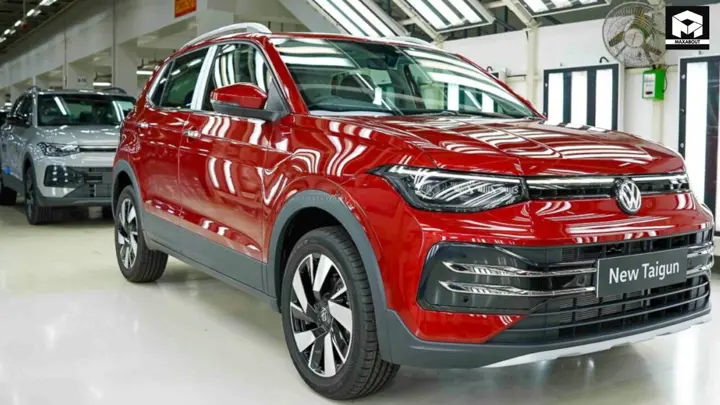
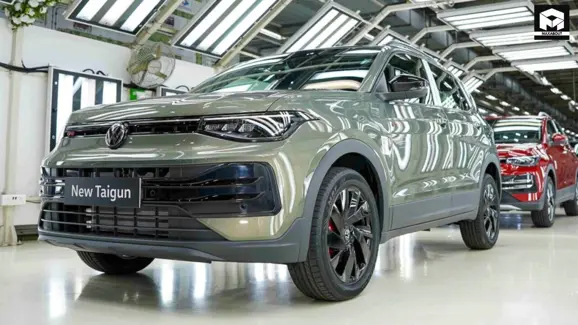
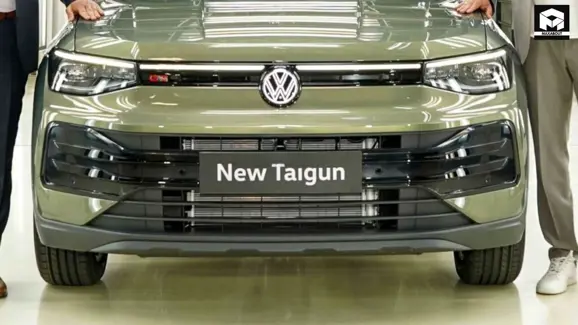
From what's visible in official production images and early observations, Volkswagen has taken a measured but noticeable approach with the 2026 Taigun's exterior. The front fascia gets the most attention — a revised grille with a bolder horizontal slat pattern, sharper LED daytime running lights with a new light signature, and a reworked lower bumper that looks more angular and assertive than before.
The headlight cluster appears slimmer and more swept back, which does give the front end a more contemporary feel. It's not a dramatic reinvention, but it's a meaningful step forward. The rear sees subtle updates too — revised tail lamp internals and a cleaner bumper treatment.
Compared to what Hyundai did with the Creta facelift — which was genuinely bold and polarising — or Kia's sharp Seltos refresh, the Taigun's updates feel more restrained and European in character. Whether that's a strength or a weakness honestly depends on the buyer. Some people appreciate the understated confidence. Others want something that turns heads in Bengaluru traffic.
In my view, the Taigun has always had solid road presence for its size, and this facelift sharpens that without overreaching. For buyers who found the older model slightly bland, this should feel like a genuine improvement — not just a badge refresh.
Interior and Feature Upgrades: Does It Finally Feel Premium Enough?
Step inside, and this is honestly where the facelift conversation gets more interesting. Volkswagen has clearly heard the criticism about the previous Taigun's cabin feeling a bit sparse — functional and well-built, yes, but lacking the visual richness that rivals like the Creta and Seltos were offering at similar price points.
The centerpiece is a larger infotainment screen, reportedly pushing into the 10-inch territory with updated software, wireless Apple CarPlay and Android Auto, and connected car technology baked in. That last bit matters more than people give it credit for — remote climate control, vehicle tracking, and geofencing are genuinely useful if you're parking in crowded spots across cities like Pune or Hyderabad.
The instrument cluster now leans digital, which addresses another persistent complaint. Previously, the layout felt underwhelming compared to what Hyundai and Kia were doing. The updated unit looks sharper and more modern without feeling gimmicky.
Ventilated seats appear to be on the table for higher variants — a long-overdue addition for anyone dealing with peak summer heat in Chennai or Delhi. Wireless charging is also reportedly included, which feels standard expectation now rather than a premium addition.
One complaint that genuinely frustrated previous owners was the absence of rear AC vents on lower trims. Whether Volkswagen has fully resolved this across the range remains to be confirmed, but early production details suggest improvements there.
Overall, the cabin feels more competitive now. Not segment-leading, but no longer playing catch-up either.
Engine and Performance: Familiar Powertrains With Any New Tricks?
Volkswagen isn't reinventing the mechanical side here. The 1.0-litre TSI and 1.5-litre TSI engines carry forward, which honestly makes sense — these units have earned a solid reputation in India over several years. If it isn't broken, don't rebuild it from scratch.
The 1.0 TSI producing around 115 bhp remains the accessible entry point. In city conditions — think Bengaluru's outer ring road crawl or Delhi's lunchtime gridlock — this engine is genuinely adequate. It pulls cleanly from low speeds and doesn't feel stressed in stop-and-go situations. Highway cruising at 100-120 kmph feels relaxed too. Where it shows limitations is on steep hill sections, like driving through the ghats, where the smaller displacement occasionally asks you to think ahead with gear selection.
The 1.5 TSI is the more satisfying engine, full stop. Around 150 bhp with the cylinder deactivation technology makes it both punchy and reasonably efficient. From what reviewers have consistently noted, real-world efficiency lands somewhere between 13-16 kmpl depending on driving style — meaningfully below ARAI claims, but competitive for the segment.
Now, the DSG gearbox conversation. Previous owners have raised legitimate concerns about jerky low-speed behavior and occasional hesitation in dense traffic. Whether Volkswagen has recalibrated the DSG software for this facelift remains unconfirmed officially, but that is arguably the single biggest performance-related improvement buyers are hoping for.
Safety Features and NCAP Readiness: Volkswagen's Biggest Selling Point
If there is one area where Volkswagen has consistently earned genuine respect in India, it is safety. The original Taigun scored a 5-star Global NCAP rating — and that was not a soft result. It held up well under adult and child occupant protection criteria, which genuinely mattered to family buyers who were paying attention.
The 2026 facelift is expected to carry that legacy forward. Standard equipment should include six airbags, Electronic Stability Control, a rear parking camera, and automatic emergency braking — features that were either optional or absent in many segment rivals not long ago.
The more interesting conversation is around ADAS. From what industry reports suggest, Volkswagen is likely to expand the driver assistance suite — potentially including lane assist and adaptive cruise control at higher trims. Nothing officially confirmed yet, but the global Taigun direction supports this expectation.
What makes this section of the market fascinating right now is the competition catching up fast. Rivals like the Creta and Seltos have significantly improved their safety credentials in recent iterations. Volkswagen no longer has this space entirely to itself.
But structural integrity and build quality remain areas where the Taigun still commands real confidence among buyers — and that reputation is genuinely difficult to manufacture overnight.
Expected Price, Variants, and Value Proposition in India
The outgoing Taigun currently starts around ₹11.5 lakh and stretches to approximately ₹19.5 lakh (ex-showroom) for the fully loaded GT Plus DSG. Given the facelift's updated visual package, revised interior elements, and likely feature additions, expect the 2026 model to carry a modest premium — probably landing between ₹12 lakh and ₹21 lakh. Not a dramatic jump, but noticeable.
Volkswagen typically organises the Taigun into Comfortline, Highline, and Topline-equivalent trims, with GT variants sitting at the top for performance-focused buyers. From what industry observers expect, the mid-spec Highline 1.0 TSI automatic will likely represent the sweet spot — reasonably well-equipped without pushing into territory where a 1.5 TSI starts making more logical sense.
Now, against direct rivals — the Hyundai Creta, Kia Seltos, and Skoda Kushaq facelift — the Taigun faces a genuine pricing challenge. The Creta and Seltos offer more features per rupee at comparable price points. The Kushaq, sharing the same platform, essentially forces Volkswagen to justify its own identity.
Where the Taigun argues its case is in driving dynamics and build solidity — areas that don't appear on specification sheets but matter on long stretches of highway between, say, Pune and Mumbai.
Ownership costs remain a real conversation, though. Service expenses and spare parts pricing have historically run higher than mass-market rivals. Volkswagen India has expanded its service network meaningfully in recent years, which helps — but buyers in smaller cities should still factor this into their decision carefully.
Production Start and Launch Timeline: How Soon Can Buyers Expect It?
When a manufacturer begins production ahead of an official launch announcement, it usually signals one thing clearly — the launch is imminent. This isn't a coincidence. Production ramp-ups of this nature typically precede a public debut by four to eight weeks, sometimes less. Volkswagen India appears to be in that final stretch.
Based on industry patterns, a launch window somewhere between late 2025 and early 2026 looks realistic. Volkswagen has historically preferred structured media drives before opening bookings — expect a few curated highway runs and city loops for journalists before the price announcement drops.
Now, the practical question most buyers are actually wrestling with: wait for the facelift, or grab the outgoing Taigun at a discount? Dealers are already quietly offering better negotiation room on current stock. If the refresh brings genuinely updated features — revised interior, new driver assistance tech, refreshed styling — waiting makes sense for someone not in a rush.
But if your current vehicle situation is urgent, the existing Taigun remains a solid purchase. Just negotiate hard on the outgoing variant's pricing before facelifted stock arrives and dealership attention shifts entirely.
Should You Wait for the 2026 Taigun Facelift or Buy Something Else Now?
Honestly, this comes down to who you are as a buyer — not just what your budget looks like.
If you genuinely enjoy driving, the Taigun's TSI engine is hard to match in this segment. The facelift isn't changing that powertrain, so that core appeal stays intact. Safety-conscious families who want six airbags and solid structural integrity as standard will also find the refreshed Taigun compelling — European build quality still holds a real edge on Indian highways where crash outcomes matter.
However, buyers who prioritise feature abundance — panoramic sunroofs, larger infotainment screens, ventilated seats — might find rivals offering more at similar price points. And if you're based in a smaller city with limited Volkswagen service presence, that's a practical concern worth taking seriously before committing.
Tighter budget? Alternatives in the ₹12–15 lakh space offer genuine value. The Taigun has never competed purely on price, and the facelift won't change that positioning.
For Volkswagen India, this refresh signals something broader. The compact SUV space is fiercely contested, and arriving with updated kit shows the brand isn't standing still. Whether the 2026 Taigun builds on that momentum depends entirely on how aggressively it's priced at launch.
Maxabout Team
Editorial Team
Specializes in: Automotive News, Reviews, Analysis
Want to read more automotive news?
Stay updated with the latest car launches, reviews, and industry insights.
Browse All News