
2026 Tata Sierra SDV Stack Gets Excelfore Tech
Something interesting is happening in the Indian car market. Buyers are no longer just asking about mileage figures and boot space — they want to know about software updates, connected features, and whether their car will feel as capable three years from now as it does on day one. That shift in expe...
Editorial Team
Something interesting is happening in the Indian car market. Buyers are no longer just asking about mileage figures and boot space — they want to know about software updates, connected features, and whether their car will feel as capable three years from now as it does on day one. That shift in expectation is real, and manufacturers are scrambling to keep up.
Into this moment steps the 2026 Tata Sierra — a nameplate that carries genuine emotional weight for anyone who remembers the original from the 1990s. Its revival was always going to attract attention. But Tata isn't relying on nostalgia alone.
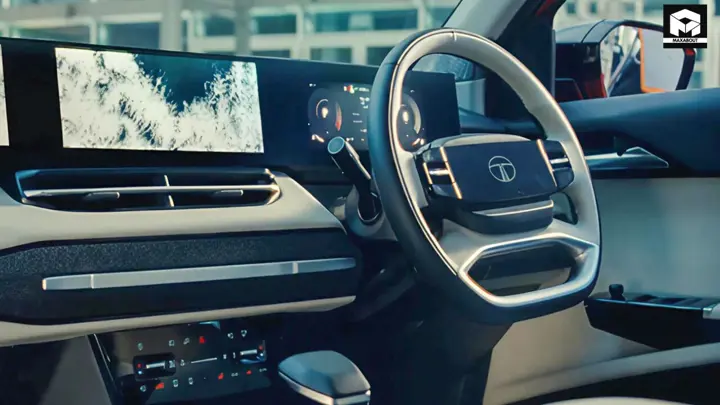
Recent official announcements confirm that Tata Motors has integrated technology from Excelfore, a company specialising in automotive-grade software infrastructure, to strengthen the Sierra's Software Defined Vehicle (SDV) architecture. This is a meaningful move. An SDV isn't simply a car with a large touchscreen — it's a vehicle where core functions are governed and updatable through software layers.
For the everyday Indian buyer weighing reliability, long-term value, and future-proofing, this partnership signals something worth paying attention to. This isn't a cosmetic upgrade. It looks like a rethink of how the Sierra is built from the inside out.
What Is an SDV and Why Should Indian Car Buyers Care?
Think about how your smartphone works. You bought it two years ago, and yet it does things today that it couldn't do on day one — because software updates quietly expanded its capabilities over time. A Software Defined Vehicle works on a similar principle. Core functions like safety systems, driver assistance, powertrain behavior, and infotainment aren't locked into fixed hardware forever. They're governed by software layers that can be updated, refined, or even expanded remotely.
Globally, this isn't a new idea. BMW, Mercedes, and Tesla have been building around SDV architecture for years. Tesla, most famously, has pushed over-the-air updates that genuinely improved vehicle range and handling after purchase. Now Tata is entering this space seriously with the Sierra — and that matters more than it might initially seem.
For Indian conditions specifically, the practical benefits are real. Imagine a software update that fine-tunes fuel efficiency calibration for stop-and-go city traffic, or one that fixes a bug in the stability control system — without a single service center visit. For someone in a city like Pune or Hyderabad where workshop queues can stretch days, that convenience carries genuine weight.
That said, complexity cuts both ways. More software means more potential failure points. From what industry observers have noted, SDV-heavy vehicles demand robust cybersecurity and reliable update infrastructure — areas where execution will matter enormously.
Who Is Excelfore and What Technology Are They Bringing to the Sierra?
This is where Excelfore enters the picture. Most consumers will never hear this name, and that is entirely by design. Excelfore is a California-based automotive software company that works deep within the vehicle technology supply chain — the kind of company that engineers know well, but showroom brochures rarely mention.
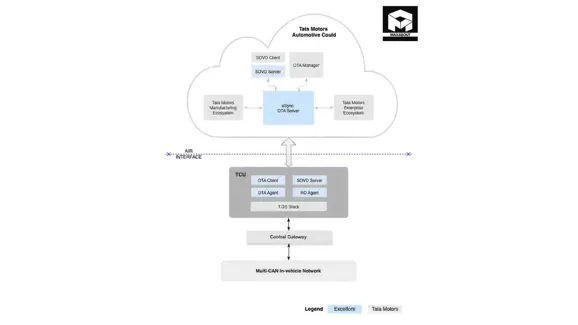
Their core expertise sits in automotive Ethernet communication standards and OTA update infrastructure. Their flagship platform, eSync, is widely recognized across the industry as a reliable framework for managing software updates across multiple vehicle ECUs simultaneously. It handles the coordination, security verification, and rollback capabilities that make remote updates trustworthy rather than risky.
For the 2026 Sierra specifically, official announcements indicate Excelfore's technology will contribute three meaningful capabilities:
Secure OTA update delivery across the Sierra's ECU network
Faster inter-ECU communication using automotive Ethernet protocols
Improved data management across connected vehicle systems
Think of it less as a feature and more as plumbing. The kind that only gets noticed when something goes wrong. Tata bringing in a specialist like Excelfore suggests the Sierra's SDV ambitions are being backed by genuinely serious software infrastructure — not just marketing language.
What New Tech Features Can Sierra Buyers Actually Expect?
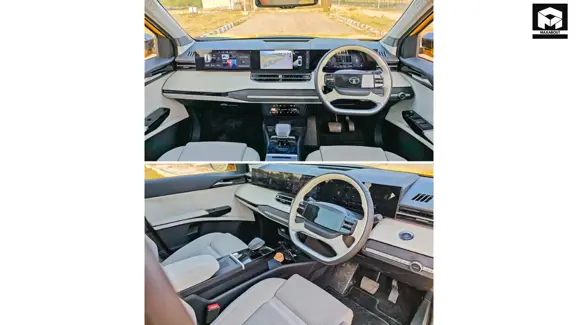
All that infrastructure talk is fine, but what does it actually mean for someone driving a Sierra through Bengaluru's Outer Ring Road traffic or navigating a Pune highway on a rainy evening? Let's get practical.
OTA updates are probably the most immediate win. With Excelfore's middleware handling communication between vehicle systems more efficiently, software updates can be pushed overnight — no dealer visit, no half-day wasted. Your car wakes up slightly smarter than it was the night before. That alone is a meaningful quality-of-life improvement over how most people currently deal with vehicle software.
Connected features through Tata's platform should also feel more responsive and stable. Think smoother remote diagnostics, more reliable geofencing, and better real-time vehicle data — the kind of thing that actually matters when you're trying to track a family member's journey on a long highway run.
There's also genuine potential for post-purchase feature unlocks — ADAS improvements, driving mode refinements, or new connected services added months after you've bought the car. It's worth being honest though: some of this depends on India's connectivity infrastructure, and rural or semi-urban owners may see these benefits later than those in metro areas.
Against rivals, this positions the Sierra as a more future-ready buy — at least on paper.
How Does This Stack Up Against Rivals in the Indian SUV Segment?
Being "more future-ready on paper" only means something if the competition isn't already there. So let's be honest about where things actually stand.
The MG Windsor and Hyundai Creta EV aren't sitting still. Both offer solid OTA update capabilities, genuinely usable connected apps, and remote vehicle management features that real owners actually use daily. Hyundai's BlueLink platform, in particular, has matured considerably — it works reliably and covers a wide range of functions. MG's internet-connected ecosystem similarly isn't just a showroom talking point.
The Mahindra BE series is arguably the most aggressive here — Mahindra has invested heavily in building a software-first architecture from the ground up, which shares a similar philosophy to what Tata is pursuing with the Sierra.
Where the Sierra's approach appears different is the depth of the underlying framework. Partnering with Excelfore for service-oriented architecture suggests Tata is building infrastructure meant to scale — not simply layering connected features onto existing hardware. That's a meaningful distinction, even if the end-user experience looks similar today.
The honest caveat? Execution will decide everything. A well-integrated platform from a competitor will always outperform an ambitious but poorly delivered one.
Real-World Concerns: Will This Tech Hold Up on Indian Roads and Networks?
Execution, as I just mentioned, decides everything. And in India, execution means surviving conditions that no European test lab can fully simulate.
Start with OTA updates. They sound seamless in press releases. But reliable, stable internet connectivity is genuinely patchy across Tier 2 and Tier 3 cities — places where Tata sells a significant volume of vehicles. What happens when an update begins downloading on a weak network and gets interrupted halfway? A corrupted or incomplete software update on a vehicle managing critical systems isn't just inconvenient. It's a legitimate safety concern worth addressing clearly.
Then there's the question of software complexity and reliability. More layers of software typically mean more potential failure points. Indian buyers have historically expected near-bulletproof mechanical reliability from their vehicles — the tolerance for software glitches is considerably lower than in markets where over-the-air fixes are culturally normalized.
Service network readiness is another honest gap worth watching. Are Tata's workshop technicians across smaller cities actually trained to diagnose SDV-related issues? A traditional mechanic and a software-literate technician are very different skill sets.
Finally, data privacy deserves a direct conversation. Connected vehicles continuously collect driving patterns, location history, and behavioral data. How Tata stores, uses, and protects this information should be transparently communicated — not buried in terms and conditions.
These aren't reasons to dismiss the technology. They're simply the right questions to ask before signing anything.
Pricing, Availability, and What to Expect at Launch
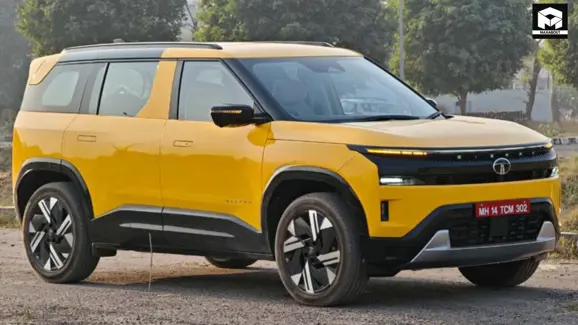
As of now, Tata has not officially confirmed pricing for the 2026 Sierra. That needs to be said clearly, because speculation is running ahead of facts in many corners of the internet. What we do know comes from official announcements and broader industry context.
The Sierra is being positioned as a premium lifestyle SUV — distinctly above the Nexon, sitting closer to the Harrier and Safari in terms of brand ambition. Expect pricing to reflect that. A ballpark range of ₹18 lakh to ₹28 lakh feels reasonable given its competitive target, though the SDV-heavy variants could push the ceiling higher.
The SDV stack powered by Excelfore's technology is almost certainly reserved for top-tier trims. Whether that premium is justified depends on how mature the software experience feels at launch — and that's genuinely unknown right now.
Both EV and ICE powertrains are expected. The SDV architecture will likely behave differently across both — the electric variant offering deeper software integration, while the ICE version may receive a more limited connected feature set.
My honest advice: wait for the official launch event before forming strong opinions on value.
Final Thoughts: Is Tata Sierra's SDV Push a Genuine Leap or Just Good Marketing?
Honestly? It feels like both — and that's not necessarily a bad thing.
The partnership with Excelfore is credible. This isn't some obscure vendor Tata picked for optics. The technology foundation appears genuinely solid, and the intent behind building a proper software-defined architecture — rather than bolting features onto existing hardware — suggests real commitment.
But intent and execution are very different things. Indian car buyers have seen promising technology announcements before that quietly disappeared post-launch. What matters is whether over-the-air updates actually arrive regularly, whether the connected features work reliably on Indian networks, and whether Tata's after-sales teams can meaningfully support software-related concerns.
The Sierra has enormous potential to set a genuine benchmark. Whether it does depends entirely on follow-through.
I'd love to know — what connected car features actually matter to you? Does SDV capability influence your buying decision, or is it still secondary to price, comfort, and reliability? Share your thoughts below.
No comments yet
Be the first to share your thoughts!
Want to read more automotive news?
Stay updated with the latest car launches, reviews, and industry insights.
Browse All News