
2026 Kia Syros: More Features, Lower Price Explained
India's compact SUV segment is brutal. There's no other way to put it. Every brand is fighting tooth and nail for your attention — and your money. The Hyundai Creta keeps refreshing itself, the Tata Nexon plays the safety card hard, and the Maruti Grand Vitara has that hybrid efficiency angle locked...
India's compact SUV segment is brutal. There's no other way to put it. Every brand is fighting tooth and nail for your attention — and your money. The Hyundai Creta keeps refreshing itself, the Tata Nexon plays the safety card hard, and the Maruti Grand Vitara has that hybrid efficiency angle locked down. Breaking through that noise is genuinely difficult.
So when Kia announced updates to the Syros for 2026, I was curious. Not just because it's a new model year, but because of what they're reportedly promising — more features, same or potentially lower price. In a segment where manufacturers typically charge a premium for every added bell and whistle, that's a combination worth paying attention to.
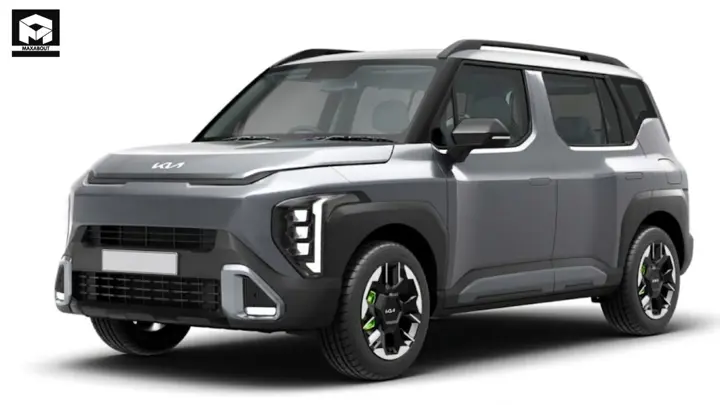 It sounds almost too good to be true, honestly. But from what industry reports and early official announcements suggest, Kia seems serious about making the Syros a stronger value proposition this time around.
This article takes an honest, balanced look at everything the 2026 Syros refresh brings — the features, the pricing logic, the engine options, and whether it genuinely deserves a spot on your shortlist. No hype, just a straightforward breakdown of what's changed and whether it actually matters for everyday Indian buyers.
What's New in the 2026 Kia Syros: Key Updates at a Glance
Let's get straight into it. The 2026 Syros isn't a ground-up redesign — it's a focused refresh, and honestly, that's fine. From what official announcements and industry reports indicate, Kia has targeted the areas that buyers were actually vocal about rather than changing things that were already working.
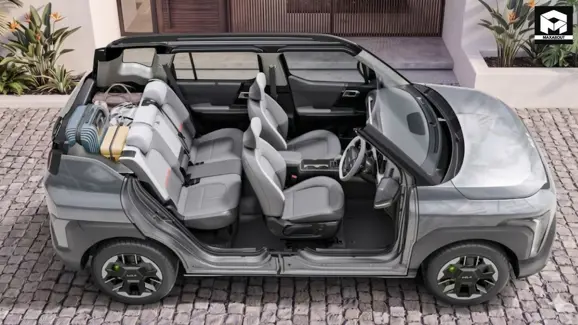
Design: Subtle But Noticeable
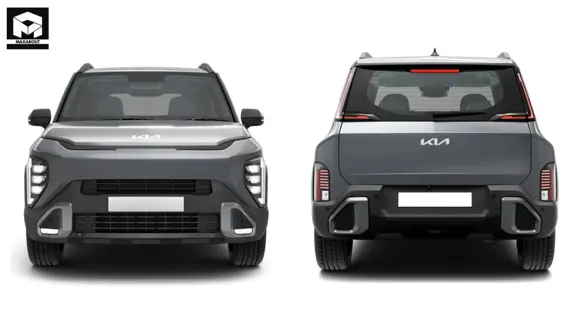
On the outside, expect revised front fascia detailing — sharper LED daytime running light signatures and a slightly reworked bumper treatment that gives the car a more premium stance. It's not dramatic, but it photographs better and feels more contemporary on the road. A couple of new color options are reportedly in the mix too, likely including a dual-tone finish that the original model's buyers had been requesting.
 Inside is where the more meaningful changes sit. The infotainment screen is expected to grow, with a larger touchscreen unit offering a cleaner interface and improved responsiveness — something early Syros owners found slightly lacking. Ventilated front seats, previously reserved for higher trims, appear to be moving further down the variant ladder. Given how brutal summers are across cities like Nagpur, Chennai, and Ahmedabad, that's a genuinely useful addition rather than a showroom gimmick.
Features and ADAS
The 2026 model is expected to carry expanded ADAS functionality, building on the existing suite with more reliable lane-keeping assistance and forward collision warnings. The panoramic sunroof, based on available information, is likely to become accessible on mid-range trims rather than being exclusive to the top variant.
Powertrain options appear to continue unchanged — the 1.0-litre turbocharged petrol and the 1.5-litre diesel both staying on. No significant tuning changes have been confirmed. What Kia seems to be prioritizing here is clear: feature democratization. Move the good stuff downward, price it more competitively, and let the value story do the talking.
Feature-by-Feature Breakdown: What You Actually Get for the Price
So let's get into the actual substance — because features on paper mean very little until you understand which trim gets what and whether the things that genuinely matter in daily Indian use are accessible without spending top dollar.
Starting with connectivity, the wireless Apple CarPlay and Android Auto combination is expected to move to mid-level variants. This matters more than people give it credit for. In stop-and-go traffic across cities like Bengaluru or Pune, the last thing you want is a cable dangling across the center console. Going wireless on a mid-trim is a genuine upgrade over most rivals in this segment.
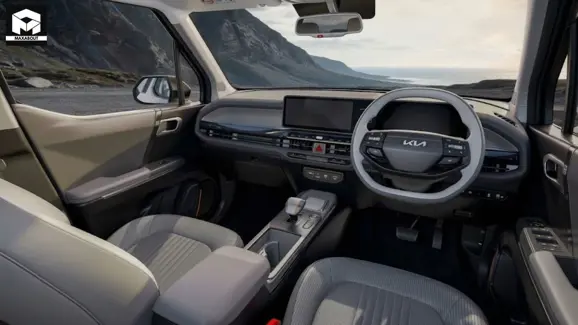 The digital instrument cluster and the connected car suite — with remote commands, geofencing, and vehicle diagnostics — continue to be part of the package. Based on available information, these features are being positioned lower in the trim hierarchy for 2026, which strengthens the value case considerably.
Rear seat comfort deserves special mention. Indian buyers frequently prioritize the back seat over everything else, and the Syros has always offered reasonable legroom given its dimensions. Ambient lighting in the cabin adds a premium feel that rear passengers genuinely notice on evening commutes.
On safety, 6 airbags and ESP being standard across variants — if confirmed — would be a significant move. At similar price points, some rivals still gate these behind higher trims. That alone changes the conversation around real-world value.
Pricing Breakdown: Where Does the 2026 Kia Syros Fit in Your Budget?
Based on official announcements and industry reports, the 2026 Kia Syros is expected to start around ₹8.99 lakh for the base variant, stretching up to approximately ₹15.5 lakh for the fully loaded top trim. That range is genuinely interesting — it positions the Syros squarely against the Hyundai Creta, Maruti Grand Vitara, and the Toyota Hyryder without asking buyers to stretch uncomfortably.
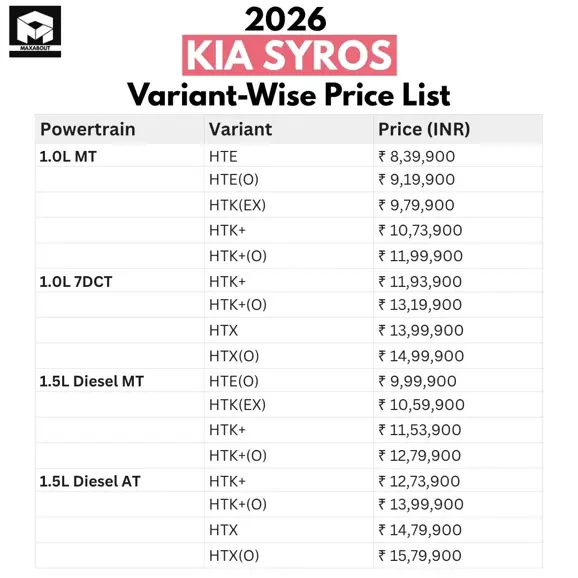 Compared to the previous model year, the promise of more features at a lower or similar price does appear to hold up, at least on paper. The entry variant now reportedly includes features that previously sat one trim higher. That matters for buyers who want honest value without constantly feeling like the better version is just out of reach.
From a value perspective, the mid-range variant looks like the sweet spot. You get most of the meaningful features — the larger display, ventilated seats, and the safety package — without paying the premium jump that the top trim demands largely for sunroof and cosmetic upgrades.
That said, Indian buyers know the sticker price is only the beginning. On-road pricing in cities like Mumbai or Bengaluru can add ₹1.5 to ₹2 lakh once you account for registration, road tax, insurance, and dealer accessories. A mid-variant Syros realistically lands closer to ₹14 lakh on-road in most metros.
For a middle-class family considering an EMI route, a ₹12 lakh ex-showroom variant financed over 60 months at standard interest rates works out to roughly ₹22,000–24,000 per month — manageable, but not light. Worth planning carefully before committing.
Engine Options and Real-World Performance on Indian Roads
Once you've sorted the budget side, the next question is which engine actually suits your life. The 2026 Syros comes with two core options — a 1.0-litre turbo-petrol and a 1.5-litre diesel — and the difference between them matters more than the spec sheet suggests.
The turbo-petrol puts out around 120 PS and 172 Nm. On paper, that sounds punchy for a compact SUV. In practice, it's genuinely responsive on open roads — highway stretches like NH48 between Bangalore and Mysuru feel effortless at 100–110 kmph. But here's the honest part: turbo-petrols in stop-and-go city traffic can feel slightly hesitant at very low speeds, especially in bumper-to-bumper situations on Outer Ring Road or Pune's FC Road. The turbo needs a moment to build boost, and urban crawling doesn't always give it that. It's manageable, not a dealbreaker — but worth knowing.
The 1.5-litre diesel delivers around 116 PS and 250 Nm, and that torque figure tells the real story. Low-end pull is strong, making it far more relaxed in heavy traffic. For buyers in cities with long daily commutes or those regularly covering highway distances, the diesel genuinely earns its price premium.
On fuel efficiency, ARAI figures hover around 18–19 kmpl for diesel and 16–17 kmpl for turbo-petrol. Real-world estimates from early reviews suggest 13–15 kmpl in mixed city use — reasonable, not exceptional.
Gearbox choices include a 6-speed manual and an automatic option. For pure city use, the automatic is the more practical choice. The manual suits highway-heavy or budget-conscious buyers who prefer direct control.
Pros and Cons of the 2026 Kia Syros: An Honest Take
No car is perfect. The Syros has genuine strengths, but also some real-world concerns worth thinking about before you sign anything.
What Works in Its Favour
The cabin is genuinely impressive for this price band. Dual screens, ventilated seats, and a panoramic sunroof at this segment feel meaningful, not just box-ticking. Kia's build quality has consistently earned respect — panel gaps are tight, materials feel considered, and the interior doesn't feel like it'll rattle apart after two monsoons.
Ride quality also looks promising for Indian conditions. From what I've gathered through early reviews, the suspension setup handles broken patches and speed breakers with reasonable composure — something that genuinely matters on city roads.
Where It Falls Short
Kia's service network remains a real concern outside major metros. If you're in a Tier 2 or Tier 3 city, you're likely driving significant distances for routine servicing — something Maruti or even Hyundai buyers don't worry about nearly as much.
The DCT gearbox also deserves honest scrutiny. Based on past user feedback across Kia and Hyundai DCT owners, heavy stop-and-go traffic can expose jerky behaviour and long-term reliability questions. Worth considering if your daily commute involves crawling through congested stretches.
And the diesel premium — unless you're clocking over 1,500 km monthly, the numbers rarely justify it over the turbo-petrol for most buyers.
How the 2026 Kia Syros Stacks Up Against Its Rivals
Every car exists in a market, not in isolation. And the Syros is stepping into one of the most fiercely contested segments in India. So how does it actually compare against the cars most buyers will shortlist alongside it?
Start with the Hyundai Creta — the obvious benchmark. The Creta wins on service network reach and resale value. If you're in a smaller city or town where Kia dealerships are sparse, that matters enormously. But the Syros punches back hard on rear seat space and feature density per rupee. The panoramic roof, ventilated seats, and larger cabin feel at similar price points genuinely tip the scales for urban family buyers who prioritise comfort over brand familiarity.
Against the Tata Nexon facelift, the conversation shifts. Nexon owners swear by its safety ratings and increasingly robust service network. The Syros feels more premium inside, but Tata's emotional connect and improving reliability perception are real factors. For buyers who are first-time SUV owners or safety-first minded, the Nexon remains a strong, practical choice.
The Maruti Grand Vitara brings something neither can easily match — strong hybrid fuel efficiency and Maruti's unbeatable service presence across India. If you're running high monthly kilometres on city roads, the Grand Vitara's strong hybrid variant saves real money over time. The Syros simply cannot compete on that front.
The Volkswagen Taigun appeals to a different buyer altogether — someone who values driving dynamics and European build quality over feature counts. The Syros offers considerably more tech, but the Taigun feels more composed and refined on open roads.
Bottom line: the Syros suits buyers who want maximum features and rear-seat comfort within a ₹15–20 lakh budget, and who live near a reliable Kia service centre. If long-term ownership peace of mind and resale value weigh heavier, the Creta or Nexon deserve a closer look first.
Final Verdict: Should You Buy the 2026 Kia Syros?
Here is my honest take — the 2026 Syros is not marketing hype. The value proposition is genuinely strong. Getting panoramic displays, ventilated rear seats, and advanced driver assistance features at this price point is remarkable by any reasonable measure. Kia has clearly listened to what Indian buyers actually want.
The ideal Syros buyer is someone who spends considerable time in the rear seat, prioritizes a tech-forward cabin experience, and lives within reasonable distance of a Kia service centre. Young professionals in cities like Bengaluru, Pune, or Hyderabad — where Kia's network is reasonably strong — will find this vehicle genuinely rewarding.
However, if you are in a smaller city with limited Kia presence, wait before booking. From what early reviewers suggest, after-sales experience varies significantly by location. A practical tip worth following — give it six months and read real ownership feedback from actual buyers in your region.
Who should look elsewhere? Buyers with strong resale concerns, or those in areas where service accessibility is genuinely uncertain.
Overall, the Syros strengthens Kia's India story considerably. It signals that Kia is here to compete seriously — not just participate.
Maxabout Team
Editorial Team
Specializes in: Automotive News, Reviews, Analysis
Want to read more automotive news?
Stay updated with the latest car launches, reviews, and industry insights.
Browse All News