
2026 Hyundai Exter Facelift: India Launch, Features & Updates
Since its debut in 2023, the Hyundai Exter has established itself as a strong player in India's competitive sub-compact SUV segment. Now, recent spy shots reveal that Hyundai is preparing a significant update for this popular model, expected to launch in mid-2026.The current Exter has resonated well...
Since its debut in 2023, the Hyundai Exter has established itself as a strong player in India's competitive sub-compact SUV segment. Now, recent spy shots reveal that Hyundai is preparing a significant update for this popular model, expected to launch in mid-2026.
The current Exter has resonated well with Indian buyers, particularly for its robust build quality and comprehensive feature list. As someone who's followed the automotive industry closely, I believe this quick update cycle shows Hyundai's commitment to keeping their product fresh in a segment where competition is intensifying.
In its present form, the Exter competes with the Tata Punch, Citroen C3, and Maruti Suzuki Ignis, with prices ranging from ₹5.64 lakh to ₹9.38 lakh. The upcoming facelift arrives at a crucial time when several new entries are expected in this segment.
While the current model already offers strong value, including standard six airbags and modern connectivity features, the 2026 facelift appears poised to raise the bar further. The test mule spotted suggests both exterior refinements and interior upgrades, though Hyundai is wisely maintaining the Exter's core strengths.
Expected Exterior Changes

Based on recent spy photographs, the 2026 Exter facelift appears to maintain its distinctive SUV silhouette while introducing several refinements. I notice the most prominent changes at the front, where a redesigned grille features a more sophisticated geometric pattern, complemented by what appears to be updated LED daytime running lights.
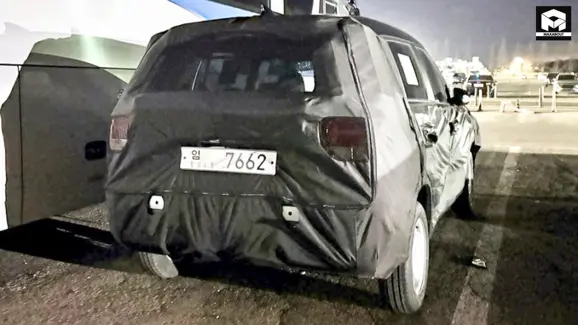
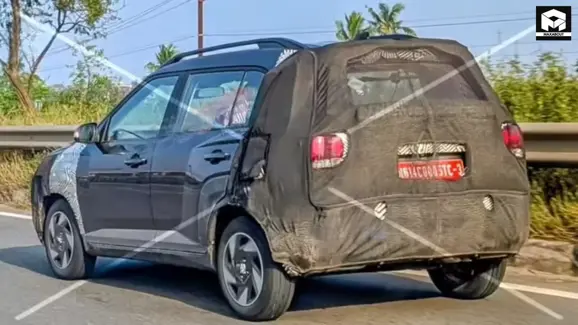
The side profile reveals new dual-tone alloy wheels with a more premium design. While the current Exter's strong character lines remain, subtle tweaks to the body cladding suggest enhanced visual robustness. The rear section, though heavily camouflaged in test vehicles, hints at revised LED tail lamp signatures and a modified bumper design.
Color options are expected to expand, with industry sources suggesting the introduction of two new shades including what looks like a striking deep blue metallic finish. The popular two-tone roof option will likely continue, though potentially with fresh combinations to maintain the Exter's youthful appeal.
Key Design Updates
Redesigned front grille with enhanced LED lighting elements
New dual-tone alloy wheel design
Updated rear bumper profile and tail lamp graphics
Fresh exterior color options
Modified body cladding for a more premium look
While these changes appear evolutionary rather than revolutionary, they should help the Exter maintain its modern aesthetic in an increasingly competitive segment.
Interior and Technology Evolution
The 2026 Exter's cabin is poised for a significant technological upgrade, with spy shots revealing a completely redesigned dashboard housing dual digital displays. The new setup includes a 12.9-inch touchscreen infotainment system paired with a 9.9-inch digital instrument cluster, bringing it in line with more premium offerings.
Perhaps the most exciting addition is the implementation of Android Auto OS (AAOS), making the Exter the first mass-market vehicle in India to feature this advanced system. This means seamless integration of Google services and over-the-air updates - particularly valuable for users in major cities where navigation updates are crucial.
Comfort and Convenience Updates
The refreshed interior brings several practical improvements that Indian buyers will appreciate:
New dual-pane sunroof system for better ventilation in hot weather
Redesigned seats with improved cushioning and support
Added rear armrest with cupholders
Split-folding rear seats for enhanced cargo flexibility
Wireless phone charging pad with cooling function
Material quality sees a noticeable upgrade, with soft-touch materials on frequently touched surfaces and new upholstery options. The cabin feels more premium while maintaining the practicality that made the original Exter popular. The slightly revised ergonomics, including a new position for the central armrest, should make those long drives in city traffic more comfortable.
Engine Options and Performance Updates
The 2026 Exter facelift continues with the proven 1.2-litre naturally aspirated petrol engine, though sources suggest Hyundai engineers have made subtle refinements to improve smoothness and efficiency. The petrol variant maintains its output of 83hp and 114Nm torque, while the CNG version delivers 69hp and 95Nm - numbers that work well for Indian city driving conditions.
Transmission options remain familiar with the 5-speed manual and AMT choices, but the AMT programming receives a welcome update for smoother shifts. In my assessment, this should address the occasional jerky transitions that some owners reported in the current model, especially during slow-speed traffic situations.
Expected Fuel Efficiency
Petrol Manual: Approximately 19.4 km/l
Petrol AMT: Around 19.2 km/l
CNG: Expected 28.5 km/kg
While not revolutionary, these mechanical updates focus on refinement rather than outright performance. I believe this approach makes sense for the Exter's target audience - urban families who prioritize smooth, efficient daily commuting over sporty dynamics. The engine remains adequately powerful for both city use and occasional highway runs, while maintaining the fuel efficiency that Indian customers expect in this segment.
Enhanced Safety Features
Looking at the 2026 Exter's safety package, I'm particularly impressed by Hyundai's commitment to passenger protection. The new model retains the 6-airbag system as standard but introduces several notable upgrades.
Advanced Safety Package
Enhanced electronic stability control with improved sensors
360-degree camera system (first-in-segment)
Tire pressure monitoring with individual readouts
Upgraded ABS with electronic brake distribution
Hill-hold assist with refined calibration
I think the most significant addition is the new Level 1 ADAS features, which include:
Forward collision warning
Lane departure warning
High-beam assist
Having tested similar systems in urban Indian conditions, I believe these features will prove genuinely useful, especially during night driving on poorly lit roads. The enhanced structural rigidity also addresses a key safety aspect - the updated Exter is expected to maintain its predecessor's strong crash test performance while meeting the latest safety regulations.
The inclusion of rear disc brakes on higher variants (replacing the previous drum setup) should provide better stopping power, which is particularly relevant given our unpredictable traffic conditions.
Expected Price and Market Positioning
I expect the 2026 Hyundai Exter facelift to command a premium of roughly ₹30,000-40,000 over the current model. This would position the range approximately between ₹6.2 lakh and ₹10.4 lakh (ex-showroom). While this represents a notable increase, the additional features and improvements should justify the higher price point.
The variant structure will likely remain similar, starting from the EX trim up to the range-topping SX(O) Connect. Based on Hyundai's recent pricing strategies, I anticipate the following approximate variant pricing:
EX: ₹6.2-6.5 lakh
S: ₹7.3-7.6 lakh
SX: ₹8.4-8.7 lakh
SX(O): ₹9.5-10.4 lakh
Maintenance costs should remain competitive, with service intervals staying at 10,000 km. From my analysis of Hyundai's service patterns, expect annual maintenance to cost between ₹4,000-6,000 for regular services. The standardization of parts across Hyundai's lineup means spare part availability shouldn't be an issue, especially given the company's extensive service network across India.
Should You Wait for the 2026 Exter?
In my assessment, the decision to wait for the 2026 facelift really depends on your specific needs. If you're currently in the market for a compact SUV, the existing Exter already offers excellent value with its proven 1.2L engine and comprehensive feature set.
However, if you're not in an immediate rush, waiting for the facelift could be worthwhile, especially considering these factors:
Pro-wait: The new dual-pane sunroof and larger infotainment system could enhance the premium feel
Pro-wait: Expected Android Auto OS integration will future-proof the technology
Pro-buy now: Current prices are likely to increase with the facelift
Pro-buy now: Proven reliability of the current model
From my experience analyzing market trends, I expect the facelift to command a premium of ₹30,000-50,000 over current prices. If the enhanced features aren't crucial for your needs, the current Exter represents better value. Moreover, waiting until mid-2026 means missing out on about 6 months of ownership experience.
In my view, unless the upcoming tech features are absolutely essential for you, the current Exter makes more practical sense, especially considering its established reliability and competitive pricing.
Maxabout Team
Editorial Team
Specializes in: Automotive News, Reviews, Analysis
Want to read more automotive news?
Stay updated with the latest car launches, reviews, and industry insights.
Browse All News